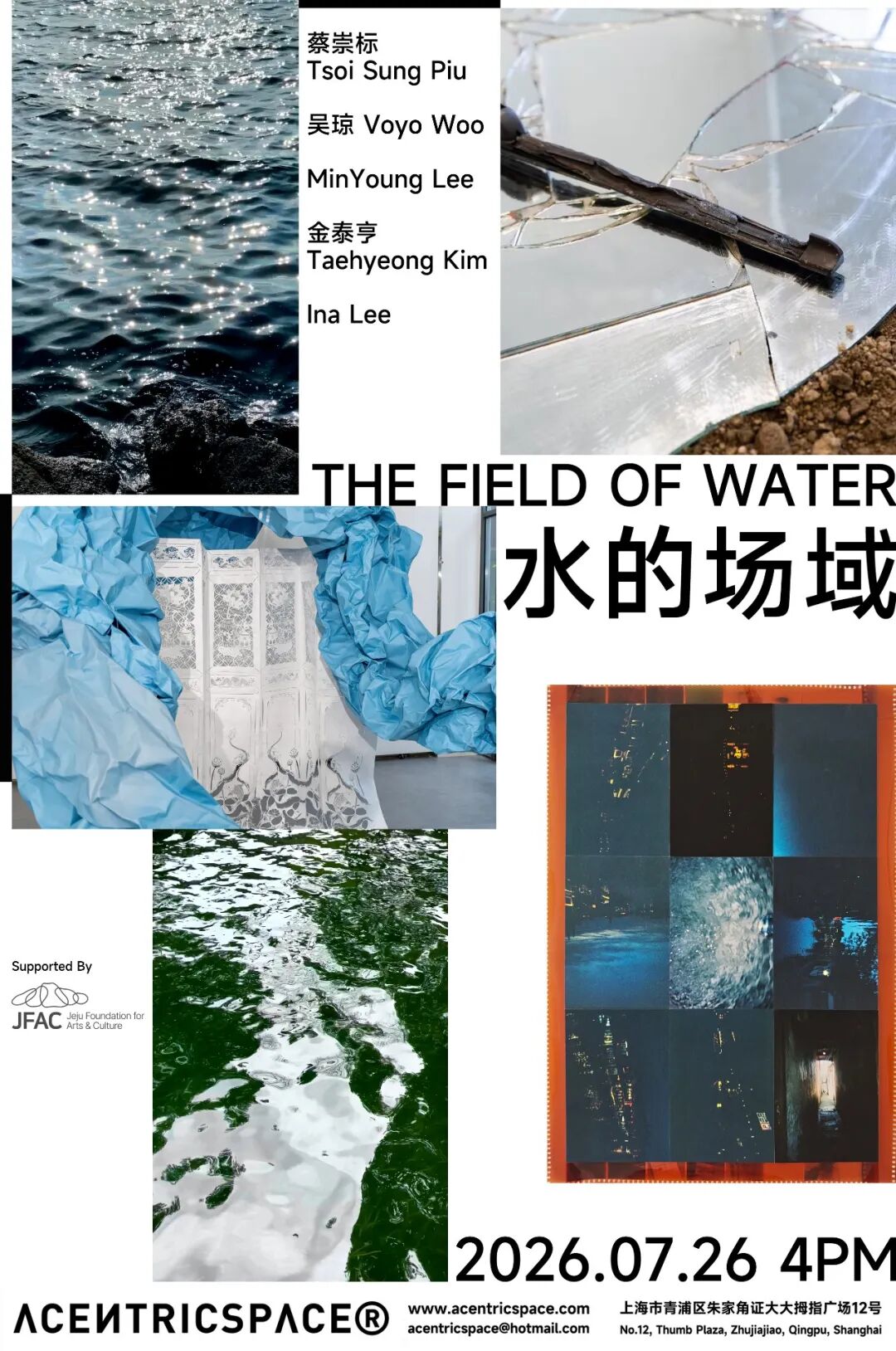
2026 July Artists in Residence
Residency Works Open Day
July 26 (Sunday) 16:00, 2026
July 26 (Sunday) 17:00, 2026
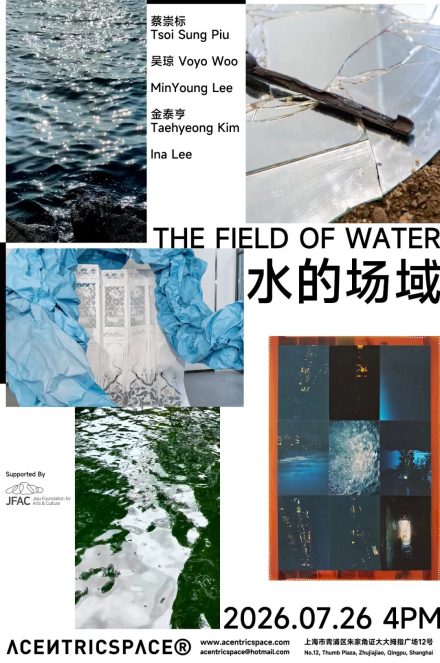
在朱家角这座由水道、桥梁、街巷与日常生活共同织就的江南古镇中,五位驻地艺术家以各自的创作方法,围绕“水”这一持续流动的媒介,展开对空间转译、地方记忆、生态感知与身体经验的多重回应。作品并不将朱家角视为一处被凝固的历史景观,而是将其理解为一个持续生成的场域:河道在城市化与旅游化的进程中不断重写自身,居民经验在迁移、重构与再组织中留下痕迹,水体则在可见与不可见、自然与人工、过去与当下之间维持着未曾中断的循环。
从蔡崇标对拆迁语境、残余物与河水关系的重构,到吴琼以纸本装置将朱家角的河道、桥梁建筑与水下根系转化为一条连接代际记忆、生态共生与内在转化的通道;从金泰亨以影像、声音与交互机制回应水的循环与感知,到MinYoung Lee、金泰亨分别以时间层叠、地理记忆与身体在场展开对水乡经验的聆听;再到 Ina Lee 以影像与声响追随“一滴水”的流动路径,作品共同构成了一种围绕水乡展开的感知图谱。它们既指向地方经验的具体性,也打开了更广阔的思考:当空间不断被改写,什么会被保留,什么会被擦除,而又有什么仍在水面之下默默流动、彼此关联,并持续生成新的形式?
本次开幕试图通过这些作品,在“地方”与“流动”之间建立一种可被观看、聆听与感知的关系:让水成为记忆的载体、时间的介质,也是通向另一种理解现实的入口。 观众在作品之间行走时,看到的不仅是一座古镇的当代表述,更是一种关于变动、共生与再感知的空间经验。
Set within Zhujiajiao, an old Jiangnan water town woven together by canals, bridges, lanes, and everyday life, the five resident artists each respond—through their own artistic methods—to water as a continuously flowing medium, unfolding multiple reflections on spatial translation, local memory, ecological perception, and embodied experience. Rather than treating Zhujiajiao as a fixed historical landscape, the works approach it as a site in constant formation: its waterways are continually rewritten through processes of urbanization and tourism, residents’ experiences leave traces through displacement, reconstruction, and reorganization, and water itself sustains an unbroken circulation between the visible and the invisible, the natural and the constructed, the past and the present.
From Tsoi Sung Piu’s reconstruction of the relationships among demolition sites, residual materials, and river water, to Voyo Woo’s paper-based installation, which transforms Zhujiajiao’s canals, bridge architecture, and aquatic root systems into a passage between inherited memory, ecological interdependence, and inner transformation; from Taehyung Kim’s response to the circulation and perception of water through image, sound, and interactive mechanisms, to MinYoung Lee’s and Taehyung Kim’s distinct explorations of temporal layering, geographic memory, and bodily presence through listening to the water-town environment; and finally to Ina Lee’s tracing of a single drop of water through image and sound, the works collectively form a sensory map centered on the water town. They point not only to the specificity of local experience, but also to broader questions: as space is continually rewritten, what is preserved, what is erased, and what continues to flow quietly beneath the surface—remaining interconnected and generating new forms?
This opening seeks, through these works, to establish a relation between “place” and “flow” that can be seen, heard, and sensed: making water a carrier of memory, a medium of time, and a threshold toward another way of understanding reality. As viewers move among the works, what they encounter is not only a contemporary articulation of an old town, but also a spatial experience shaped by change, coexistence, and renewed perception.
蔡崇标 Tsoi Sung Piu
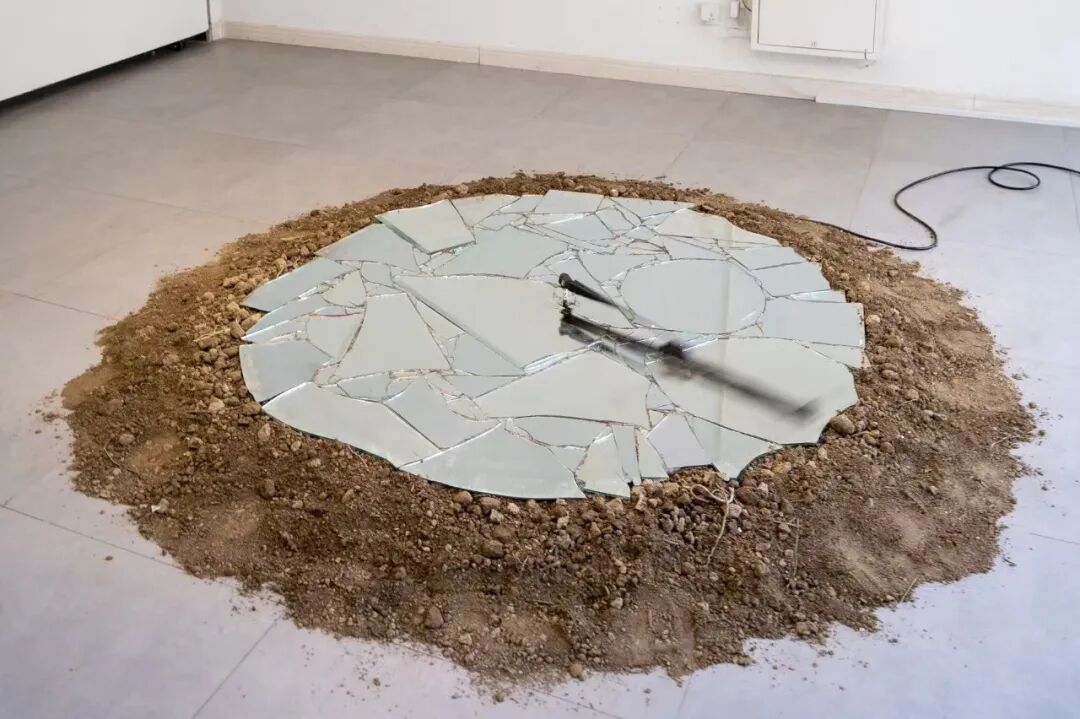
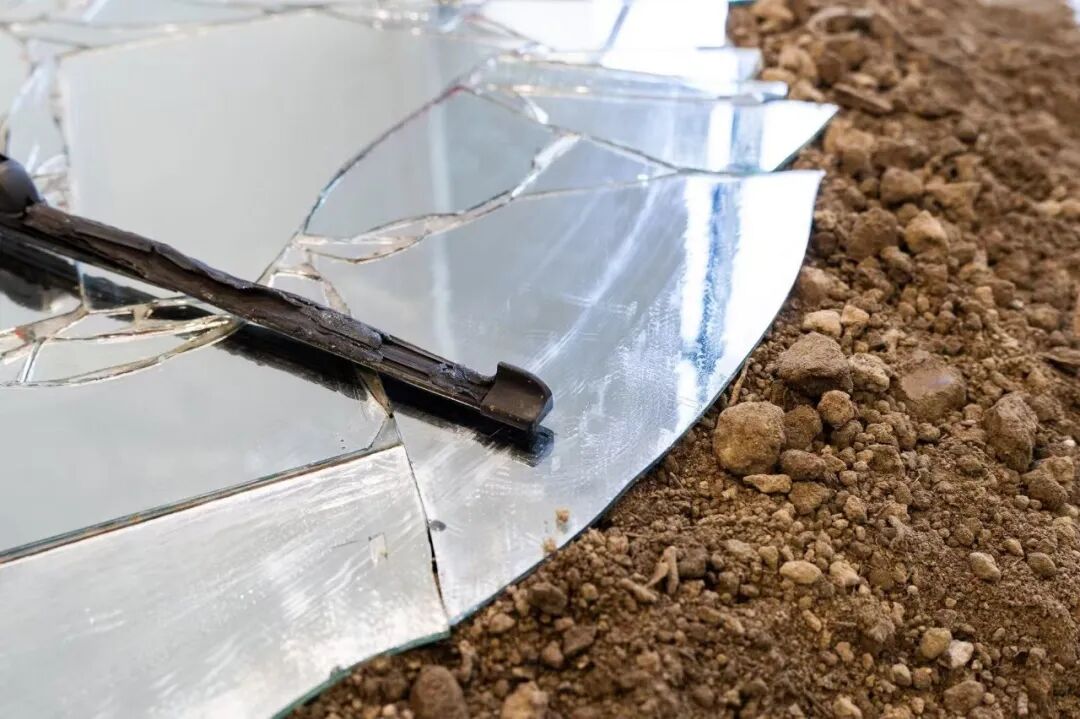
得体的映射 A Decent Reflection
破镜、泥土、杉木板、汽车雨刮、改装马达、喷雾系统、河水
Broken mirror, soil, fir wood board, windshield wiper, modified motor, misting system, river water
When the roads have been built, water continues to flow by a new right.
Broken mirrors pool on the ordinary ground and keep being polished bright.
城市总是以急切向上的姿态将进步展示出来。随着陆路运输网络的扩展,河道逐渐从一条繁忙的运河,转变为旅游绅士化语境下的景观。居民的日常节奏在两种相继出现但性质迥异的“非场所”状态中自然演变;水体虽持续参与沿岸的生活轨迹,却在这一空间转换的过程中保持着陌生感。
《得体的映射》由朱家角居民拆迁区废弃的物品重构而成。在漕港河水不断的浸润下,破碎的镜面在重建区的土壤上重新聚集;汽车雨刮则无休止地反复擦拭镜面。
The city perpetually puts its progress on display through an urgent posture. With the expansion of land transportation networks, the waterway gradually transitions from a laboring canal into a landscape situated within the context of tourism gentrification. The daily rhythms of the residents naturally evolve within these two successive yet distinct states of the “non-place”. Although the water continues to participate in the life along its banks, it retains a sense of estrangement throughout this process of spatial transformation.
“A Decent Reflection” is reconstructed from discarded objects salvaged from the residential reconstruction zones of Zhujiajiao. Under the moistening of the Caogang River water, broken mirrors reaccumulate upon the soil of the redevelopment zone, while the windshield wiper endlessly polishes the fractured reflective surfaces.
吴琼 Voyo Woo
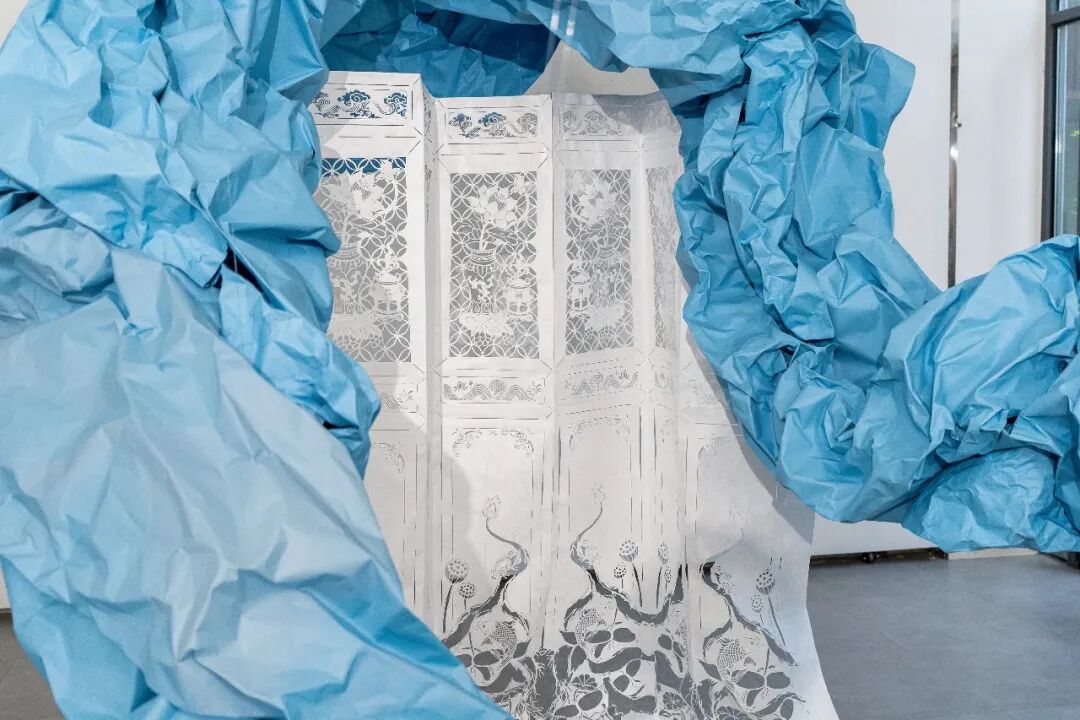
放·升 Release, Rise
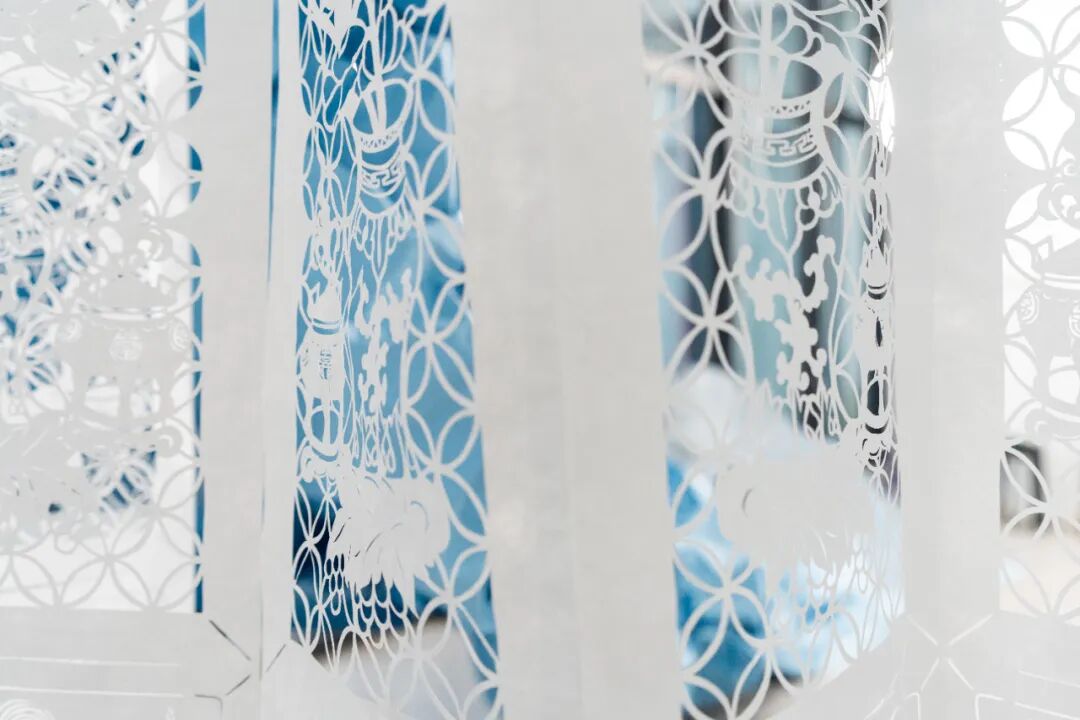
Paper cutting, tyvek, acrylic sheet, fishing wire
2026
品的灵感来自朱家角的放生桥。“放”既指放开、释放,也意味着放下我们对过往经验、固有观念和累积记忆的执着;“升”则不只是空间上的上升,也包含提升、升华和觉醒。对我来说,《放·升》所描述的是一个内在过程:当一个人愿意放下之后,也许会获得新的觉知、智慧,并进入一种更开阔的精神状态。
这件作品试图把人们的注意力重新带回朱家角最根本的部分 – 水、河道、桥梁、建筑,以及水面之下相互依存的生态系统。我也受到当地“耕读传家”传统的启发。农业维系生活,教育延续文化,两者共同支撑着一代又一代人的成长,也构成了这座古镇长期延续的基础。
在装置中,蓝色的纸河从地面蜿蜒而起,被抬升到空中,将原本平静、熟悉的河道转化为一种流动的雕塑形态。纸雕的门、桥和屏风形成一道通往不同世界的入口,连接水上与水下、过去与现在、现实与精神。
鱼、莲藕、水生植物和交错的根系,引导观众把目光投向水面以下,去看见那些平时容易被忽略、却始终支撑着这座城镇与人们生活的力量。我希望观众能够在作品中停下来,向下看,也向内看,在“放”与“升”之间,感受一次释放、转化和重新觉察的过程。
The project was inspired by Fangsheng Bridge in Zhujiajiao. In Chinese, “放” can mean to release, let go, or loosen our attachment to inherited structures and accumulated memories. “升” means to rise or become elevated. For me, it describes what may become possible after release: expanded awareness, received wisdom, a connection to the higher self, or a shift into another state of consciousness.
Through this installation, I wanted to draw attention back to the roots of Zhujiajiao: its water, canals, architecture, ecological systems, and traditions. I was also inspired by the local philosophy of bringing agriculture and education together to support the flourishing of future generations and the long-term well-being of the community.
The blue paper river begins on the ground and then rises into the air, transforming the familiar landscape of the canal into a suspended, sculptural form. The paper-cut gate and architectural panels create a threshold between different worlds: above and below the water, past and present, the visible and invisible, and the material and spiritual.
The aquatic plants, fish, lotus roots, and interconnected root systems invite viewers to look beneath the surface and consider the complex ecosystem that has sustained this town and its people. By elevating the river, I hope to make the familiar unfamiliar—and create a space where viewers can pause, look more deeply, release what they carry, and imagine how they might rise.
Performance 表演
第一场:角里水風 Wind on Water in Zhujiajiao
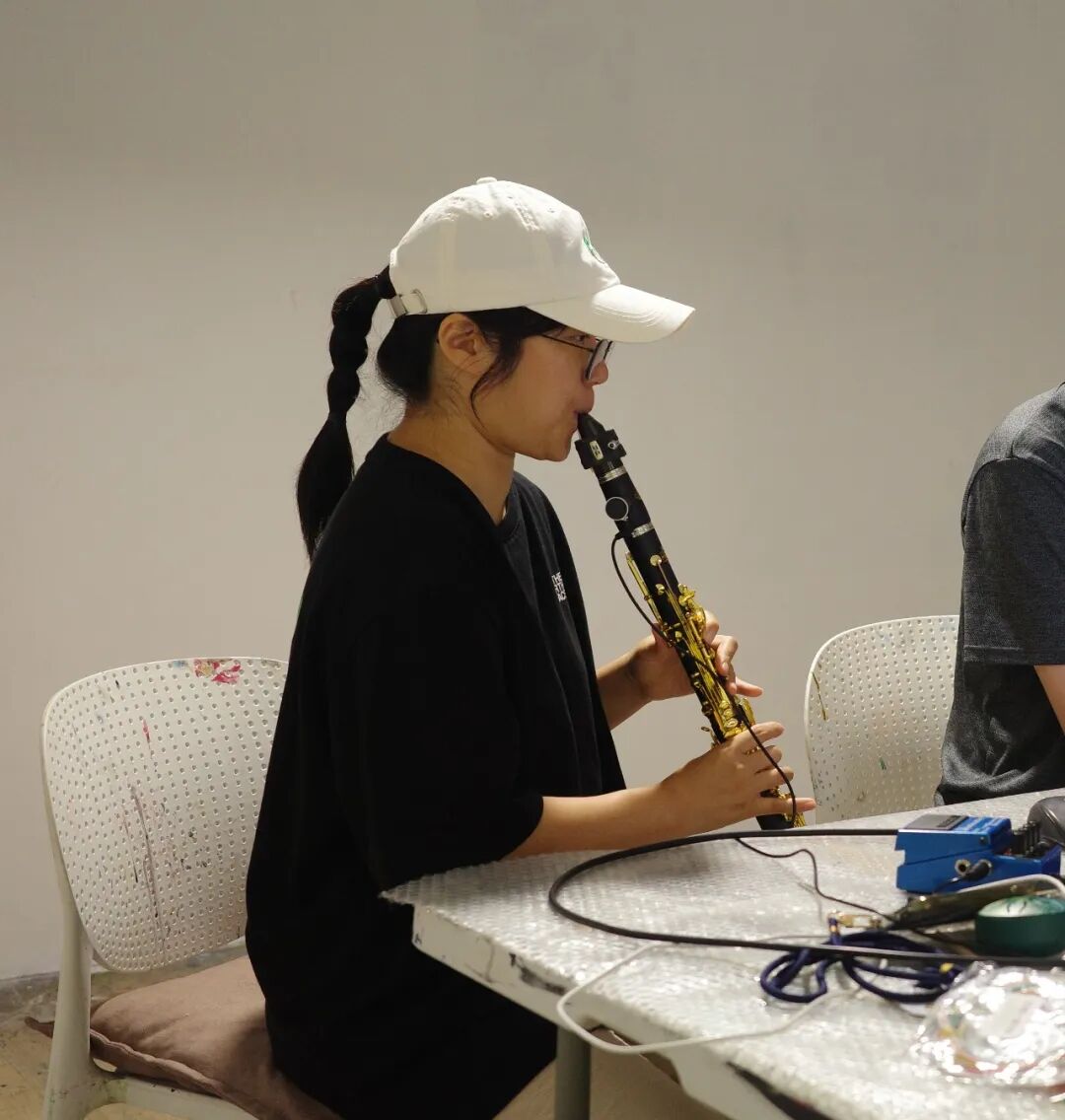
适用于单簧管和现场电子音乐 for clarinet and live electronics
作曲 Composed by Minyoung Lee
电子 Electronics by Taehyeong Kim
表演Performed by Minyoung Lee (单簧管 clarinet), Taehyeong Kim (现场电子乐 live electronics)
《角里水風》是作曲家对朱家角三周驻地时光的个人回望 – 回望这座小镇的日常与风景,也回望在那里遇见的人们。在宁静的水乡景致、仿佛承载着数个世纪的建筑,以及为那几周留下印记的暴雨与狂风之中,作品汇聚了每一天反复出现、却又不断变化的感受。
单簧管奏出的旋律经过电子音响中的长延迟处理,随后原样返回。当来自过去的旋律回响并与当下的声音相叠时,不同的瞬间便在同一段时间之内共存。这些层叠的时间构成了作曲家对朱家角的记忆。
Wind on Water in Zhujiajiao is a personal recollection of a three-week stay in the town—of its everyday life and landscapes, and of the people the composer encountered there. Amid the quiet scenery of the water town, buildings that seem to hold centuries, and the downpours and strong winds that marked those weeks, the work gathers the sensations of days that repeated themselves and yet kept changing.
The melody played by the clarinet is sent through a long delay in the electronics and returns exactly as it was. As the melody from the past echoes and overlaps with the sound of the present, separate moments come to exist together within a single span of time. These layers of time form the composer’s memory of Zhujiajiao.
第二场:水鄕三色 Three Hues of a Water Town
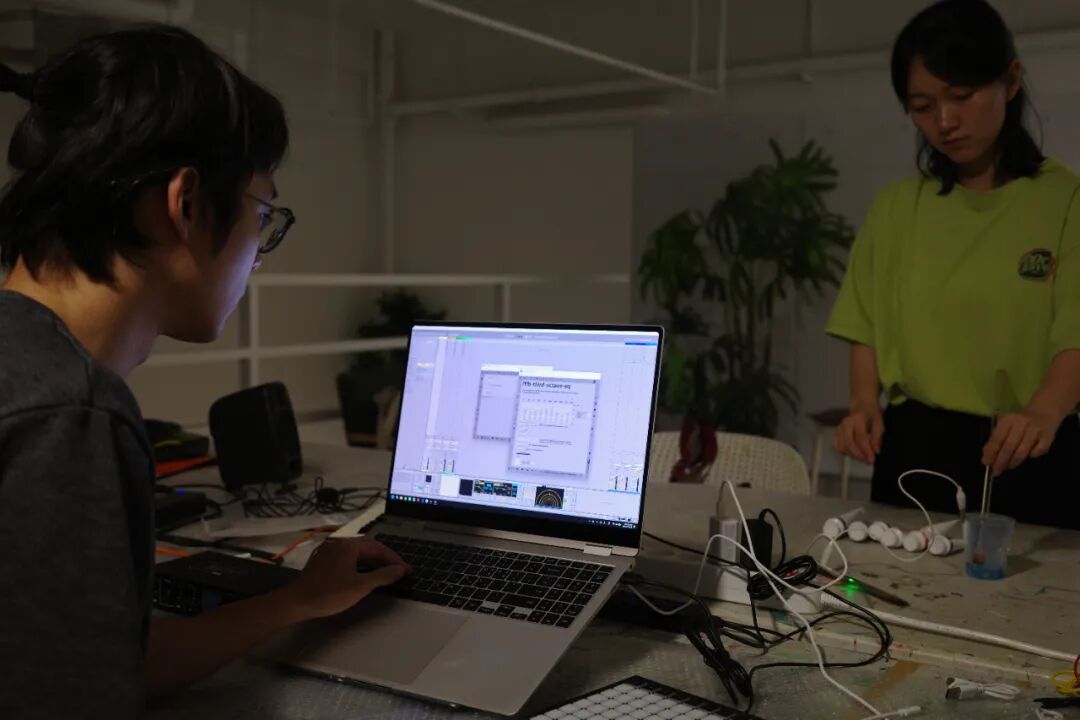
适用于单簧管和现场电子设备 for clarinet, water and live electronics
作曲 Composed by Taehyeong Kim
表演 Performed by Minyoung Lee (单簧管 clarinet), Ina Lee (水 water), Taehyeong Kim (现场电子乐 live electronics), Lián Pimentel (舞蹈 dance)
《水鄕三色》源于在济州、上海与太湖形成的三段关于水的记忆。在这三处,水都与人们的生活紧密交织,却各自留下截然不同的印象。济州的海既是将岛屿与朝鲜半岛分隔开来的边界,也是长久以来维系当地人生计的根基。在上海,水承载着人与物资的流动,成为连接这座城市与更广阔世界的交流通道。太湖向地平线铺展开来,留下静谧的印象。作品将这些由水塑造的地方所带来的不同感受转化为三个乐章。
在作品中,水本身便是一件乐器,演奏者与水的直接接触被转化为声音。与之并行的是单簧管的呼吸、现场电子音响所营造的声响空间,以及舞者的身体动作;它们彼此渗透、相互扰动,却不失各自的特质。这些元素聚散的密度与方式随乐章而变化。从作曲家个人生活中生发的声音,穿过大都市层叠交错的流动,最终流入湖泊的辽阔与静谧。这些元素共同构成三种关于水的意象,并将其中承载的记忆传递给观众。
Three Hues of a Water Town begins with three memories of water encountered in Jeju, Shanghai, and at Lake Tai (Taihu). In all three places, water is deeply entwined with human life, yet each leaves a distinctly different impression. Jeju’s sea is both a boundary separating the island from the Korean mainland and a source of livelihood that has sustained its people for generations. In Shanghai, water carries people and goods, serving as a channel of exchange that connects the city with the wider world. Lake Tai, stretching toward the horizon, leaves an impression of stillness. The work translates these contrasting sensations of places shaped by water into three movements.
Here, water itself functions as an instrument, with the performer’s physical contact with it translated into sound. Alongside it, the breath of the clarinet, the sonic space created by the live electronics, and the gestures of the dancer seep into and unsettle one another without losing their individual character. The density and manner in which these elements gather and disperse vary from movement to movement. Sound rooted in the composer’s own life moves through the layered and entangled motion of a metropolis and eventually flows into the breadth and stillness of a lake. Together, these elements form three images of water, conveying the memories they carry to the audience.
金泰亨 Taehyeong Kim
互动装置:单通道视频(彩色、竖屏),实时生成性声音,水体,两个陶瓷碗,定制软件与电子设备
Interactive installation: single-channel video (color, portrait orientation), real-time generative sound, water, two ceramic bowls, custom software and electronics
尺寸可变;连续 Dimensions variable; continuous
视频由Minyoung Lee拍摄,地点包括济州岛、朱家角、黎里古镇和太湖
Video footage by Minyoung Lee, filmed in Jeju, Zhujiajiao, Lili Ancient Town, and Lake Tai
《水雲和安》循环播放在不同地点拍摄的河流、湖泊与海洋的影像,展现水在浩瀚自然之中绵延不息的流转。尽管地点、光线与水面的运动各不相同,水却仿佛始终是同一道缓慢而绵延的水流;水声与一段几乎难以察觉、缓缓展开的旋律伴随其间。作品名取自韩语中意为“循环”的 sunhwan 一词。该词原由两个音节构成,作品名将其展开为四个音节:su-un-hwa-an,并分别对应水、云、和、安四个汉字,共同唤起水升腾成云、再复归为水的循环,以及流动中形成的和谐与再次到来的宁静。
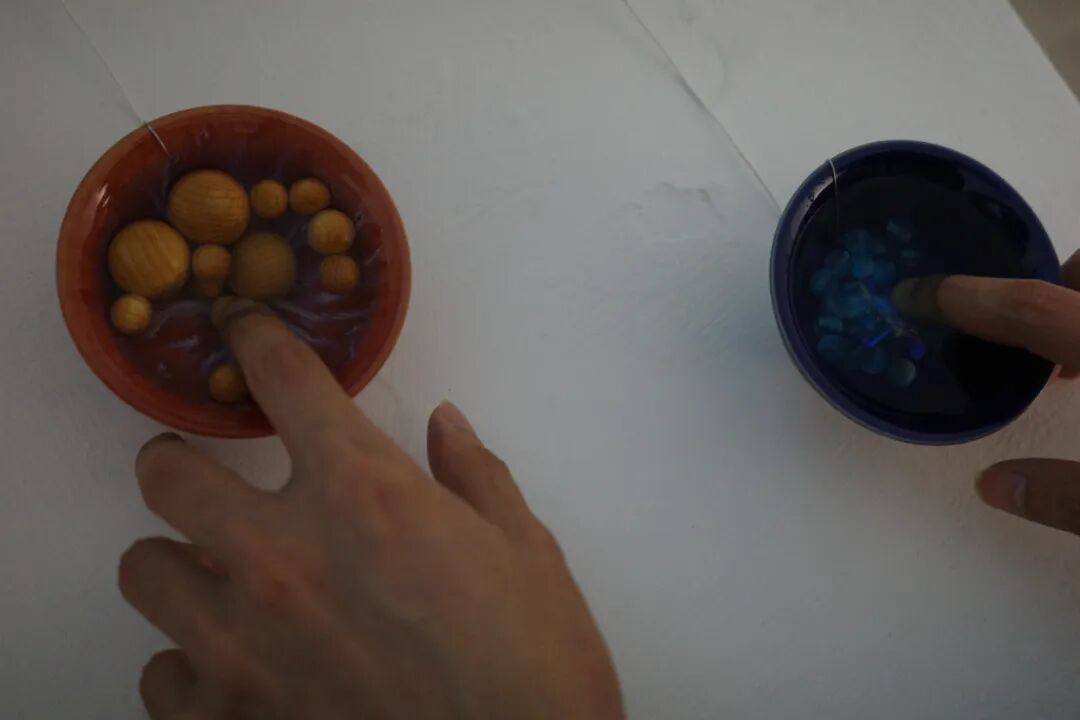
观众将手指分别放入两只碗中,以自己的身体连接两只碗中的水时,微弱的电信号便开始调制影像与声音。来自不同地点的水景相互重叠、交融,电子声响也随之实时生成。当观众抽回手指,扰动逐渐平息,画面却不会恢复原状,而是转而延续为另一处水的景象。通过身体连接两只碗,观众并非中断或支配水的流动,而是短暂进入早已持续的循环之中,成为水由一种状态流转至下一种状态的一环。
Su-un-hwa-an presents looping images of rivers, lakes, and seas filmed in different places, tracing the continuous passage of water through the vastness of nature. Though the locations, light, and movements of the water’s surface differ, the water seems to continue as one slow flow, accompanied by the sound of water and a melody that unfolds almost imperceptibly. The title expands the Korean word sunhwan, meaning “circulation,” from two syllables into four: su-un-hwa-an. These syllables are paired with the Chinese characters 水 (water), 云 (cloud), 和 (harmony), and 安 (calm), together evoking water rising to form clouds and returning as water, the harmony formed through its movement, and the calm that returns.
When a visitor places a finger in each bowl, connecting the two bodies of water through their own body, a faint electrical signal modulates the image and sound. Separate scenes of water overlap and mingle, while electronic sound is generated in real time. When the visitor withdraws their fingers, the disturbance subsides, but the image does not return to its previous state; it carries on into a scene of water from another place. By physically linking the two bowls, the visitor does not interrupt or control the flow, but briefly enters the circulation already underway, becoming part of water’s passage from one state to the next.
Ina Lee
一滴之时 물의 시간을 지나면 Time of a Drop
Composition, 2021, rev. 2026;
摄影与录音 photography and sound recordings, 2025
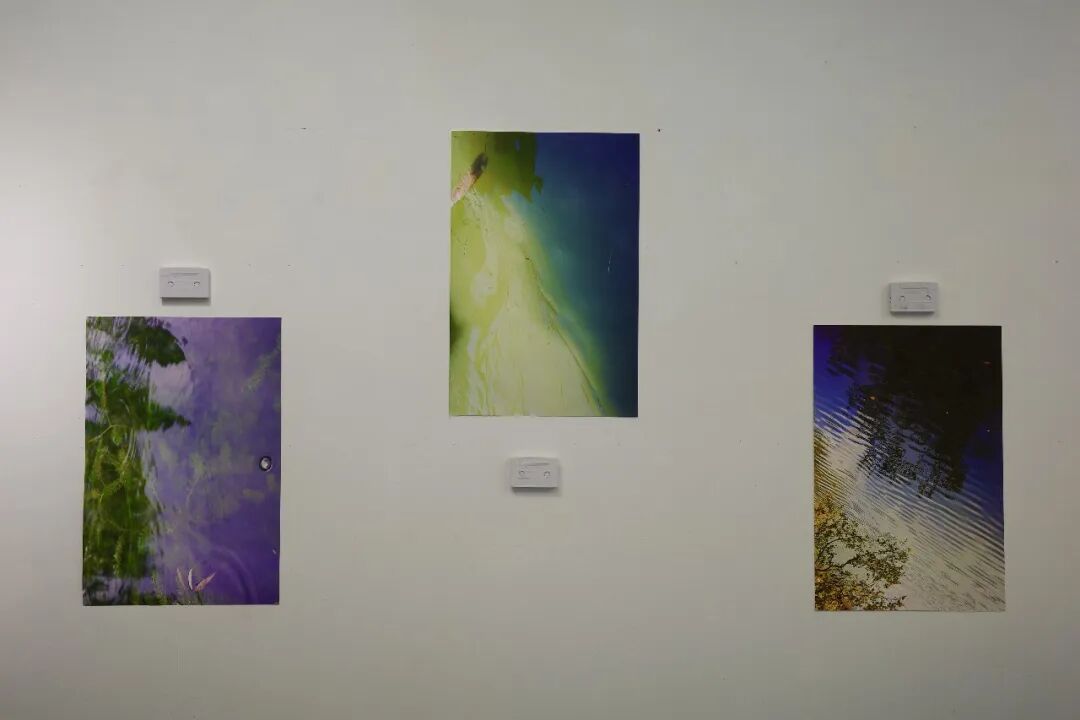
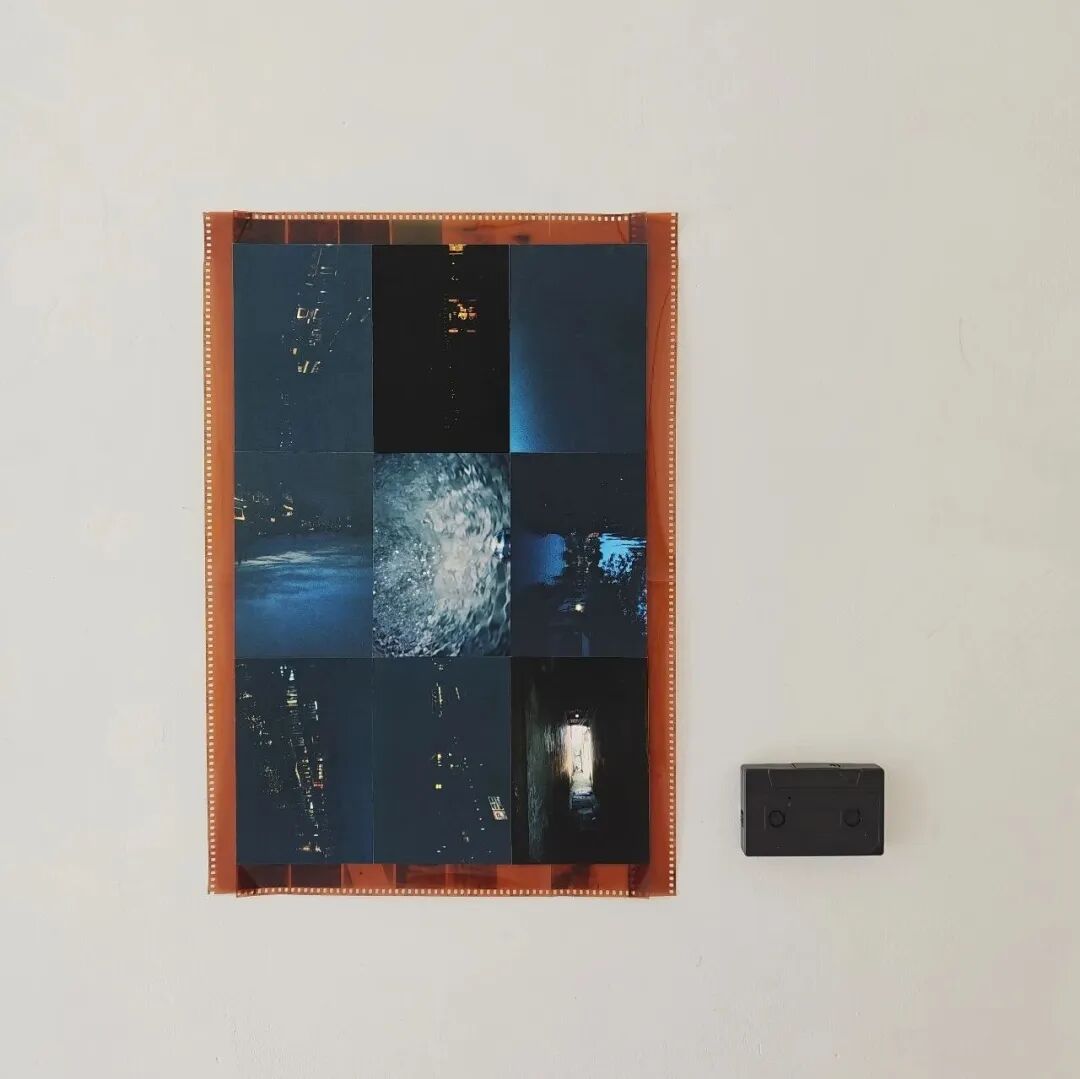
《一滴之时》是一件由六张在朱家角拍摄的照片组成的装置作品,每张照片都配有独立的声音。这些在朱家角收集的水声、雨声、心跳声以及周围环境的录音,与一首此前创作的新版作品进行了融合。
作品跟随一滴水的流动,它渗入并最终汇入更大的水体之中。原本在不同时间与地点产生的图像和声音,在同一空间内相互连接,暗示着即使微小而孤立的事物,也能找到通往他者的路径。水不断变换形态,重新开始流淌。
Time of a Drop is an installation composed of six photographs taken in Zhujiajiao, each paired with its own sound. Recordings of water, rain, heartbeats, and surrounding environments collected in Zhujiajiao are brought together with a newly edited version of an earlier composition.
The work follows a single drop as it moves, seeps, and eventually joins a larger body of water. Images and sounds that began in different moments and places become connected within one space, suggesting that even something small and isolated can find its way toward others. Water continually changes form and begins to flow again.
MinYoung Lee, 金泰亨 Taehyeong Kim, Ina Lee
Supported By Jeju Foundation for Arts & Culture


![[超]灾变论 [Hyper-]Catastrophe Theory 舜 Shun](https://www.acentricspace.com/wp-content/uploads/2020/10/wxsync-2024-04-17e42ddfe2087d093ffcdad3f414da34-440x625.jpeg)