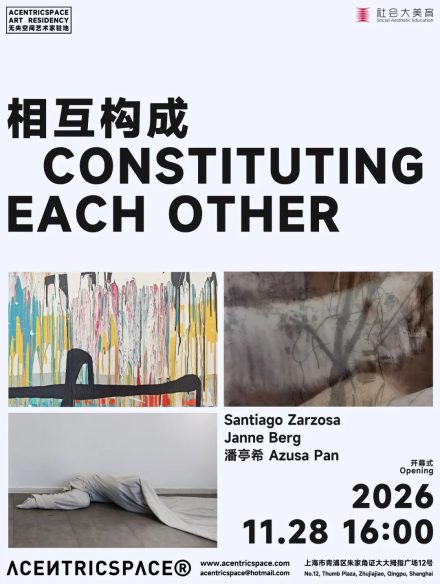
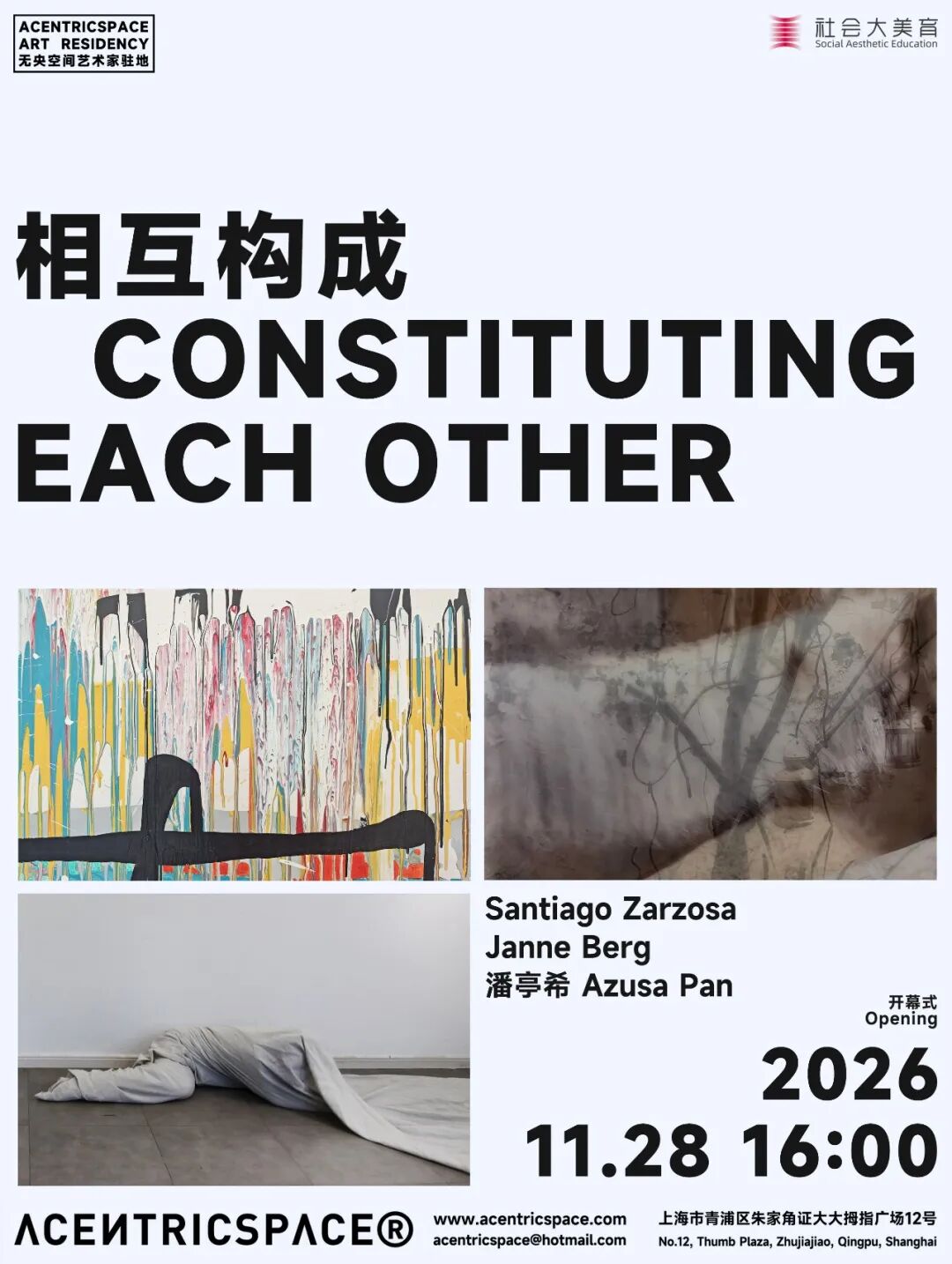
相互构成 Constituting Each Other
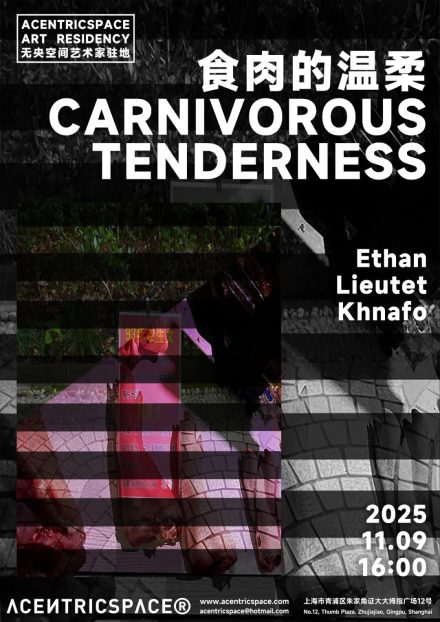
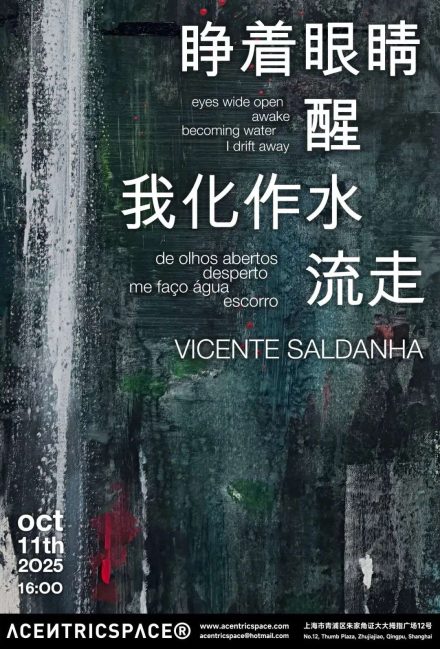
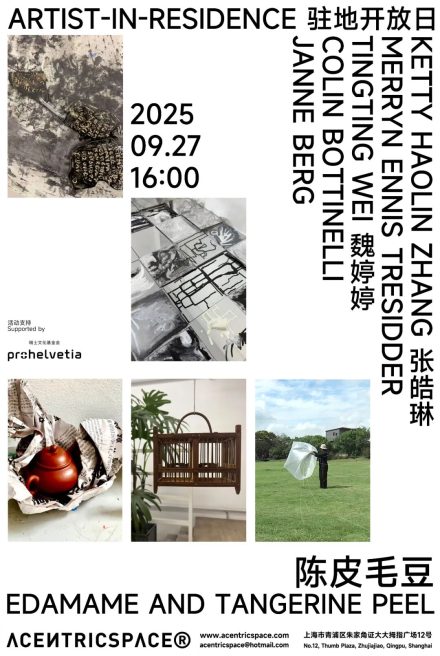
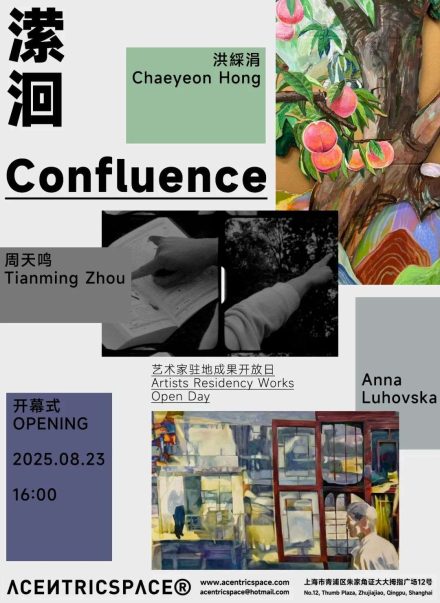
2026 November Artists-in-Residence
Residency Works Open Day
Santiago Zarzosa
Janne Berg
潘亭希 Azusa Pan
我们如何理解自身的存在?个体是否能够作为一个独立的主体而存在,还是说,我们始终是在与他者、环境以及周围事物的相互作用中,逐渐形成自身?
在传统的认知中,个体往往被视为一个相对完整和独立的主体,世界则被理解为主体之外的客观环境。然而,当我们重新审视人与世界之间的关系时,这种明确的区分开始变得模糊。我们的身体、感知与身份并非孤立形成,而是在持续的接触、交流、依赖与冲突中不断被塑造。存在并非一种预先完成的状态,而是一个持续生成的过程。
从这一视角出发,人与自然、人与人,以及身体与外部环境之间的关系,不再只是主体与客体之间的相互作用,而成为共同构成现实的一种方式。不同的生命、物质与力量彼此交织,在联结与分离、依存与抵抗之间形成不断变化的状态。个体既参与塑造周围的世界,也在这一过程中被世界所改变。
然而,相互构成并不意味着和谐与一致。共存可能伴随着不协调,保护也可能转化为限制,而边界既是区分自我与外部的方式,也可能成为重新认识彼此的起点。我们试图建立联结,同时又不断确认自身的位置;我们渴望融入世界,却也需要保留某种距离。
《相互构成》以此为出发点,关注个体与外部世界之间不断变化的关系,以及那些在接触、摩擦、依赖与变化中逐渐形成的存在状态。展览并不试图为这种关系提供一个确定的答案,而是邀请我们重新思考:当我们与世界相互塑造、彼此影响时,个体与环境的边界究竟在哪里?我们所理解的自身,又有多少是由自身之外的事物所构成的?
How do we understand our own existence? Can an individual exist as an independent subject, or do we continually become who we are through our interactions with others, our surroundings, and the things that exist around us?
In conventional thinking, the individual is often regarded as a relatively complete and autonomous subject, while the world is understood as an external environment. Yet, when we reconsider our relationship to the world, this seemingly clear distinction begins to dissolve. Our bodies, perceptions, and identities do not emerge in isolation; encounters, exchanges, dependencies, and conflicts continually shape them. Existence is not a predetermined or completed state, but an ongoing process of becoming.
From this perspective, the relationships between humans and nature, between individuals, and between the body and its surrounding environment are no longer understood merely as interactions between subject and object. Rather, they become ways through which reality itself is constituted. Different forms of life, materials, and forces intertwine, giving rise to constantly shifting conditions between connection and separation, interdependence and resistance. The individual not only participates in shaping the surrounding world, but is also transformed by it in return.
Yet, mutual constitution does not necessarily imply harmony or agreement. Coexistence can involve discord, protection can become a form of confinement, and boundaries can serve both to distinguish the self from the outside world and to create possibilities for encountering the other. We seek connection while continually negotiating our own position; we long to become part of the world, while also needing to maintain a certain distance from it.
Constituting Each Other takes these ideas as its point of departure, exploring the shifting relationships between individuals and the external world, and the conditions of existence that emerge through encounters, friction, dependence, and transformation. Rather than offering a definitive answer, the exhibition invites us to reconsider: when we continuously shape and influence one another with the world around us, where do the boundaries between the individual and the environment lie? And how much of what we understand as ourselves is, in fact, constituted by things beyond ourselves?
Santiago Zarzosa
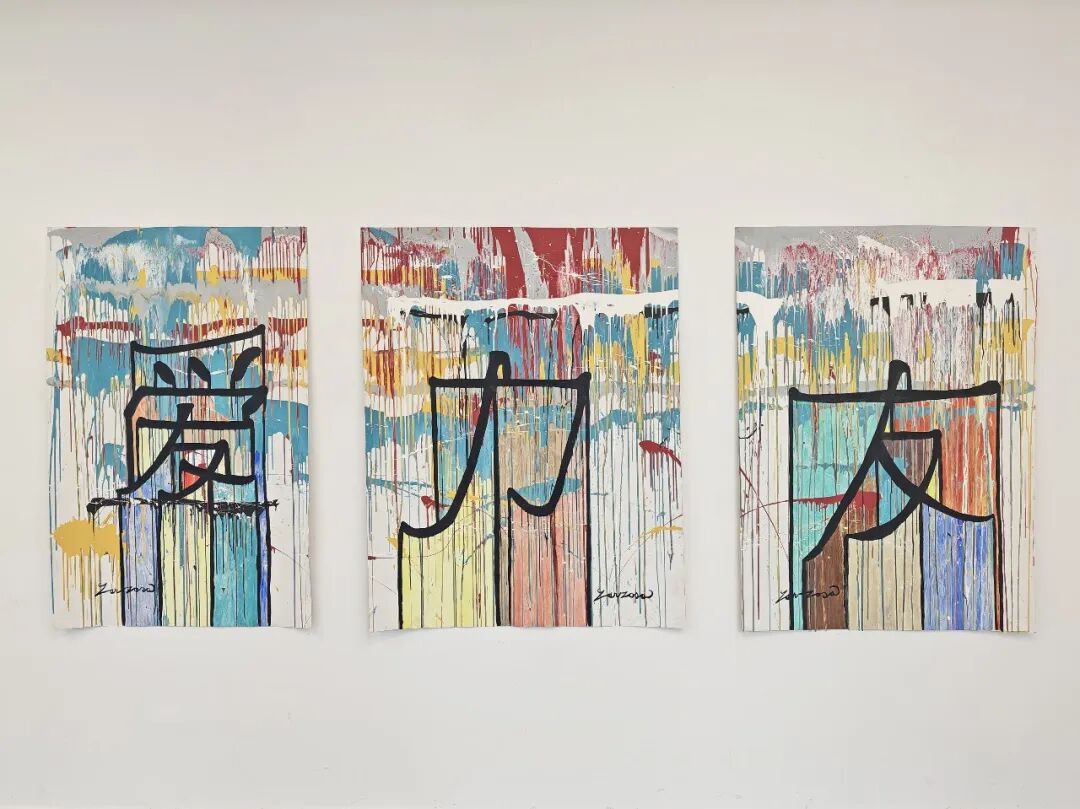
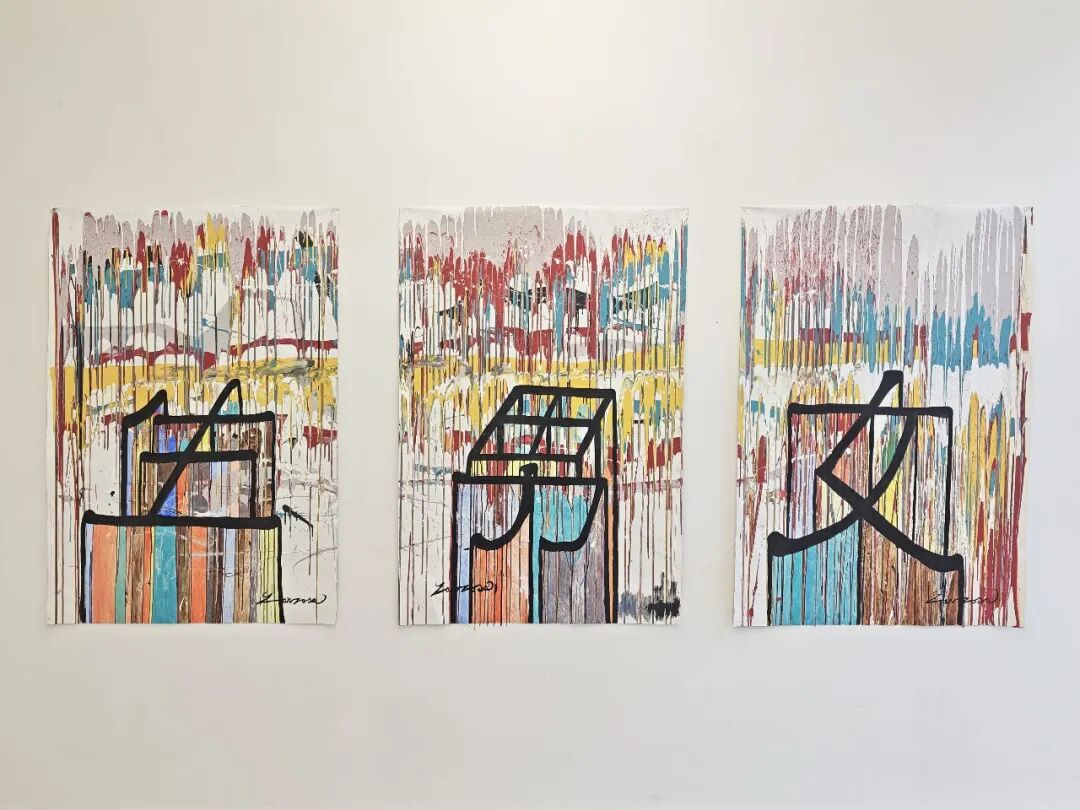
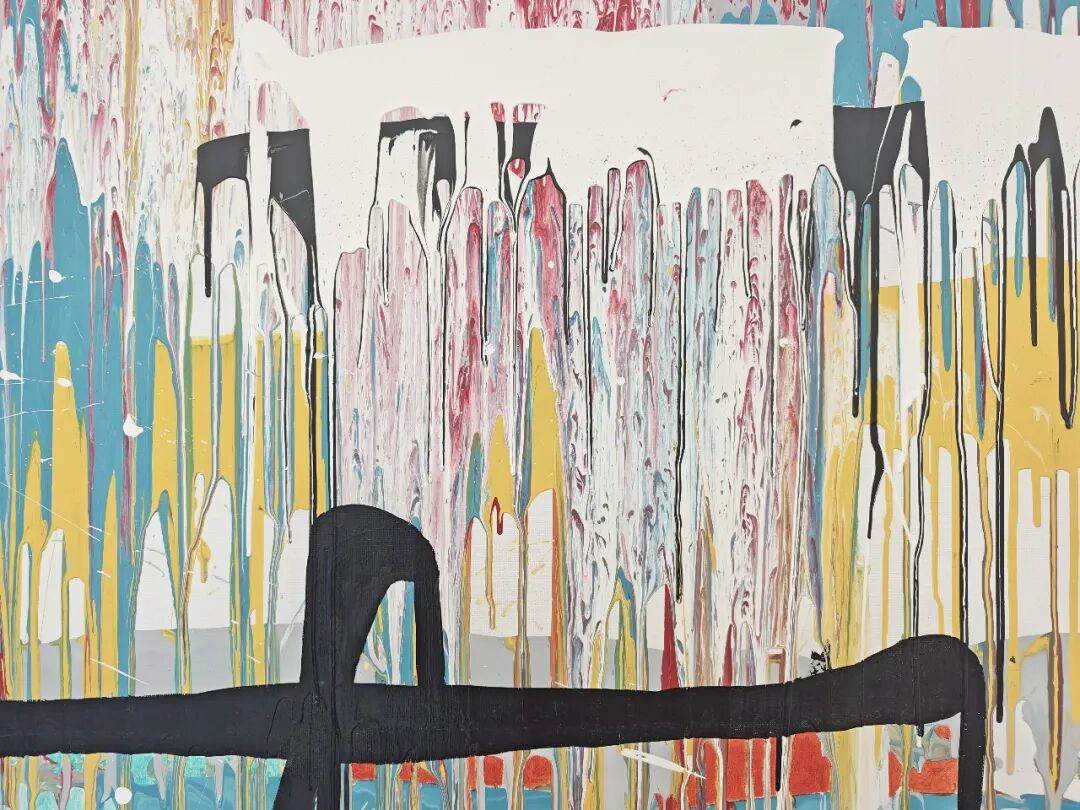
《Matter Life》是一系列包含六幅抽象画的作品,旨在探索生命以及将我们彼此联结在一起的关系。Santiago Zarzosa通过色彩、动态、层次和三维形态,展现了塑造我们存在状态的各种力量。每幅画中都融入了一个汉字,分别对应六个核心概念:生、男、女、爱、力、友。这些作品共同讲述了一个关于“我们是谁”、“我们如何与他人建立联结”,以及“我们之间的关系如何影响周围世界”的故事。作品的色彩灵感源自上海,融合了传统文化元素与当代视觉语言。艺术家巧妙运用重力、流动的颜料以及对比鲜明的结构,构建出一种在秩序与自由、力量与细腻之间游走的画面。每一幅画都是独立的表达,而当它们汇聚在一起时,便构成了一场关于生命、人际联结以及将万物凝聚在一起的能量的深刻反思。
Matter Life is a collection of six abstract paintings exploring life and the relationships that connect us. Through color, movement, layers, and three-dimensional forms, Santiago Zarzosa expresses the different forces that shape our existence. Each painting features a Chinese character representing one of six ideas: Life, Male, Female, Love, Power, and Friend. Together, they tell a story about who we are, how we relate to one another, and how our relationships influence the world around us. Inspired by Shanghai, the color palette brings together traditional cultural references and a contemporary visual language. Using gravity, flowing paint, and contrasting structures, the artist creates compositions that move between order and freedom, strength and sensitivity. Each painting is an individual expression, but together they form a reflection on life, human connection, and the energy that brings everything together.
Janne Berg
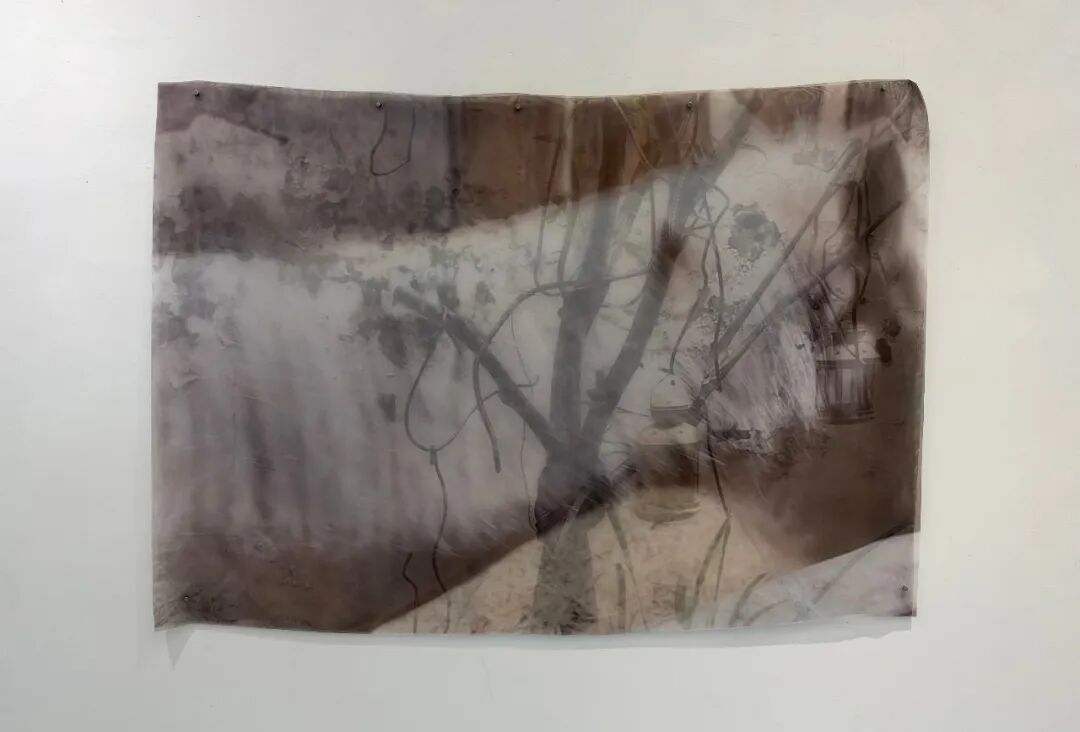
Horse and Lanterns
半透明织物打印 Print on transparent textile
70 x 98 cm
2026, Shanghai
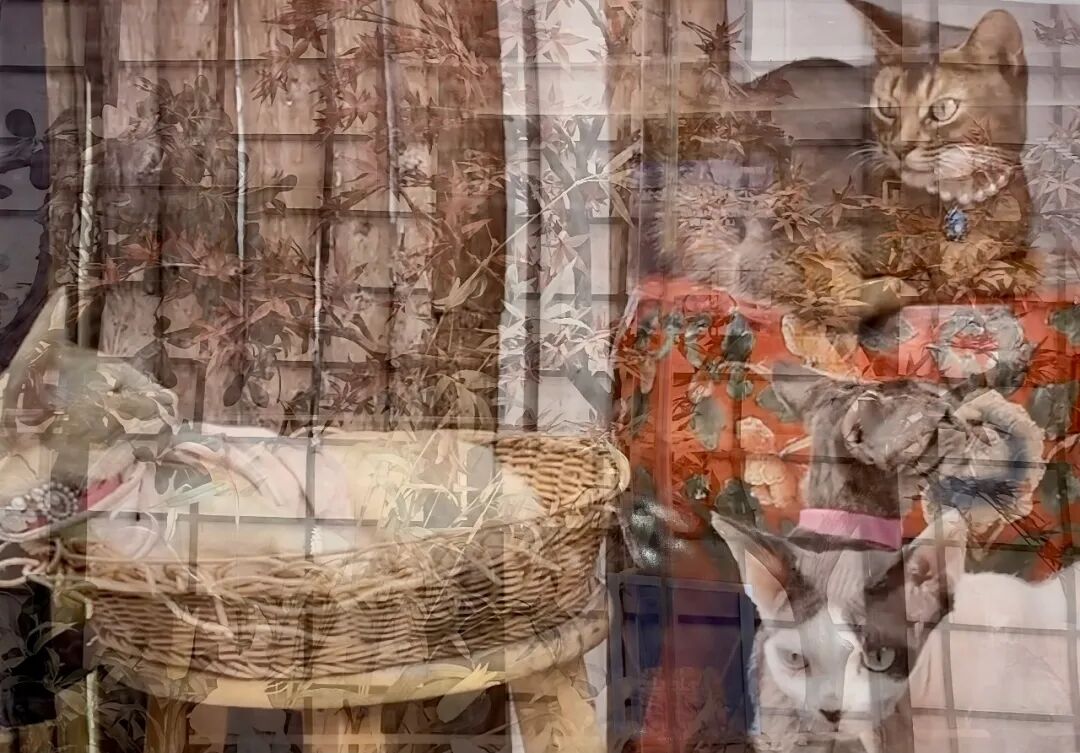
Cats with Pearls
半透明织物打印 Print on transparent textile
70 x 98 cm
2026, Shanghai
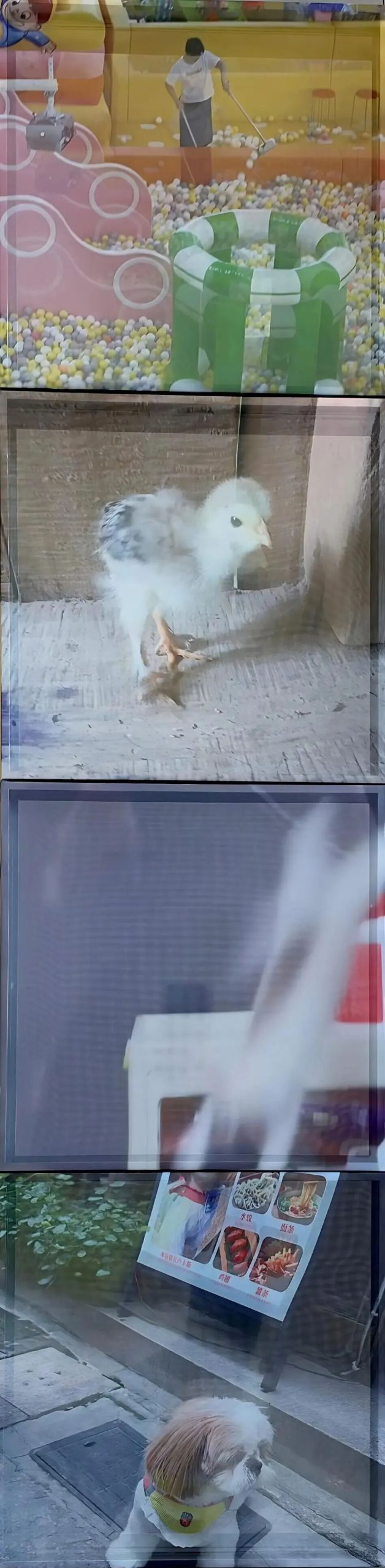
Ball Pit
半透明织物打印 Print on transparent textile, mirror, frame
30 x 30 cm
2026, Shanghai
Little Chicken
半透明织物打印 Print on transparent textile, mirror, frame
30 x 30 cm
2026, Shanghai
Jumping Cat
半透明织物打印 Print on transparent textile, mirror, frame
30 x 30 cm
2026, Shanghai
Lucas
半透明织物打印 Print on transparent textile, mirror, frame
30 x 30 cm
2026, Shanghai
Janne Berg(出生于柏林)是一位常驻纽约的视觉艺术家。她的创作核心通常围绕生物本能、感知以及我们与自然世界之间的关系,尤其是这种关系在人类构建的人造环境中所呈现出的样貌。
自2025年在ACENTRICSPACE驻留以来,Berg一直致力于捕捉那些引起她注意的细微瞬间:在这些瞬间里,动物或自然的碎片仿佛被“置入”了某种场景,显得格格不入。她关注自然与城市之间那种脆弱且有时显得荒诞的共存状态。在城市中,自然很少能以纯粹的“存在”方式出现;它往往是被安置、被驯化,或是被赋予了某种功能。这些安排既流露出某种温情,又透着一丝荒诞,折射出我们选择与动植物共处的方式。
在她的作品中,图像相互重叠却并未完全遮盖彼此,这恰如城市中的自然,总是依附于人造物之上、之后,或是深藏其中。观者仿佛置身于画面之内,成为了这一布局中的又一个“元素”。通过层叠与映射,Berg探讨了自然与人造物之间的边界,以及图像、其所处环境与观者三者之间的界限。
Janne Berg (b. Berlin) is a visual artist based in New York City. Her practice often centres on biological instincts, perception, and our relationship to the natural world in contrast to the artificial environments we construct.
Since her last residency at ACENTRICSPACE in 2025, Berg has been capturing little moments that catch her attention: moments in which animals or fragments of nature are staged and don’t seem to belong. She is interested in the fragile and sometimes absurd coexistence of nature and the city. In the city, nature rarely just exists. It often is placed, trained, or put to work. These arrangements are often affectionate and often a little absurd, and they show how we choose to live with animals and plants.
In the work, images overlap without fully covering one another, the way nature in the city is always on top of, behind, or inside something built. Viewers find themselves inside the picture, as one more figure in the arrangement. Through layering and reflection, Berg explores the boundaries between the natural and the constructed, and between the image, its environment, and the viewer.
潘亭希 Azusa Pan
蜷 Cocoon
行为艺术、空间装 Performance and installation |
亚麻布、织物定型液、鱼线 Linen, fabric stiffener, fishing line
2026
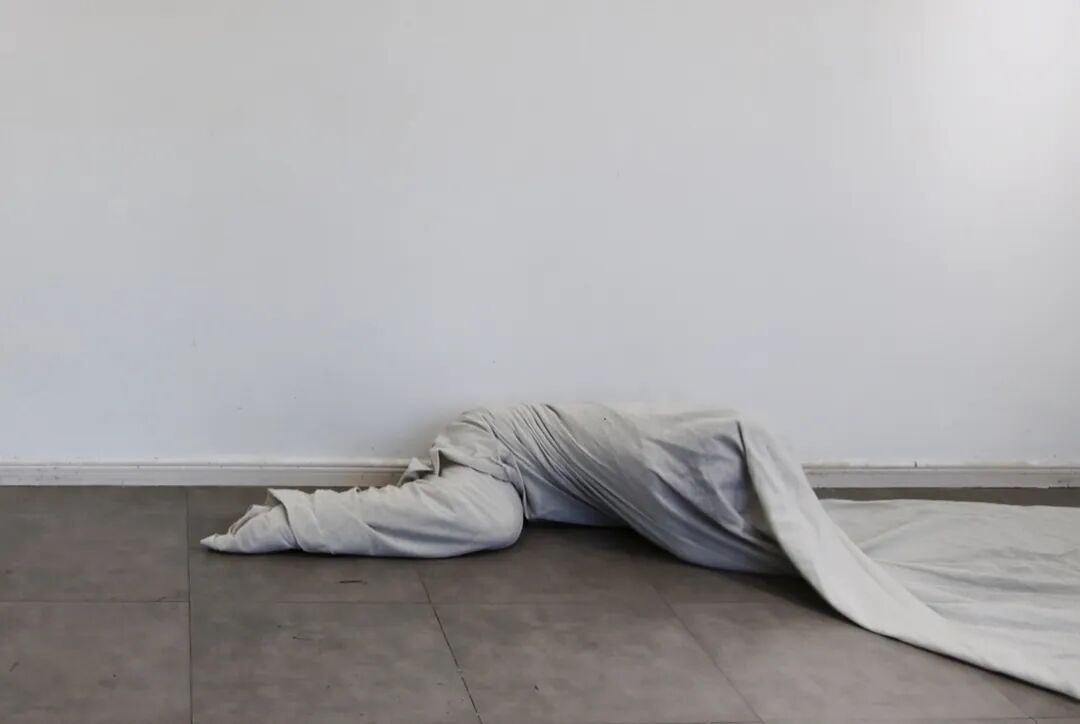
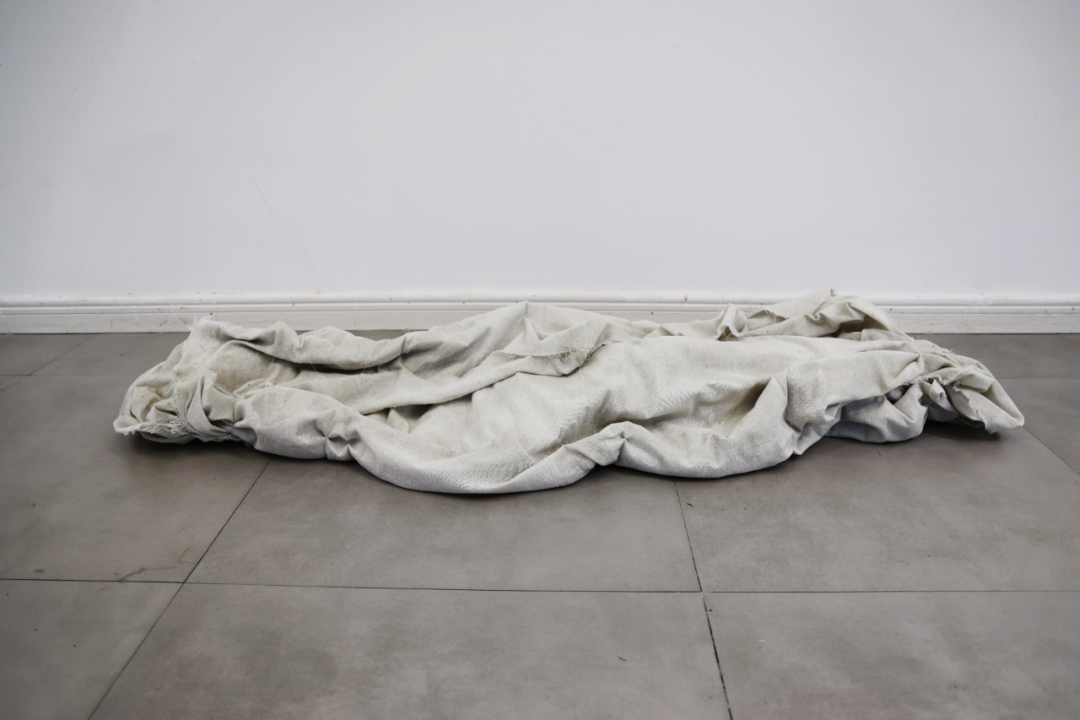
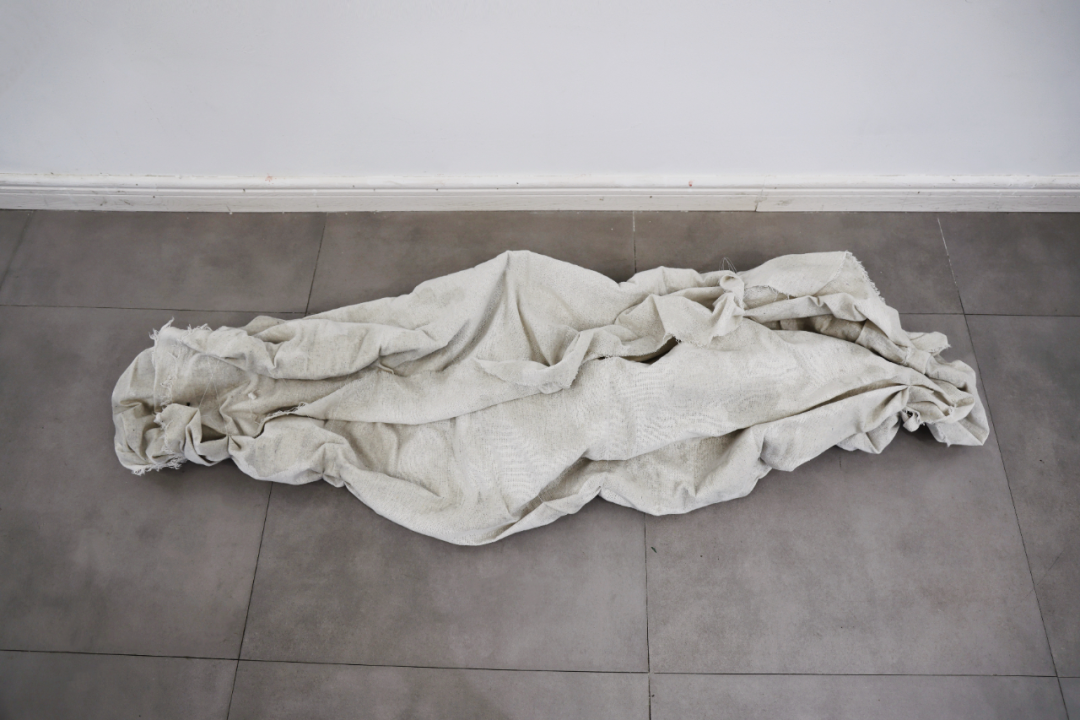
《蜷》是一件探讨自我保护、逃避与束缚的行为及装置作品。作品源于艺术家对自身退缩状态的观察,并参考加斯东·巴什拉《空间的诗学》中关于巢穴、外壳与庇护空间的讨论,进一步探索个体与外部世界之间的边界。
艺术家使用亚麻布将身体完全包裹,以蜷缩和反复滚动的方式拒绝与外界接触。然而,包裹并不意味着真正的安全与平静。身体在获得庇护的同时也受到限制,持续经历压迫、痛苦与挣扎。原本用于抵御外界的保护层,逐渐成为另一种形式的束缚。
行为结束后,艺术家离开织物,使用织物定型液保留其形态,并以透明鱼线将空壳悬挂于空间之中。缺席的身体通过物质痕迹得以延续。《蜷》呈现了逃离与面对、保护与禁锢之间的矛盾,也暗示个体终将离开自我构建的庇护空间。
Cocoon is a performance and installation work exploring self-preservation, withdrawal, and confinement. Emerging from the artist’s reflections on her own experiences of withdrawal, the work references Gaston Bachelard’s The Poetics of Space, particularly his discussion of nests, shells, and spaces of refuge, to examine the boundaries between the self and the external world.
The artist completely encloses her body in linen, curling up and repeatedly rolling across the floor as a gesture of withdrawal and refusal to engage with the outside world. Yet enclosure does not necessarily offer safety or peace. Within this protective structure, the body experiences restriction, discomfort, and struggle. What initially serves as a barrier against the external world gradually becomes another form of confinement.
Following the performance, the artist emerges from the fabric, preserving its form with fabric stiffener and suspending the empty shell with transparent fishing line. The absent body persists through its material traces. Cocoon reflects the tensions between escape and confrontation, protection and confinement, while suggesting the inevitability of leaving a self-constructed refuge.