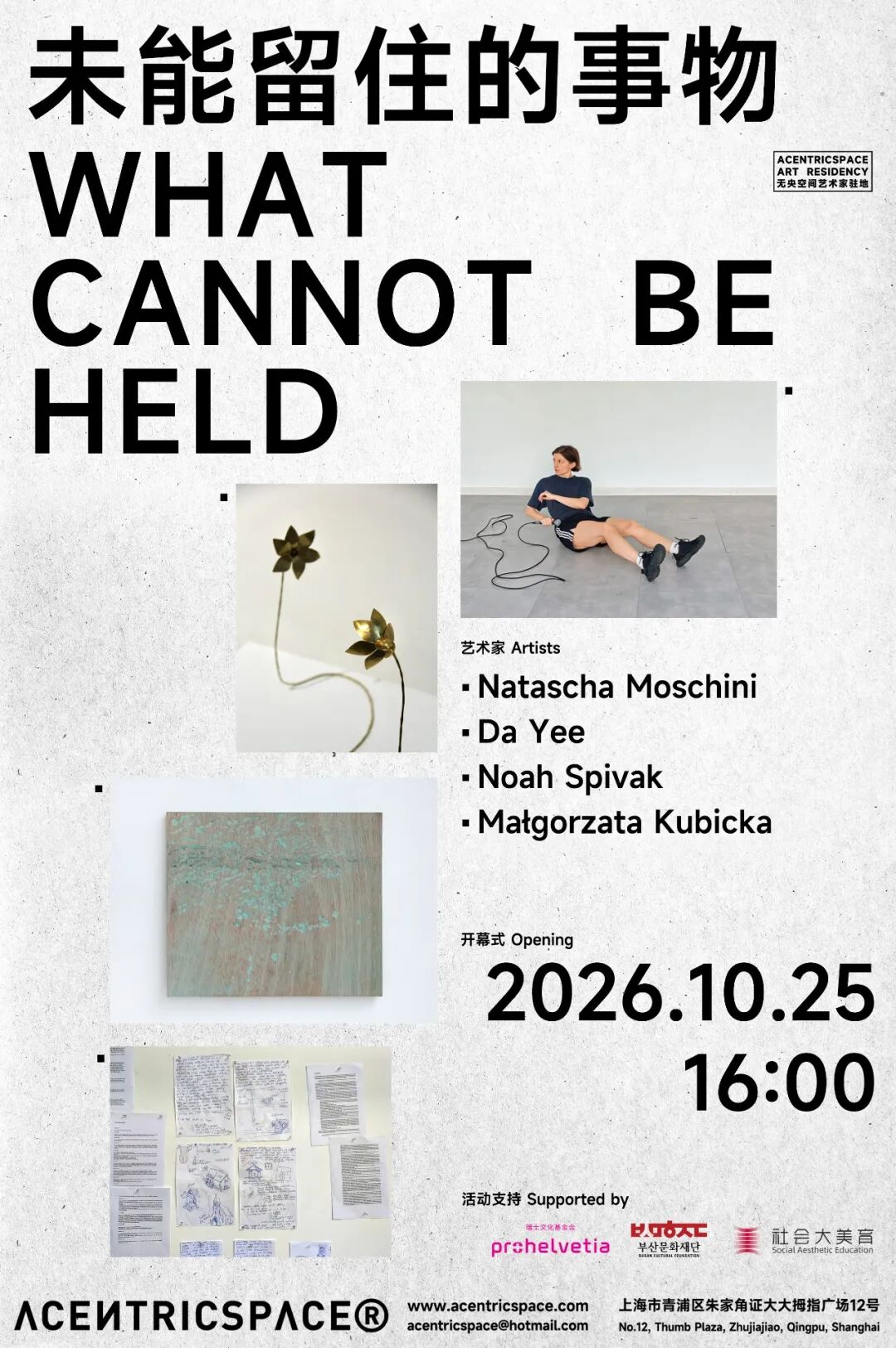
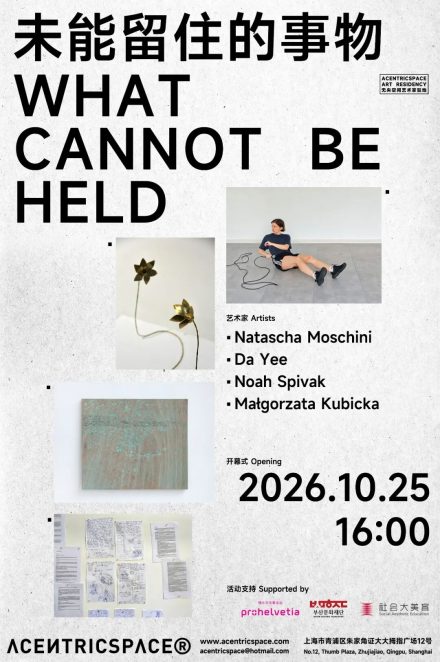
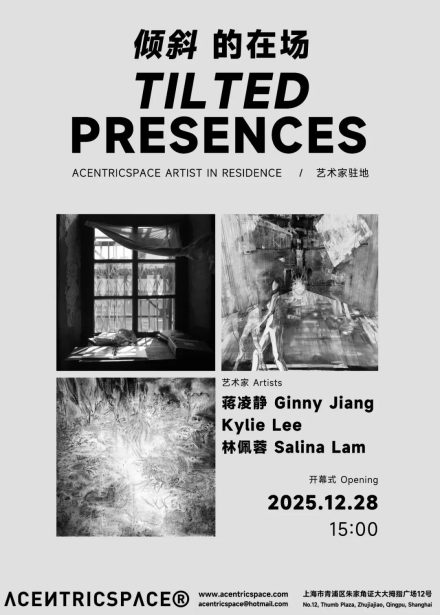
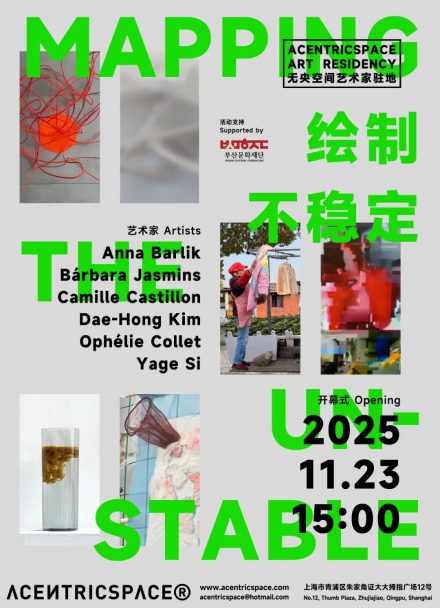
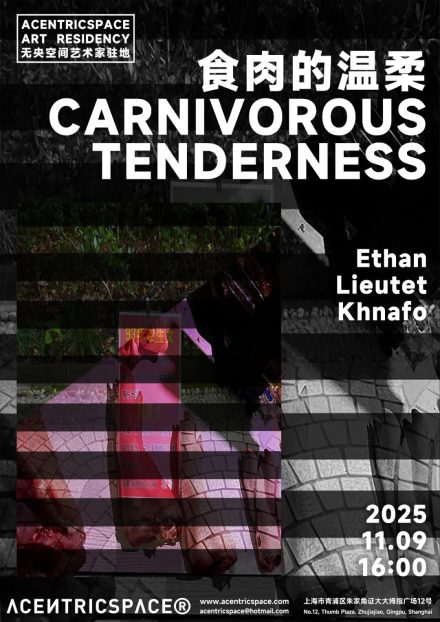
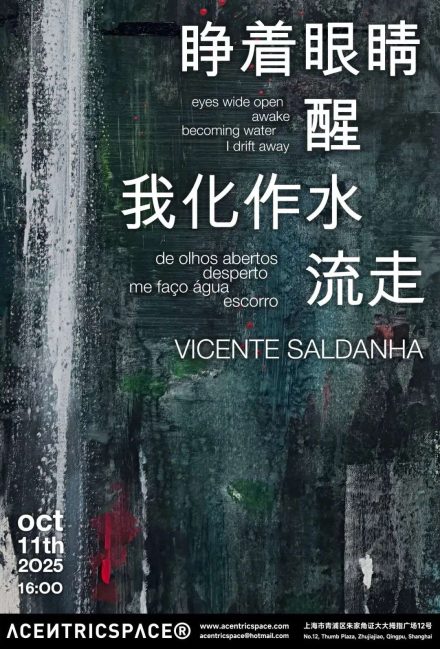
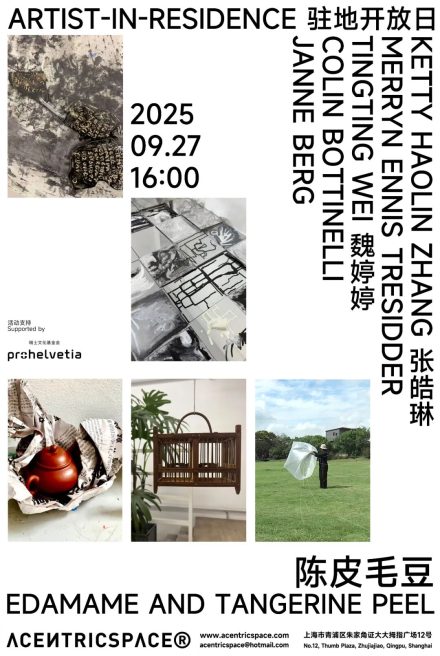
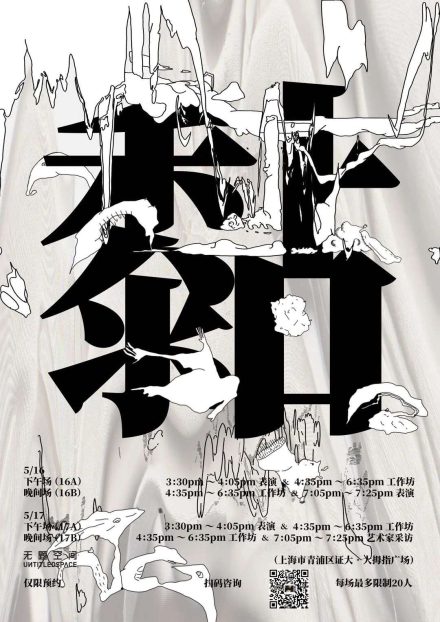
2026 October Artists-in-Residence
Residency Works Open Day
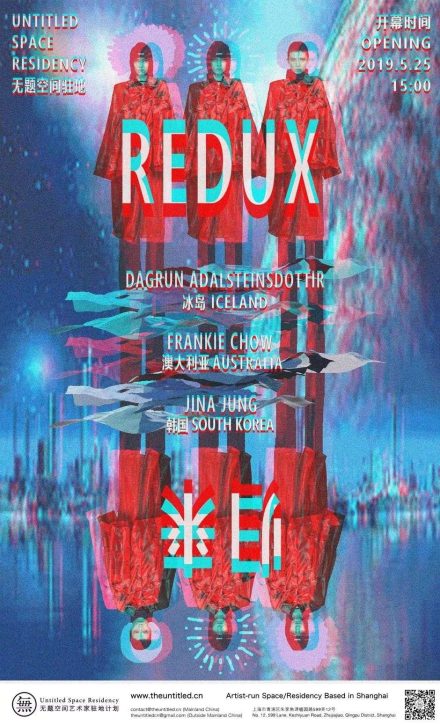
Natascha Moschini
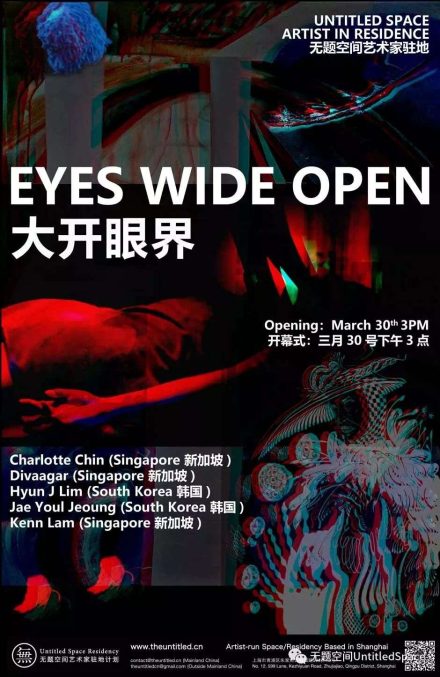
Da Yee
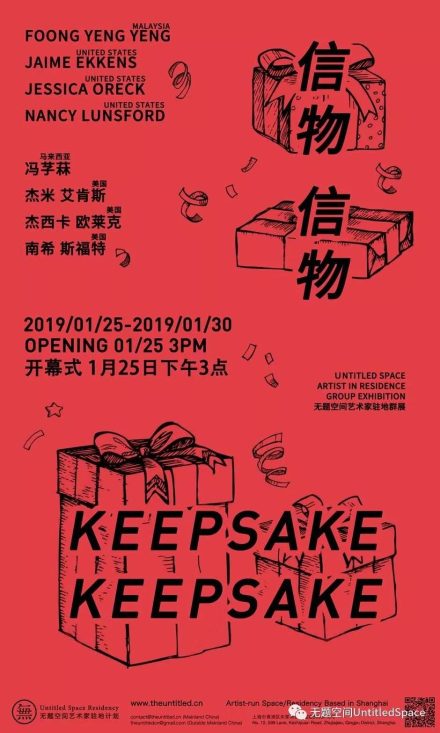
Noah Spivak
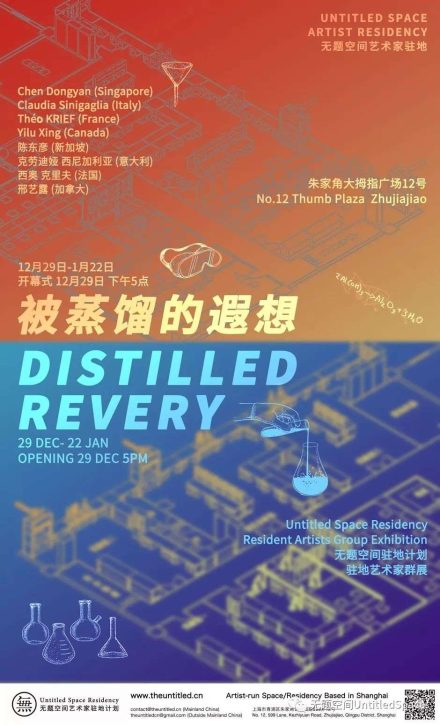
Małgorzata Kubicka
October 25 (Sunday) 16:00, 2026Performative sketch by Natascha Moschini at 17:00
Natascha Moschini的表演在下午5点开始
我们总在试图留住某些事物:自然的形态、消逝的记忆、时间留下的痕迹,以及那些不断塑造着我们的经历。然而,世界始终处于变化之中。我们能够记录、讲述与保存,却无法让一切停留在原处。《未能留住的事物》汇集了四位艺术家在驻地期间的创作与研究。他们从不同的文化背景与个人经验出发,探索时间、记忆、自然与身份如何在持续的变化中留下痕迹。Natascha Moschini从欧洲水精灵Undine的传说与中国妈祖信仰出发,重新思考人类与水、与自然之间既相互依存又日渐失衡的关系。Da Yee借助关于王质观棋的传说,以及木版印刷与染色实践,探索时间的错位、记忆的消逝,以及那些无法被完整传达的经验。Noah Spivak通过缝合、材料实验与表面处理,记录环境与时间带来的细微变化,并思考劳动、迁移与身份之间的联系。Małgorzata Kubicka则通过小说创作与对不同地点的观察,追寻时间在人、建筑与日常生活中留下的印记。水、材料、文字与记忆,在四位艺术家的实践中呈现出不同的面貌,却共同指向一个无法轻易回答的问题:当某些事物不再以原来的形态存在,它们是否真的消失了?或许,留住并不意味着让事物永远停留。那些未能被留住的东西,仍可能以痕迹、记忆或新的形态继续存在,并悄然改变我们理解世界的方式。这一版更适合直接作为公众号导览文章的主体。它保留了四位艺术家的区别,也让标题贯穿全文,没有把每件作品都强行解释成同一个主题。We are always trying to hold on to certain things: the forms of nature, fading memories, the traces left by time, and the experiences that continue to shape us. Yet the world is constantly changing. We can document, recount, and preserve, but we cannot make everything remain as it is.What Cannot Be Held brings together the works and research developed by four artists during their residencies. Drawing on different cultural backgrounds and personal experiences, they explore how time, memory, nature, and identity leave their traces through ongoing processes of change.Natascha Moschini draws on the European legend of Undine to reconsider humanity’s relationship with water and the natural world—a relationship defined by both interdependence and growing imbalance. Through the legend of Wang Zhi, who loses track of time while watching immortals play Go, and her use of woodblock printing and dyeing, Da Yee explores temporal dislocation, fading memories, and experiences that resist communication. Noah Spivak uses stitching, material experimentation, and surface treatments to trace subtle changes shaped by time and environment, reflecting on the connections between labour, migration, and identity. Through her ongoing novel project and observations of different places, Małgorzata Kubicka traces the marks time leaves on people, architecture, and everyday life.Water, materials, words, and memories take on different forms in these four artistic practices, yet they converge on a question that resists easy answers: when something no longer exists in its original form, has it truly disappeared?Perhaps to hold on to something does not mean keeping it unchanged forever. What cannot be held may continue to exist as traces, memories, or transformed forms, quietly reshaping the ways we understand the world.
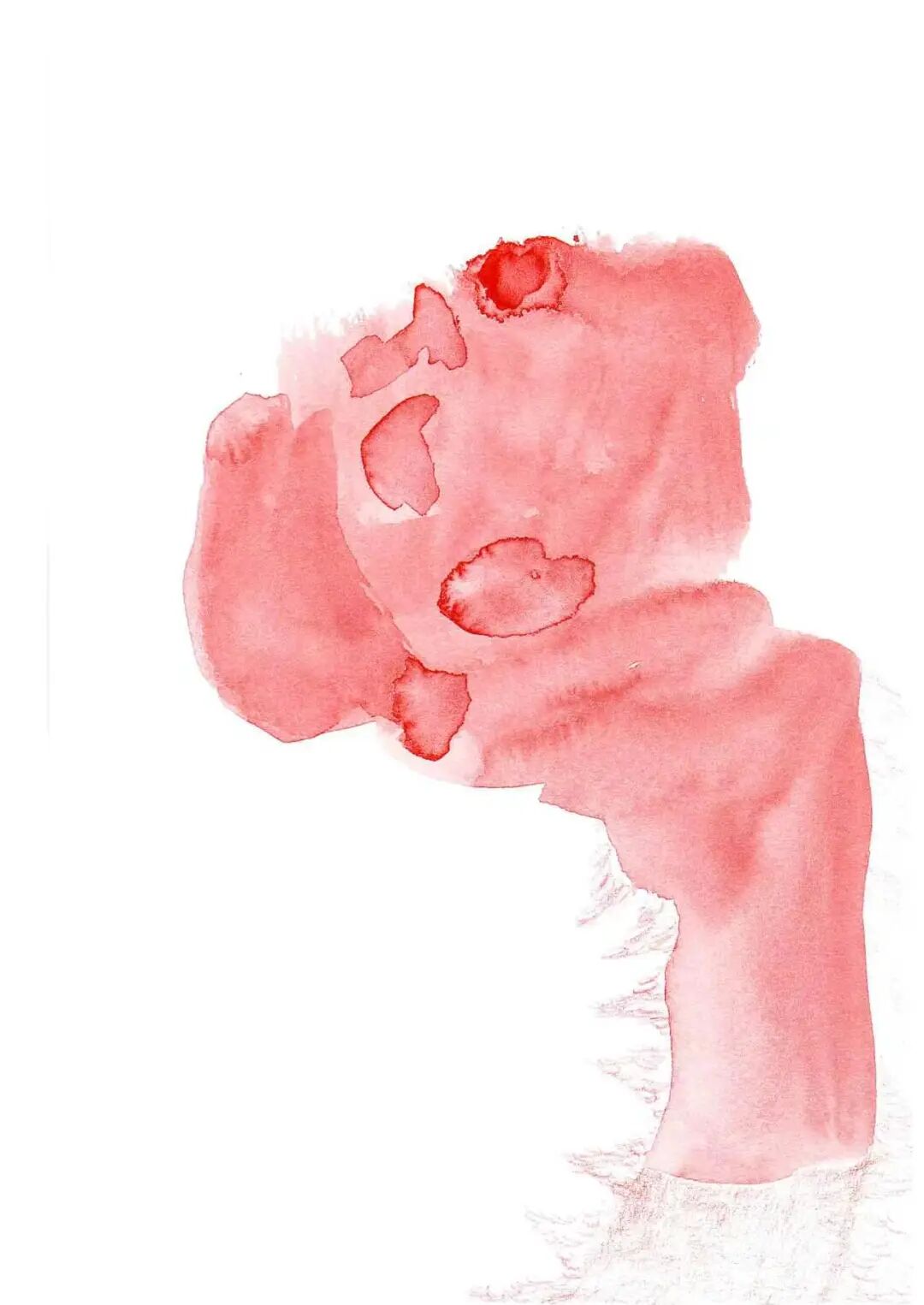
Natascha Moschini
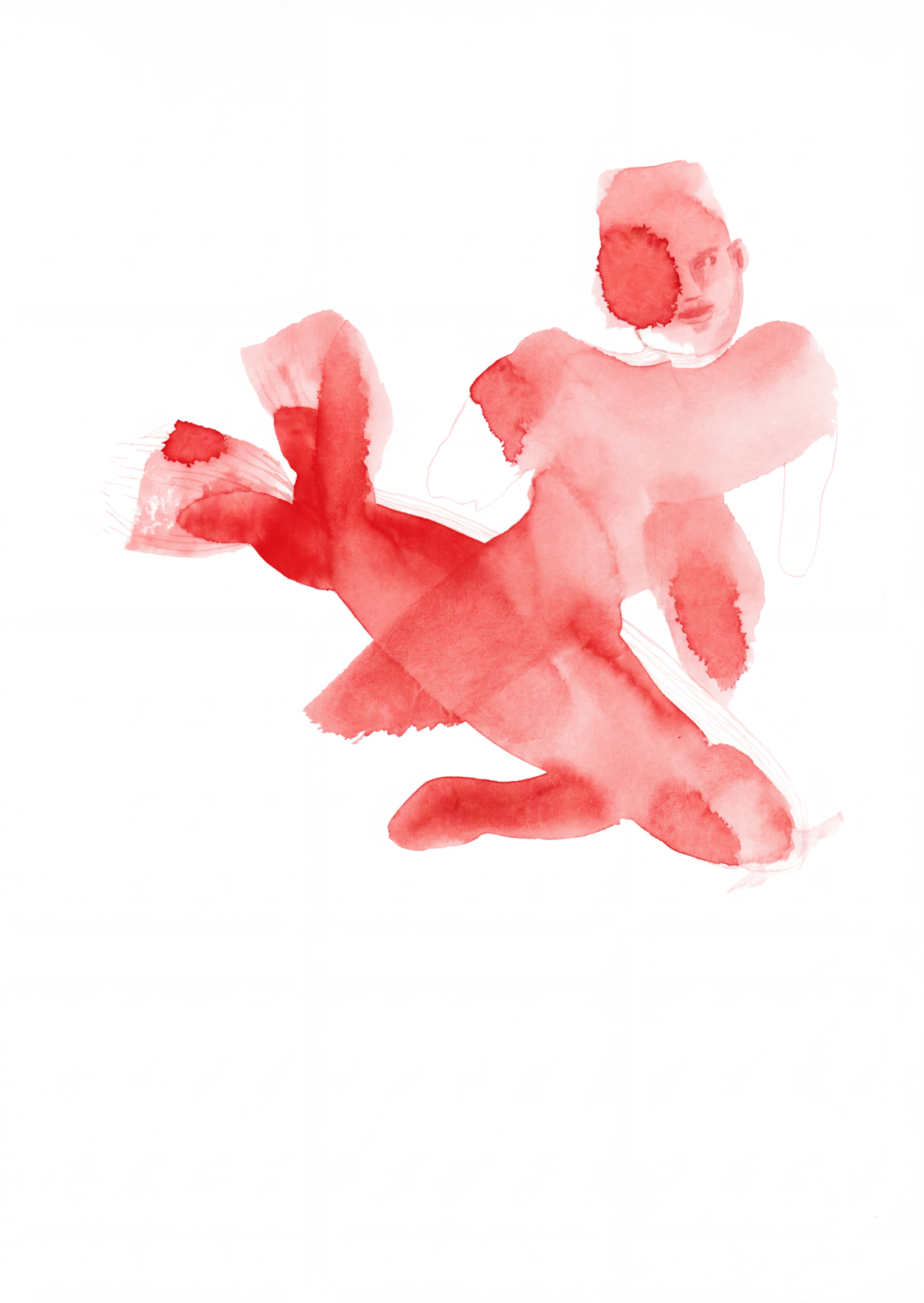
Study
纸上水彩 Watercolor on paper
19 x 27 cm
2026
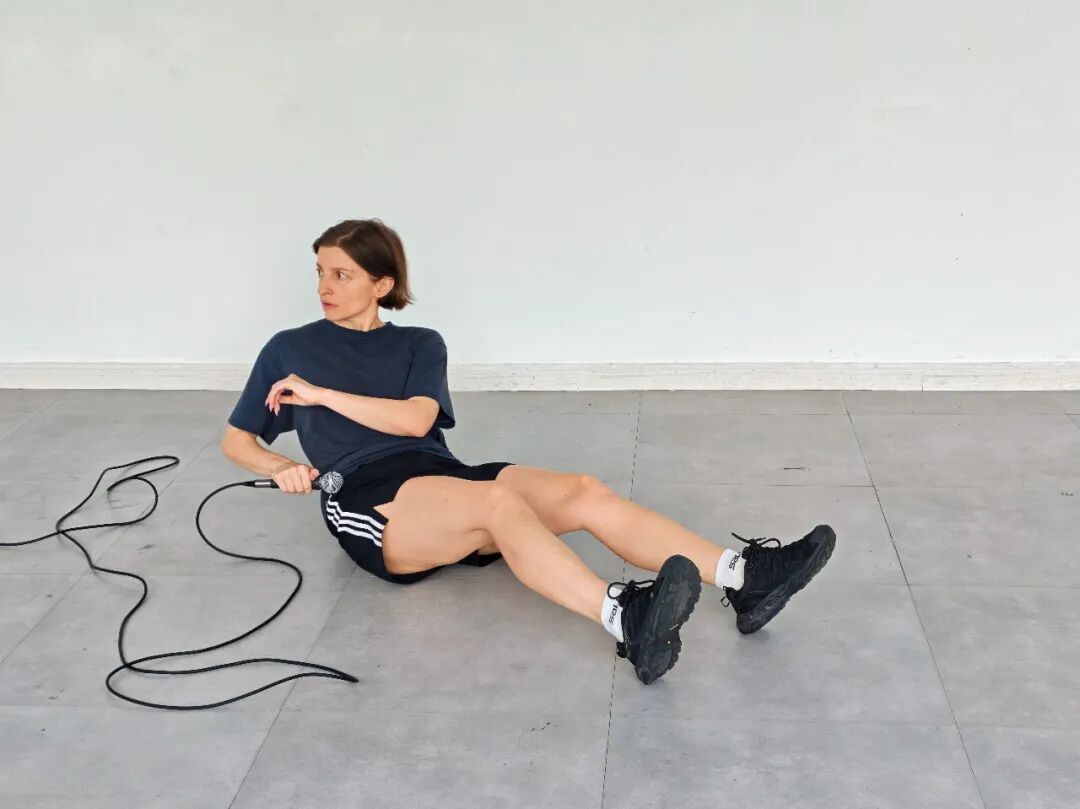
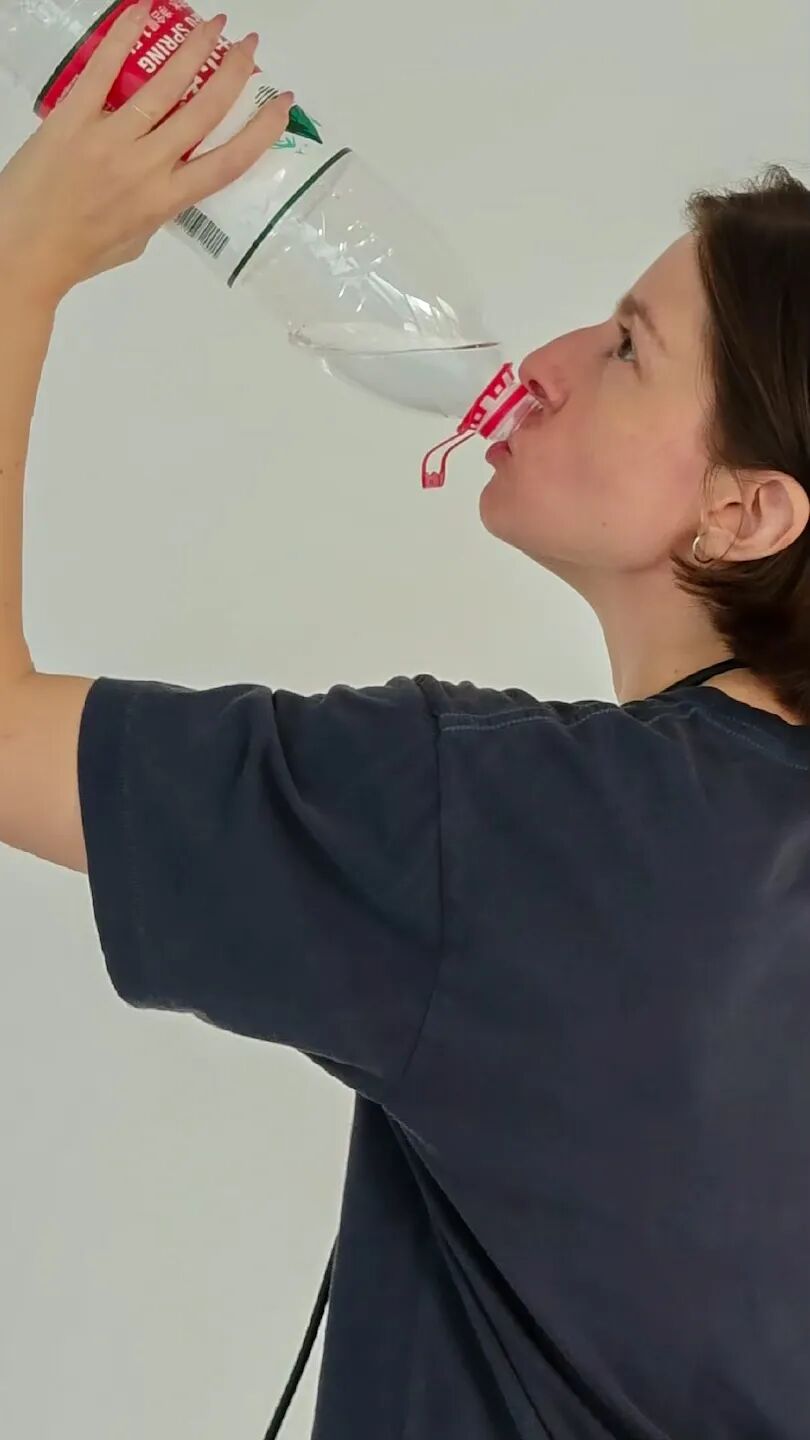
在瑞士文化基金会上海办公室的支持下,Natascha Moschini在中国进行了为期三个月的驻地创作。期间,她通过各种故事与传说,探索了人类与水体之间的关联。她的切入点是“Undine”,欧洲民间传说与文学中一种水之精灵,象征着悲伤、渴望与警示。在传说中,Undine因与一名凡人男子成婚而获得了灵魂,却最终遭到了对方的背叛。由此,Moschini将目光转向了妈祖,另一位与水紧密相连的女性形象,但她所代表的并非失落,而是守护。妈祖本是渔家女,擅长游泳;在一次海难中,她救出了自己的父亲与兄弟,此后便受到人们的尊崇与供奉。随后,她的研究将她引向了古老的水乡,朱家角。这座城镇在很大程度上依托于与水相关的景观和旅游业。镇上的“放生桥”建于1571年,其名源自“放生”,在佛教传统中,这被视为一种慈悲之举,能够积攒功德。这些故事勾勒出人类与自然之间的复杂关系:水既能赋予生命,也能夺去生命;我们既依赖于水,却又在不断地开发与利用它。基于这些研究,一个“当代Undine”的形象应运而生。Moschini借此探讨了我们在这种无法逃避的依赖关系中所承担的责任与负罪感,旨在引发人们对这些观念的重新审视。此次驻地期满后的开放日,通过一系列表演练习及纸上绘画作品,呈现了她的研究成果。During her three-month residency in China with Pro Helvetia Shanghai, Natascha Moschini explored how we relate to bodies of water through stories and tales. Her starting point was Undine, an elemental water spirit from European folklore and literature, a figure of grief, longing and warning. In the tale, Undine gains a soul by marrying a mortal man, who then betrays her.From there, Moschini turned to Mazu, another female figure bound to water, but one of protection rather than loss. Mazu was a fisherman’s daughter and an excellent swimmer, who came to be venerated after saving her father and brothers from the sea.Her research then led her to the old water town of Zhujiajiao, which lives largely from water-based attractions and tourism. The town’s Fangsheng Bridge, built in 1571, takes its name from fangsheng, “releasing fish”, an act understood in Buddhist tradition as a gesture of mercy that earns merit.These stories describe our relationship with nature: water gives and takes life, we depend on it, and yet we exploit it. Out of this research emerges a contemporary Undine, through which Moschini seeks to unsettle our ideas of responsibility and guilt within a dependency we cannot escape.The end-of-residency exhibition opens up her research through performative sketches and drawings on paper.Supported by Pro Helvetia Shanghai, the Swiss Arts Council
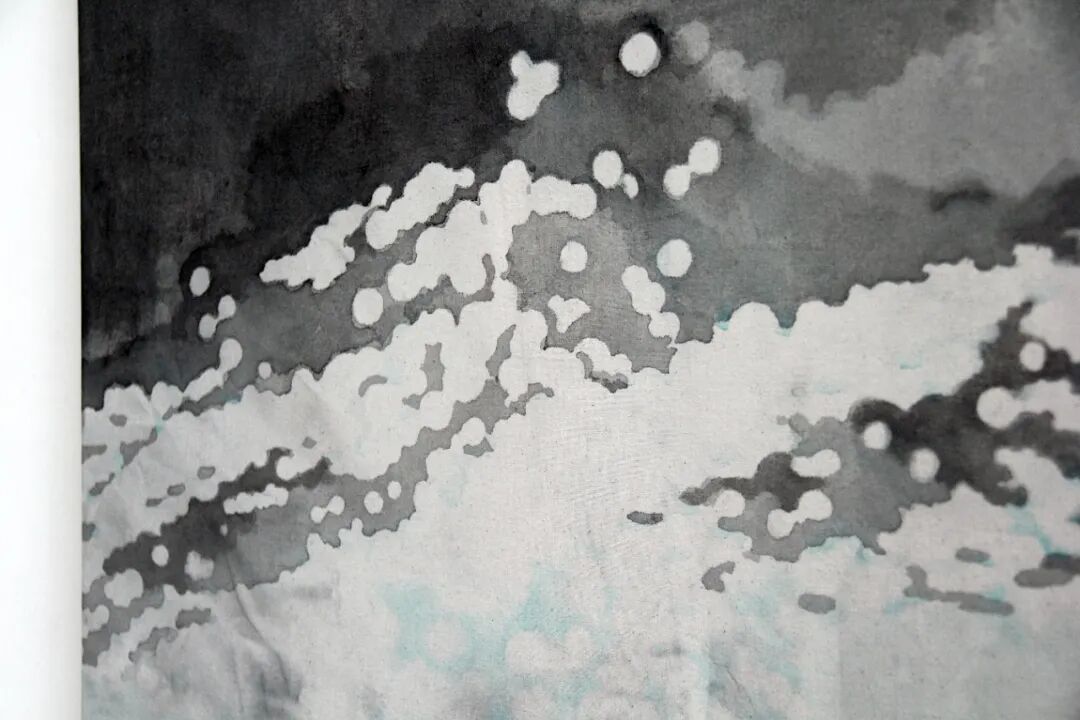
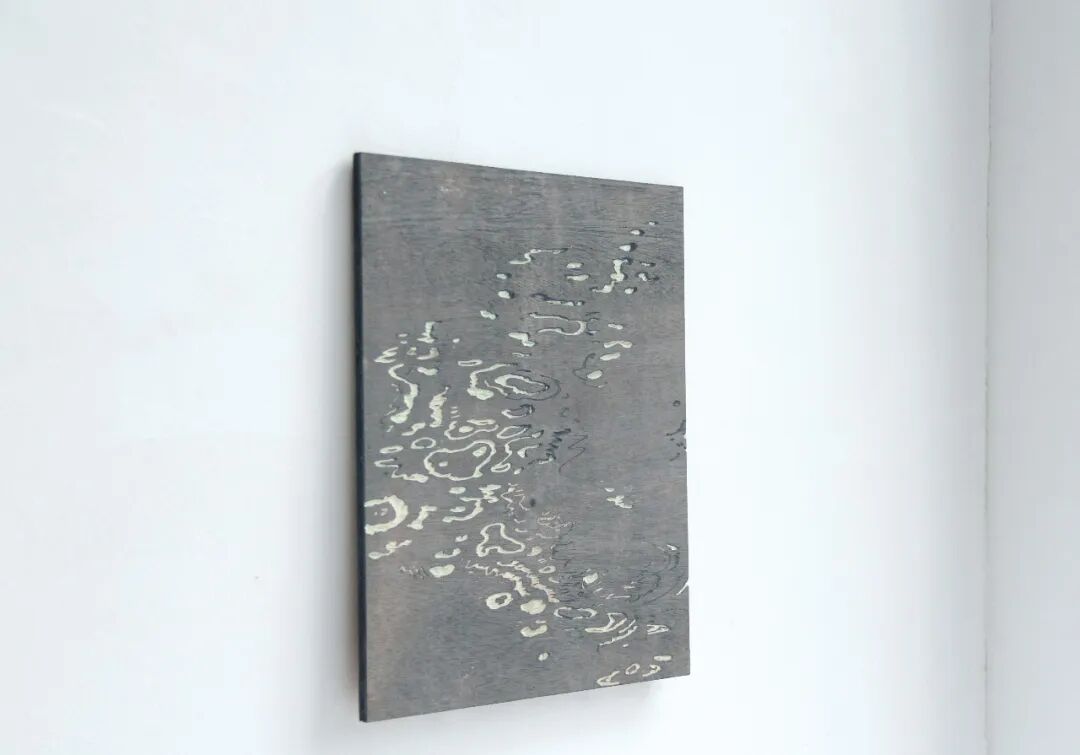
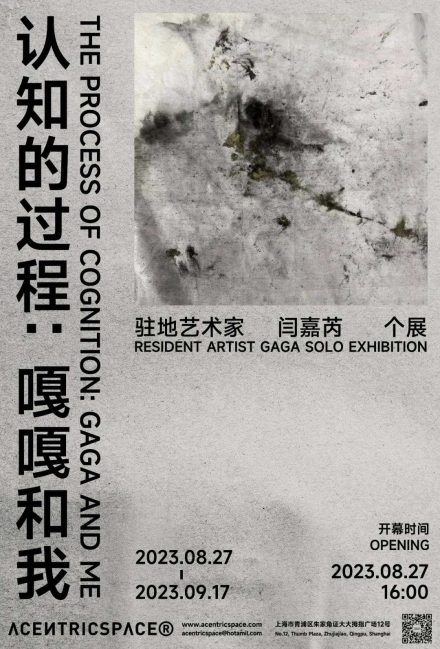
Da Yee
这系列作品取材于中国关于“王质”与围棋的传说:王质在观看仙人下棋时,虽觉不过片刻,人间却已过去多年;待他归来,曾经熟悉的世界早已消逝。在韩国口头文学中,也存在着类似的“时间倒错”主题。Da Yee将这一主题置于中国传统水乡朱家角的背景下,进行了重新构想。
Da Yee以一位从釜山来到朱家角的“局外人”视角切入故事。在此过程中,沟通的障碍让她意识到,有些意义是无法仅通过语言来传达的。通过面部表情、肢体动作及周边环境来解读意义的经历,引发了她对“在水下无法清晰传播的声音”的想象:当水面之上的日常生活照常进行时,水面之下或许还存在着另一个世界及其故事,而这一切是我们所未知的。上海飞速更迭的城市景观与朱家角仿佛停滞的过去,交织出一种“时间重叠”之感。水,既是连接不同地点的通道,也是掩藏记忆的屏障。
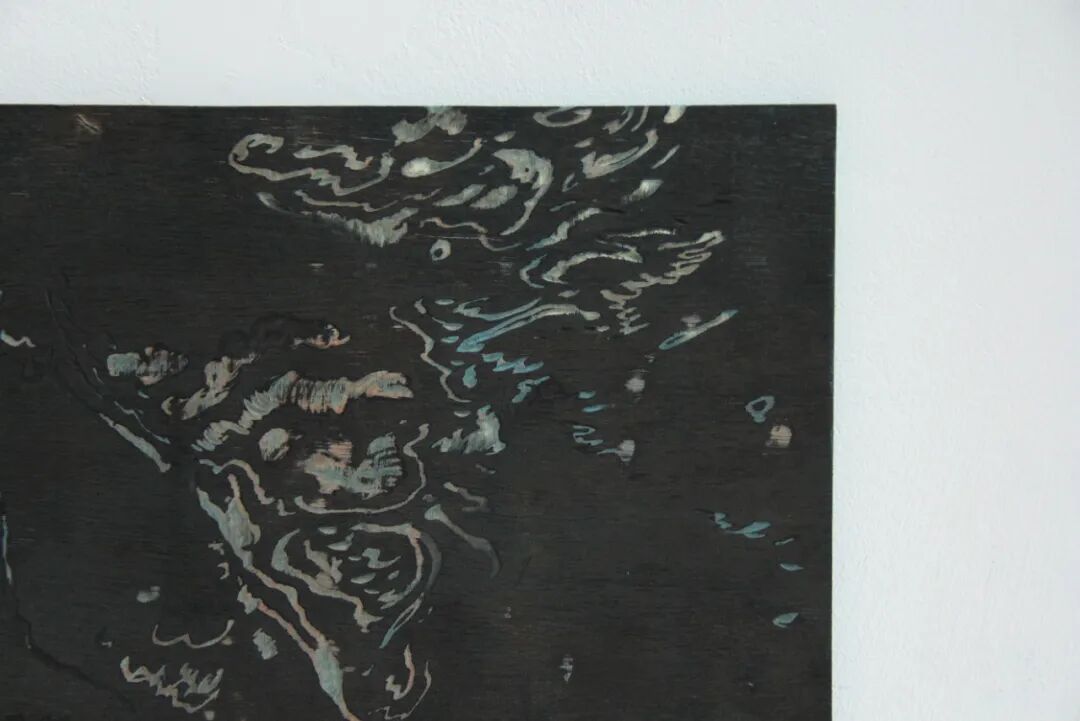
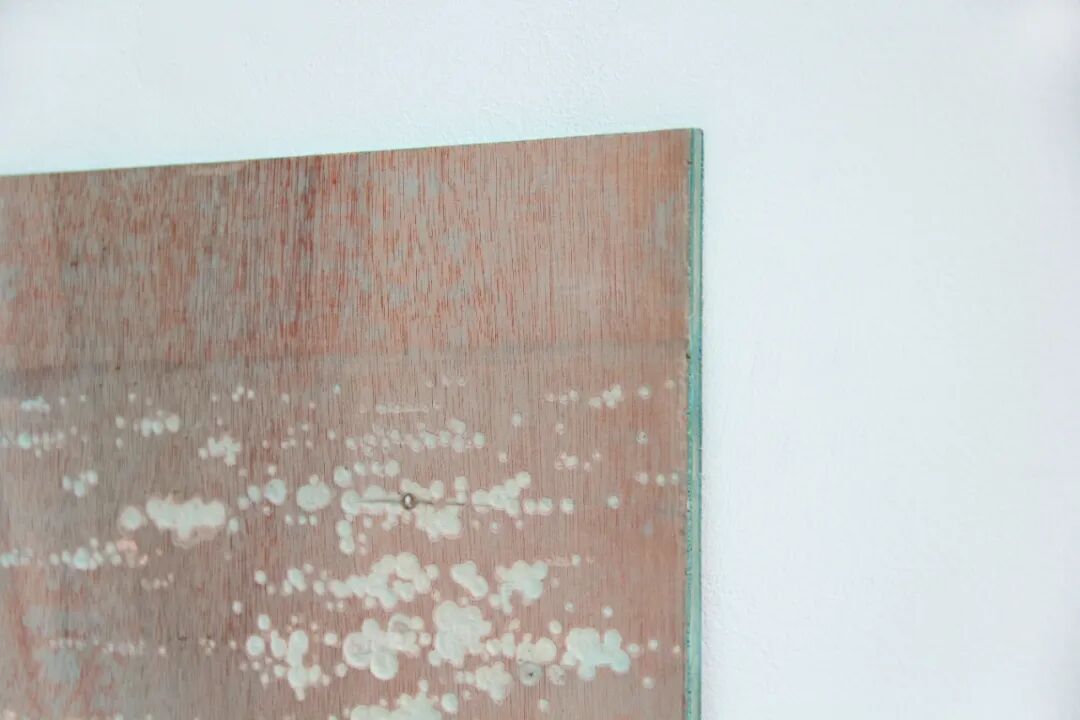
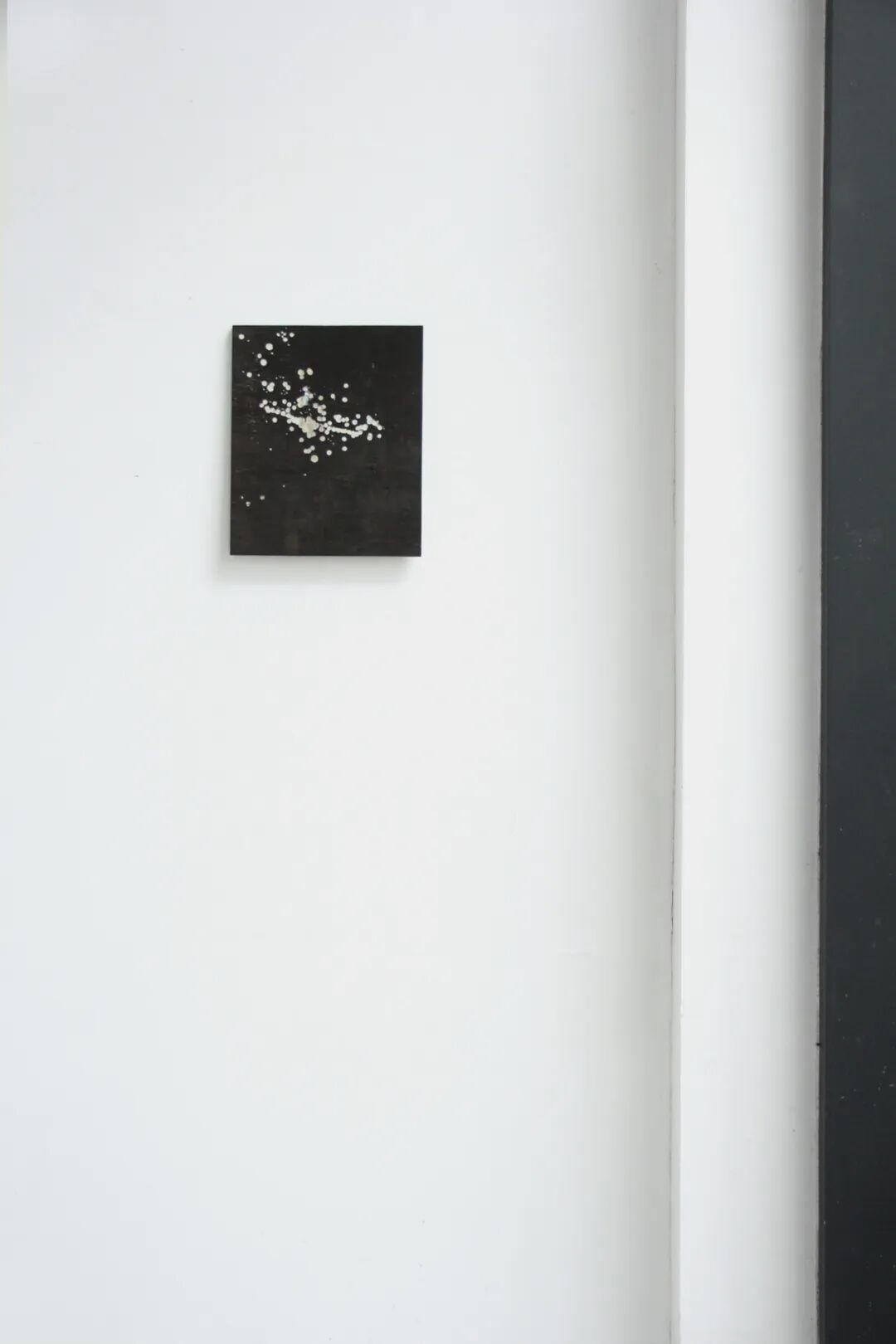
这种时间的重叠与记忆的流转,通过木版印刷与染色工艺获得了物质形态。在雕刻、剥离与重绘的过程中,手部的动作留下了痕迹,而原有的形态或随之消失,或与新图像重叠交融。染色工艺亦然,通过在织物上反复施色,层层叠叠的色彩与痕迹得以累积。这两种技艺皆将身体动作记录于物质之上,展现了记忆如何随时间推移而积淀与转化。
作品中反复出现的、描述围棋落子声的语句,使故事保持了一种开放性的结局。水道的布局、观察的视角,以及阅读过程中不断浮现的声音,共同构建出一个不同时空交汇的场域。留白之处,既是那个已消逝世界的遗迹,也蕴含着某种尚未被认知的世界的可能性。文字虽能唤起那些缺席的声音与景象,但经由阅读所重构的世界,终究无法与真实的生活经验完全重合。Da Yee正是试图通过这一缝隙,去唤回那些消逝的场所、未曾传达的故事,以及它们之间所留下的空间。
This work draws on a Chinese legend about Wang Zhi (王質) and a game of Go. While watching immortals play Go for what seems a brief moment, many years pass in the human world. Upon returning, Wang Zhi finds that the world he once knew has disappeared. A similar motif of reversed time appears in Korean oral literature. Da Yee reimagines this motif within the setting of Zhujiajiao (朱家角), a traditional water town.
Da Yee approaches the story from the perspective of an outsider visiting Zhujiajiao from Busan. The difficulties of communication encountered there drew attention to meanings that cannot be conveyed through language alone. Experiences of interpreting meaning through facial expressions, gestures, and surrounding circumstances led to an imagining of sounds that cannot travel clearly underwater. While daily life continues above the surface, another world and its stories may exist beneath the water, beyond our knowledge. The rapidly changing urban landscape of Shanghai and the seemingly suspended past of Zhujiajiao evoke a sense of overlapping times. Water becomes both a route connecting places and a surface that conceals memory.
These overlapping times and shifting memories take material form through woodblock printing and dyeing. Through carving, peeling, and redrawing, the movements of the hand leave traces, while earlier forms disappear or overlap with new images. Dyeing similarly builds up layers of color and traces through repeated applications of color to fabric. Both techniques record bodily actions on material and reveal how memory accumulates and transforms over time.
The story remains open-ended through the repetition of sentences describing the sound of Go stones. The arrangement of waterways and viewpoints, together with the recurring sounds encountered through reading, constructs a scene where different times and places intersect. Blank spaces remain as both the site of a vanished world and the possibility of a world not yet known. Written language evokes absent sounds and landscapes, yet the world reconstructed through reading never fully corresponds to lived experience. Through this gap, Da Yee seeks to evoke vanished places, stories that remain uncommunicated, and the spaces left between them.
Supported by Busan Cultural Foundation
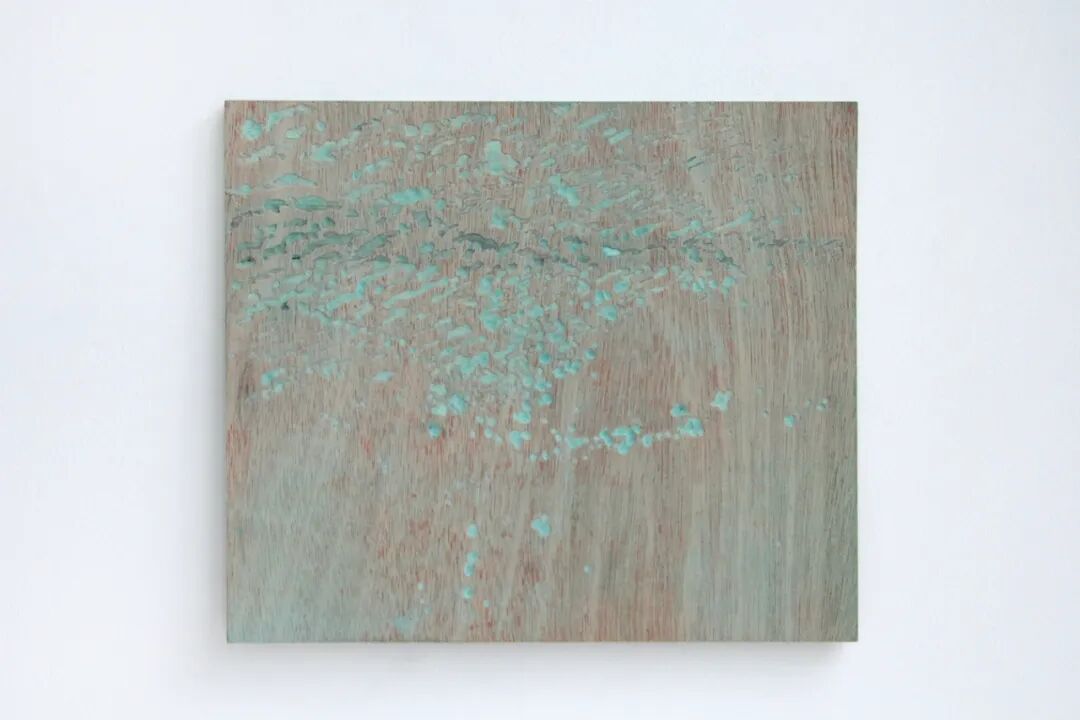
Noah Spivak
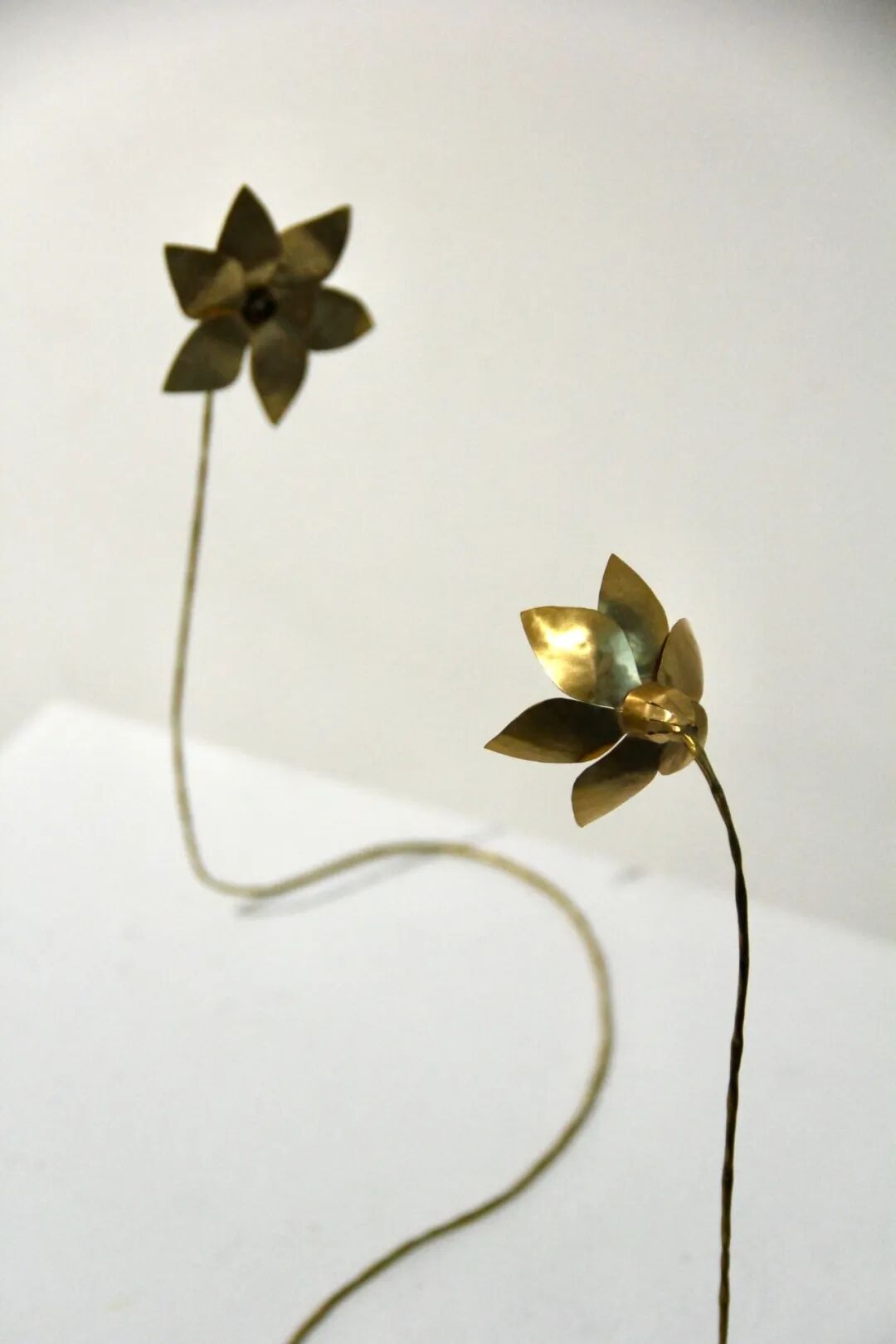
a model for ‘the lovers’
黄铜 brass
30 x 12 x 25cm
2026
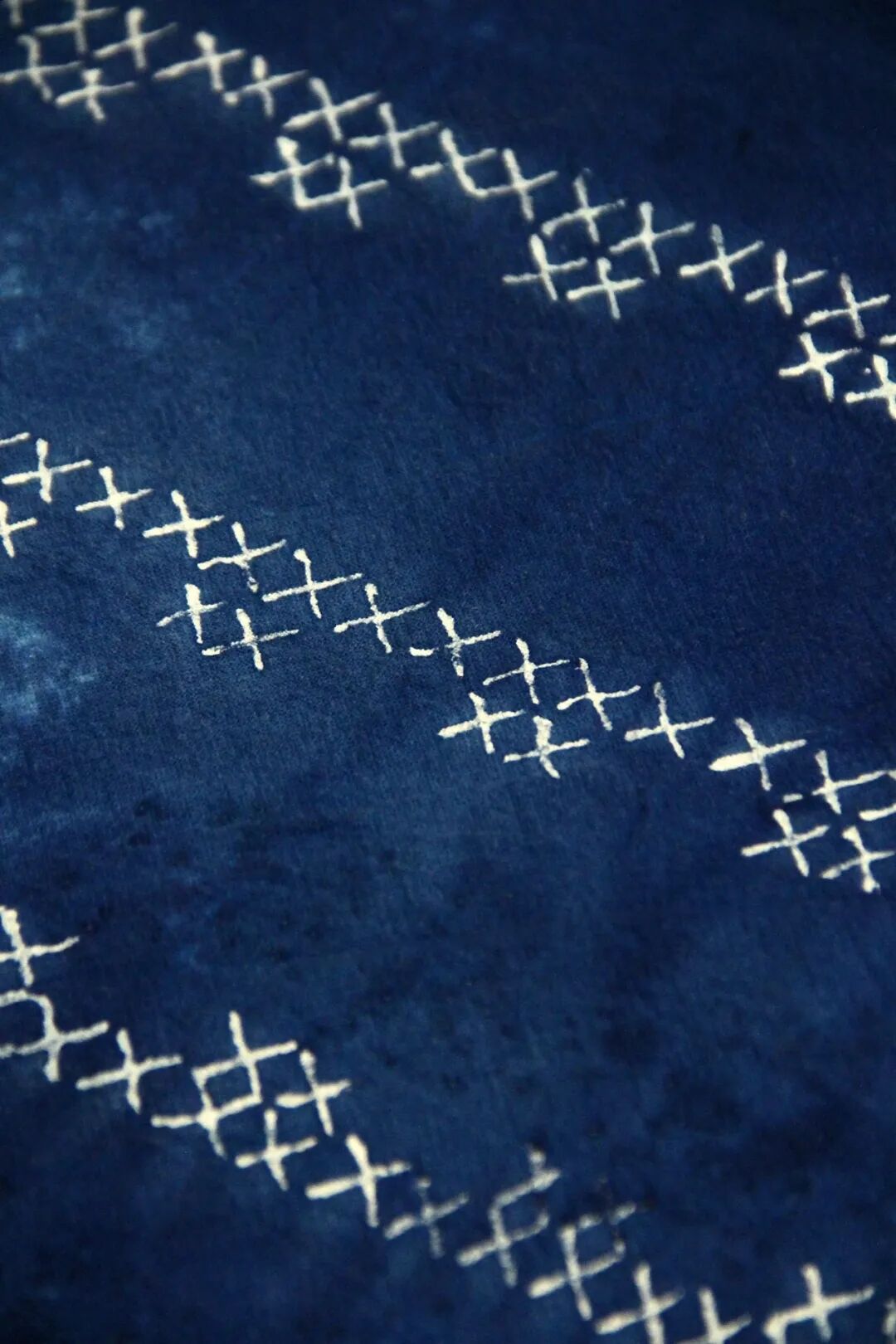
detail of Rushnyk VI
亚麻布上手工“缝制”的蓝晒作品 hand “stitched” cyanotype on linen
30 x 220cm
2026
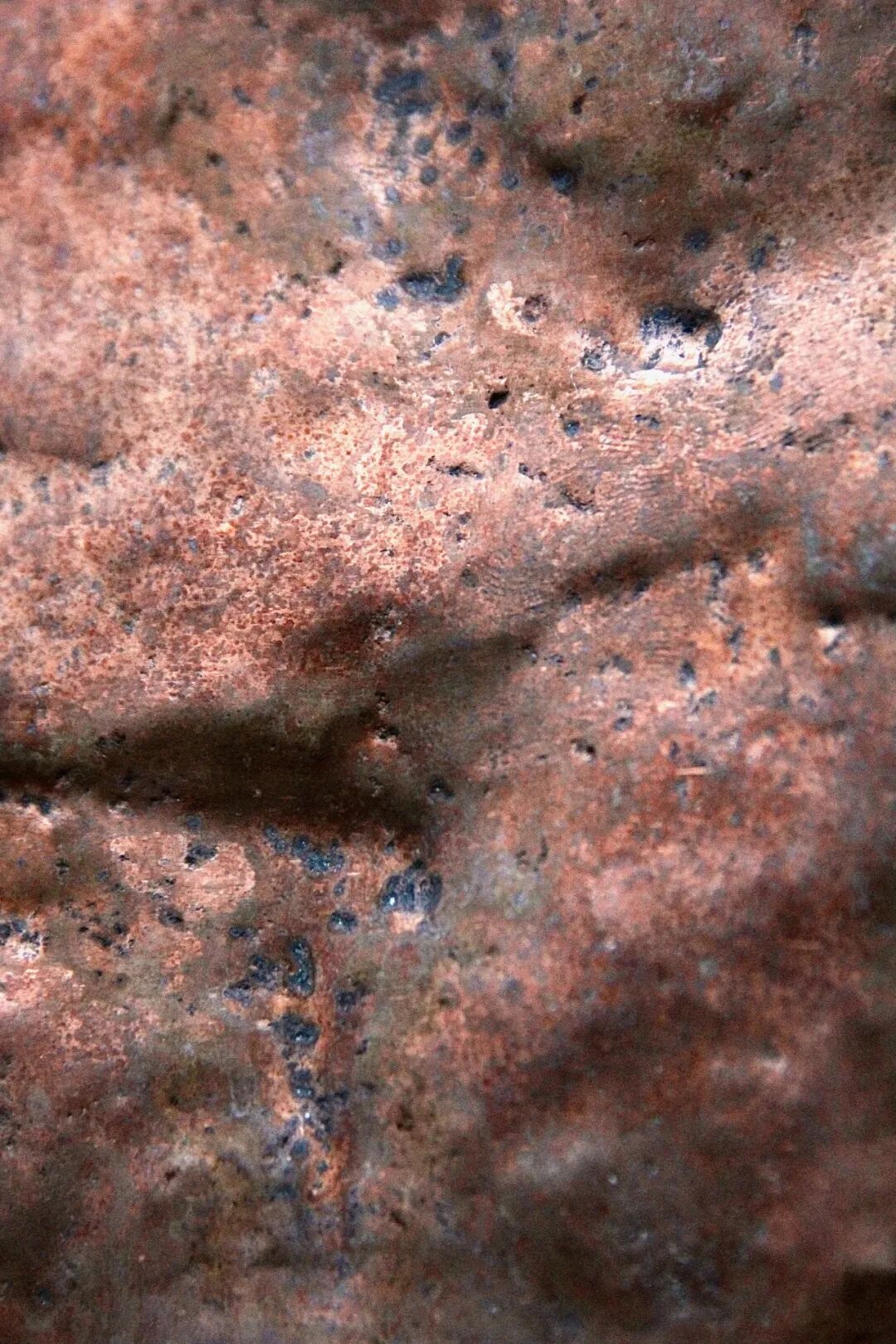
detail of teach me to speak slow (of Zhujiajiao)
从周边地区收集的纹理样本,经锤击铜片制成,体现天气与丝线质感
hammered copper tiles of collected texture samples from surrounding area, weather, thread
20 x 40cm
2026
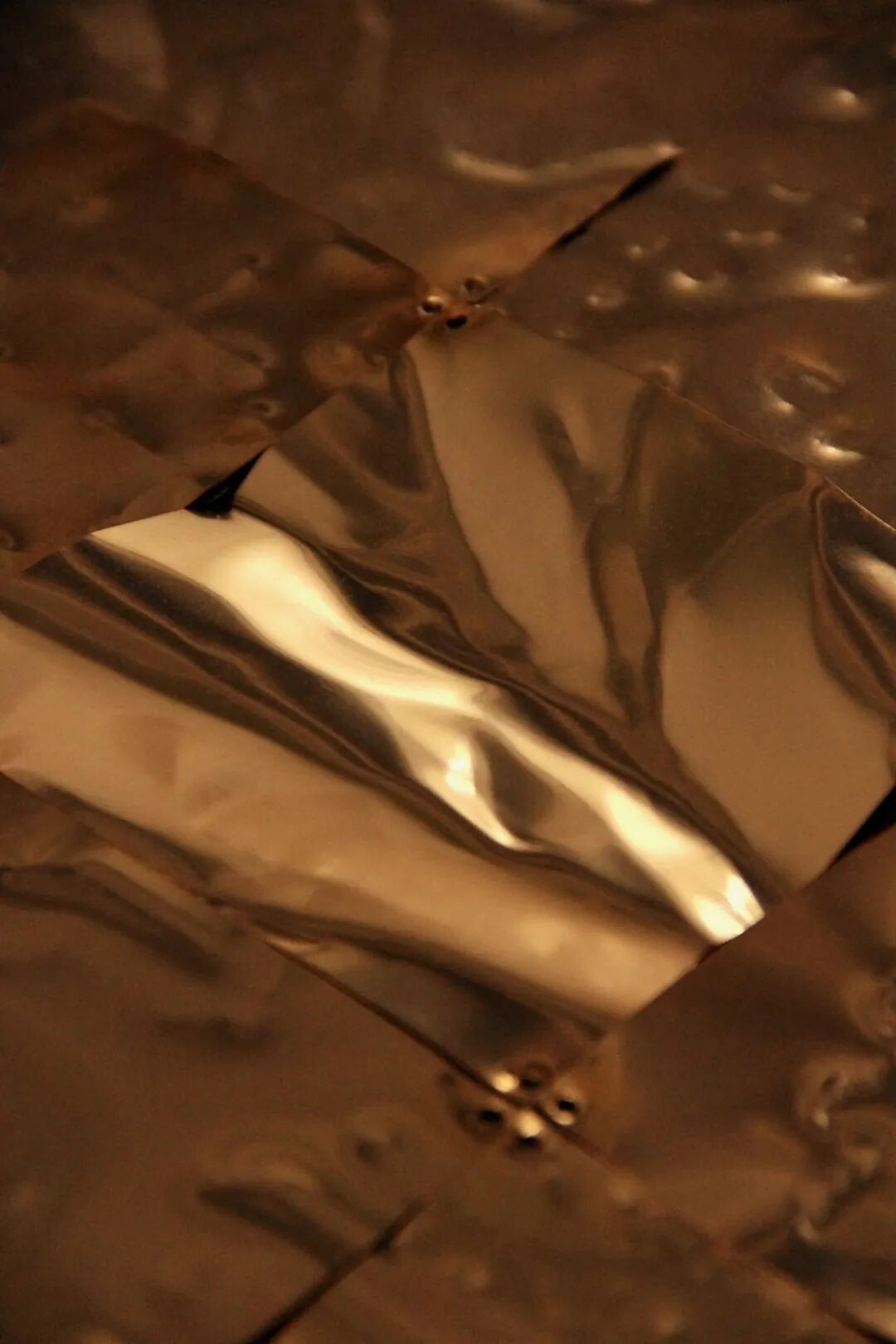
detail of teach me to speak slow (from Zhujiajiao)
从周边地区收集的纹理样本制成的锤击铜片;醋酸、氨水、硫酸铜、柠檬酸铁铵、热、亚铁氰化钾、花生油、唾液淀粉酶、氯化钠、碳酸钠、氢氧化钠、氨基磺酸、硫磺、尿素、线
hammered copper tiles of collected texture samples from surrounding area; acetic acid, ammonia, copper sulphate, ferric ammonium citrate, heat, potassium ferricyanide, peanut oil, salivary amylase, sodium chloride, sodium carbonate, sodium hydroxide, sulfamic acid, sulphur, urea, thread
2026
Spivak是一位加拿大籍乌克兰裔视觉艺术家,目前居住在所谓的“澳大利亚”。他的创作实践多围绕材料实验展开,旨在打造以过程为导向的艺术作品,并强调“转化”与“衰变”的主题。他常扮演一种“促成者”的角色,引导那些环绕在我们周围、却因隐而不见或演变过于缓慢而难以被察觉的自然过程。他在作品的形式与呈现方式中运用“重复”这一视觉手段,以此展现这些系统所蕴含的复杂性与微妙之处。通过这种方式,艺术家与物质展开合作,审视自我与环境之间那道渗透性的边界。
在ACENTRICSPACE驻地期间,Spivak持续探索乌克兰传统的家庭手工技艺(如刺绣和拼布),同时对“场所”这一概念进行了更广泛的思考,探讨我们的身体(进而延伸至我们的身份)如何随着环境的变迁而发生转变。我们究竟是主动选择适应,还是被迫在环境所迫下做出改变?身处这种“夹缝”状态,Spivak开始思考:我们该如何记录下这些几乎难以察觉的细微变迁?他被“古镇”及其周边地区独特的表面与纹理所吸引,并延续了他一贯的探索,在时间的物质记录中发掘意义。通过反复缝合、收集并构建出具有质感的浮雕,以及运用天然或化学手段营造出的“包浆”,他将这些创作行为汇聚在一起,以此反思并呈现他在驻留期间所感知到的种种变化。在这批作品中,斯皮瓦克通过对“劳动”的具象与情感层面的描绘,展开了一场关于“自我”如何(再次)寻回自我的探索。
Spivak is a Canadian-Ukrainian visual artist, currently based in so-called Australia. Much of his practice surrounds material experimentation to create process-driven artworks that emphasise transformation, and decay. The artist often acts as a facilitator to the natural processes that surround us but remain out of sight or are too slow to witness. He utilises repetition in his work, in both form and display, as a visual tool to help present the complexity, and nuance, of these very systems. In this way, the artist collaborates with matter to examine the porous boundary between the self and the environment. During Spivak’s time at ACENTRIC, he has focused on continuing his exploration of domestic Ukrainian craft practices, such as embroidery and quilting, while thinking more broadly on the idea of “place” and how our bodies (and by extension our identities), shift with the change in surroundings. Do we choose to adapt or are we forced into it by circumstance? Stuck somewhere in-between, Spivak found himself pondering how we might record these almost imperceivable shifts. Drawn to the many surfaces and textures that make the Ancient City and local area so distinct, he continued his ongoing obsession of discovering meaning in the physical record of time. Acts of repeated stitching, collecting and forming textured reliefs, and the use of both natural and chemical patinas, come together as ways to reflect on and imbue the changes felt by the artist amidst his residency period. The literal and emotional depiction of labor is used by Spivak across this body of work as he investigates his self finding its self (again).
Małgorzata Kubicka
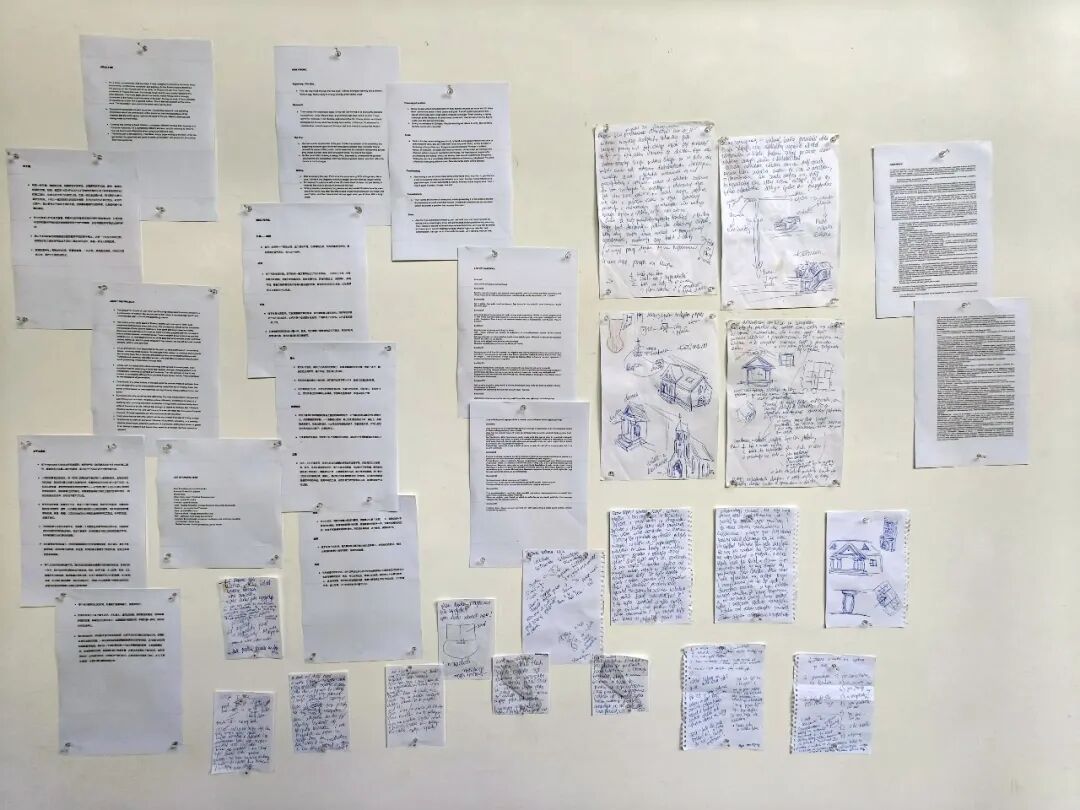
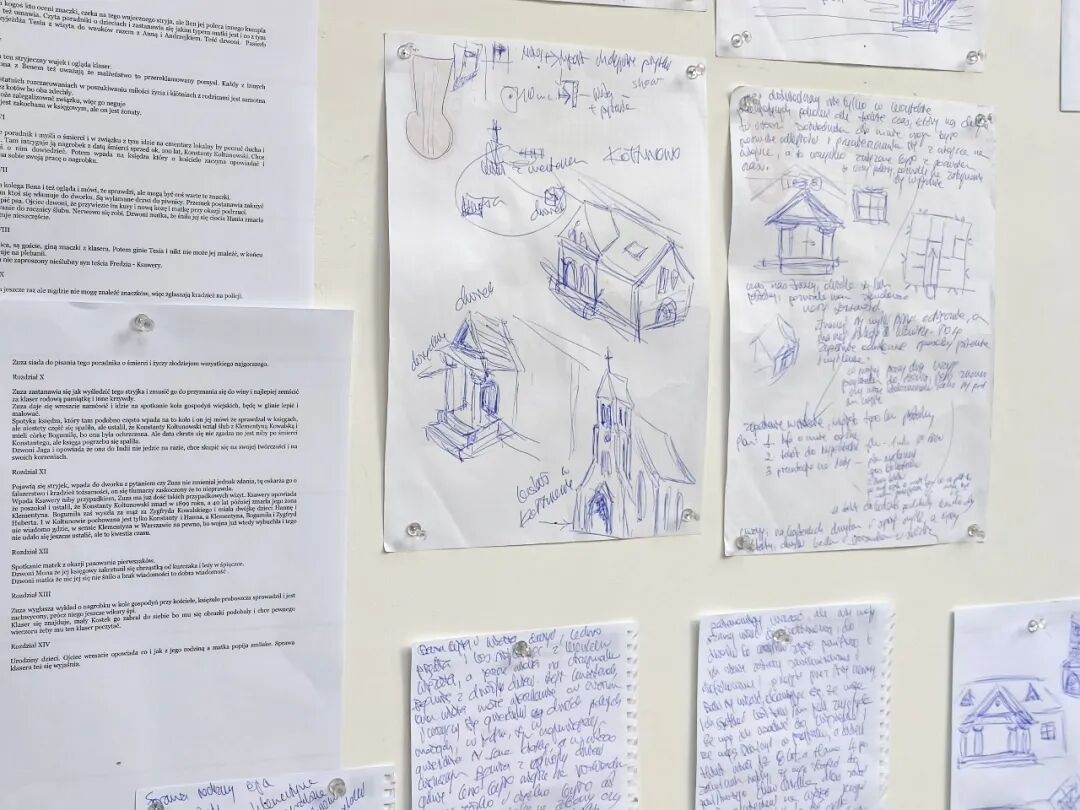
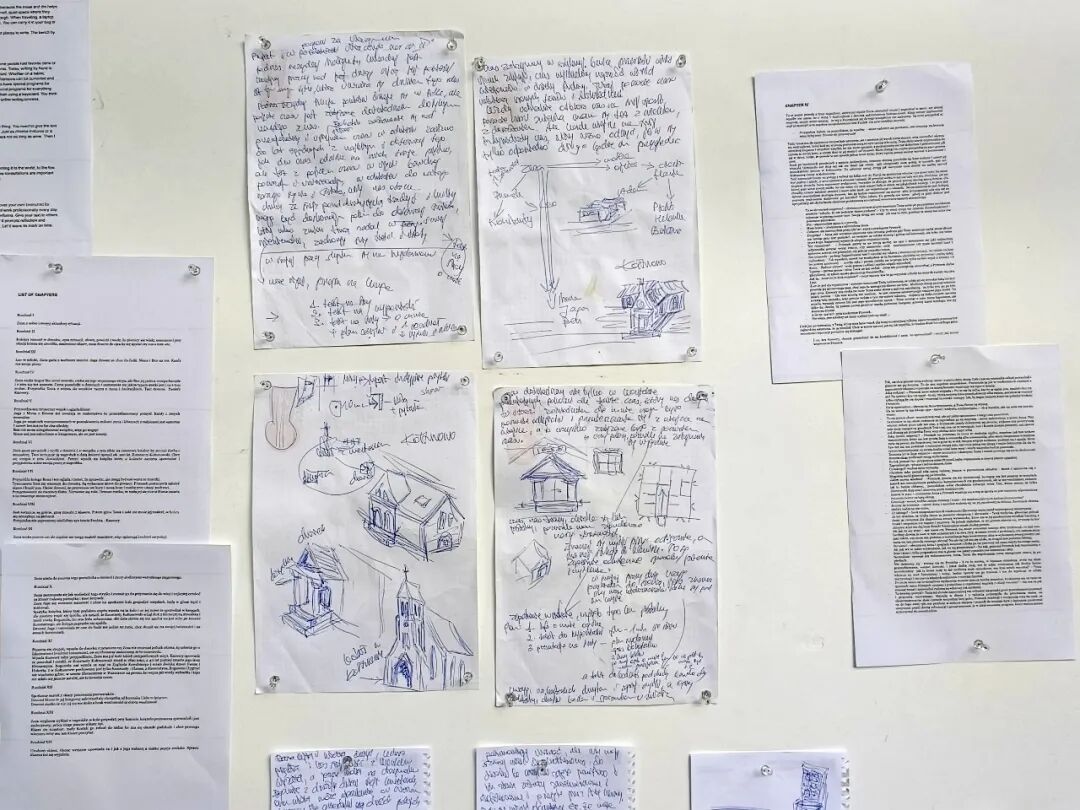
Małgorzata Kubicka在驻地期间开展的《In Pursuit of Lost Time》第二阶段项目,旨在继续创作其同名小说的第二部分;该小说的第一部分已于今年在波兰出版。
这部小说的故事背景设在波兰,但“时间”这一概念本身,却是我们每个人都深有感触的体验。小说主人公反思着时间的短暂与流逝,既包括与亲人共度时光时,观察到时间在他们身上留下的印记;也涉及对时间更宏观、更普遍意义的探讨,即时间与我们整个人生以及周围世界之间的关系。她审视着过去的痕迹,探寻在那个早已消逝的世界里,究竟留下了什么;尽管那个世界已成往事,但它却在当下的存在中留下了印记。
作为一名艺术史学家,我深深着迷于过去,以及它所遗留下来的一切。我探寻过去的痕迹,观察现存的事物,比如人们曾经居住过的建筑,他们身处其中的雕塑与绘画,还有他们视为美好并值得珍藏的家具、陶瓷及各类工艺品。这一切,都是在时间长河中的留存与守护。
中国拥有数千年的历史与文化,是一个绝佳的观察场域。在这里,尽管世界历经变迁,却依然在某种“不变”中保持着完美,留存着其内核与本质。在此语境下,“时间”的概念与我以往所认知的截然不同,时间被理解为一代代人的更迭与流转。
在朱家角的窄巷中,时间仿佛被封存在过去的一枚玻璃气泡里;而在浦东,时间又随着直插云霄的摩天大楼,飞速向前奔涌。在这里,时间感被赋予了新的内涵与意义,呈现出迥异的色彩与韵味。
每个人对时间的感知本就各不相同。随着年龄增长,我们对时间的感知也会随之改变;在漫长的一生中,我们对时间的体验始终在不断变化。有时,时间以令人眩晕的速度飞驰而过,让人感到阵阵晕眩;有时,时间流逝得缓慢而迟滞,仿佛一只垂死的老龟,既无力气也无意愿继续前行。但它依然在流淌,无论我们是否乐意。
我们无法阻止时间,却能留住某个特定时刻的记忆,记下当时发生的事,以及彼时内心的感受。
每个地方都有属于它自己的“时间”;只要凝视得足够久,便能将其洞察。
时间会在万物之上留下痕迹,无论是人、建筑还是画作。我观察着这些痕迹,搜集着“转瞬即逝”的证据,并将它们诉诸笔端,试图捕捉并定格时间,哪怕只是片刻。然而,时间终究无法停驻。
我们对时间的感知,不仅源于世代更迭的宏大背景,也源于此时此刻与我们产生交集的时间。在此期间,我获得了一种全新的体验:那种在不同地点间穿梭所带来的距离感与位移感,与我们对时间的感知紧密相连。
从一处前往另一处,旅途中的距离需要时间来跨越。或者换个角度看,这些距离反而赋予了我们时间。至于如何利用这段时间、做些什么,全由我们自己决定。正是这些时间塑造了我们,定义了我们的本质,并让我们得以构建起属于自己的身份。
The project “In Pursuit of Lost Time” part II during Małgorzata Kubicka’s residency is a continuation of work on the second part of her novel of the same title, which was published this year on the Polish publishing market.The novel’s action takes place in Poland, but the very concept of “time” is an experience that touches every one of us. The protagonist reflects on the transience and passage of time, both in relation to time spent with loved ones and family, observing how time leaves its mark on them, but also grapples with the concept of time in a more general, universal sense. Time in relation to our entire lives and the world around us. She observes traces of the past and what remains of the world that existed before us, which is gone because it has passed, but has left its mark on what remains, what is here and now.As an art historian, I am fascinated by the past, by what it left behind. I examine its traces, observing what remains. Architecture in the context of buildings where people like us once lived, the sculptures and paintings they surrounded themselves with. Furniture and ceramics, and other artistic crafts that they considered beautiful and worth preserving. Preservation through time.China, with its history and culture spanning over several thousand years, is an excellent field for observing a world that, despite changes, remains perfect in its immutability, retaining its content and essence. The very concept of time in this context is completely different from anything I have known before. Time is understood as the transience of generations.Time frozen in a glass bubble of the past amid the narrow streets of Zhujiajio; time shot forward among the skyscrapers soaring toward the sky in Pudong. Here, the sense of time takes on new meanings and significance. It has a different color and flavor.Everyone naturally perceives time differently. Our very sense of time changes with age; throughout our lives, we perceive time differently. Sometimes it rushes at a dizzying pace, causing dizziness; sometimes it drags slowly and reluctantly, like a turtle at the end of its life, without the strength or desire to continue. But it flows on. Whether we like it or not. We can’t stop it, but we can retain the memories of a given moment. Of what happened and the emotions we felt back then.Every place has its own time, which can be discovered if we look at it long enough.Time leaves its mark on everyone. Whether it’s a person, a building, or a painting. I observe these traces, collecting evidence of transience, writing them down on paper in an attempt to capture and freeze time, even for a moment. But time cannot be stopped.We experience time not only in the context of passing generations, but also in the time that touches us here and now. A new experience for me during my time here was the sense of distance and movement from place to place, which was closely linked to our sense of time.The distances we must cover to get from one place to another take time. Or rather, if we look at it differently, they give us time. It’s up to us how we use it and what we do with it. It’s this time that creates us and defines who we are, allowing us to build our identity.