2026 January Artists in Residence
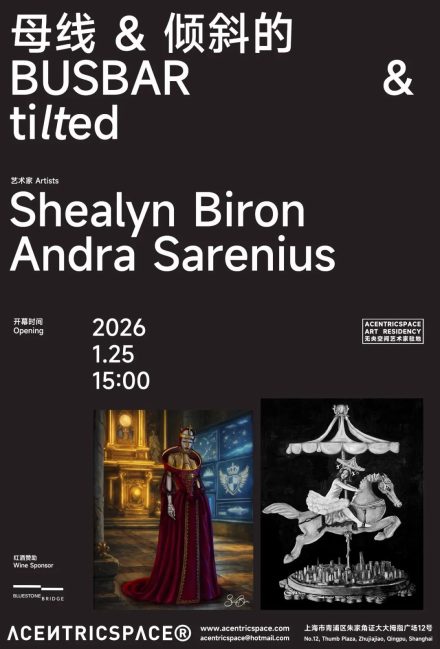
Residency Works Open Day
January 25 (Sunday) 15:00, 2026
本次开放日将Shealyn Biron与Andra Sarenius的作品并置,探讨身体如何在社会结构与空间秩序中被塑造、标记与限制。
Shealyn Biron通过近未来的叙事,将身体改造视为阶级的可见表征。义肢如同装饰,既承载权力与欲望,也暴露出控制与伪装的机制。在她构建的世界中,身份被直接嵌入身体,身体成为社会结构最直观的界面。
Andra Sarenius则从现实城市出发,通过绘画考察残障、可达性与日常空间之间的关系。她关注谁能够自由移动,哪些路径被忽视,以及身体如何在城市中被默许或排除。
两位艺术家的作品从虚构与现实出发,共同指向一个问题:身体从来不是中性的存在,而是在社会规范与空间设计中不断被塑形的场所。
This open day brings together works by Shealyn Biron and Andra Sarenius to examine how bodies are shaped, marked, and regulated by social structures and spatial systems.
Through speculative narrative, Shealyn Biron presents bodily modification as a visible inscription of class. Prosthetics function as adornment, carrying desire and authority while revealing mechanisms of control. In her constructed world, identity is embedded directly into the body, turning it into a social interface.
In contrast, Andra Sarenius grounds her work in the everyday city. Through drawing, she investigates disability, accessibility, and the politics of movement, asking who is able to move freely and which bodies remain unseen within urban space.
Together, the works suggest that the body is never neutral, but continually negotiated through design, regulation, and social norms.
Shealyn Biron
Busbar reimagines Mark Twain’s The Prince and the Pauper in a future where cybernetic prosthetics are as common as clothing—and just as revealing. In this world, class is inscribed directly onto the body. The ruling elite wear modifications crafted like heirlooms: gilded, gem-set, and meticulously engineered. By contrast, the working class and underworld are fitted with parts that mimic finery—bright and plastic, overdesigned illusions of luxury that mask their fragility.
The story begins in a throne room, where a Queen prepares her son, the Prince, for his role at court. In the ritual of refinement, she discovers a brightly colored charm concealed on his body—something unmistakably out of place within the palace.
The charm traces back to a night beyond the palace walls, when the Prince, seeking escape from a suffocating world of perfection and control, secretly slips into Busbar—a neon-lit bar that acts as a conductor for the underworld’s social current, feeding bodies and energy through its threshold and into the dance club beyond. At the edge of the floor, amid pulsing light and movement, he comes face to face with his double—someone uncannily like him, yet shaped by a life lived under very different circumstances. Where the Prince’s body reflects restraint and expectation, this doppelgänger’s body has been altered to heighten sensation.
The encounter blurs recognition and attraction, edged with unease, drawing the Prince toward a version of himself shaped by desire rather than obligation—an intimacy born not of permission, but of possibility. The charm is passed with intention, a charged gesture meant to linger. What began as adornment becomes a reminder of the night’s lesson—not of escape, but of freedoms momentarily shared.
The Queen, the Prince, the Pauper, and the Bartender each inhabit this world through what they wear: bodies shaped by ornament and restraint, adaptation and excess, revealing a society where identity is assembled as deliberately as the parts that compose it.
《母线》以马克·吐温的《王子与乞丐》为蓝本,重新构想了一个未来世界,在这个世界里,仿生假肢像衣服一样普遍,也像衣服一样暴露身份。在这个世界里,阶级直接体现在身体上。统治精英佩戴着如同传家宝般精心打造的改造部件:镀金、镶嵌宝石、工艺精湛。相比之下,工人阶级和底层社会的人们则佩戴着模仿华丽饰品的部件——色彩鲜艳、塑料制成、过度设计的奢华幻象,掩盖着它们本身的脆弱。
故事始于皇宫里,女王正在为她的儿子 – 王子,换上他华丽的皇室服饰。在这高雅的仪式的过程中,她发现王子身上藏着一个色彩鲜艳的护身符,这件东西在宫殿里显得格格不入。
这个护身符的来历要追溯到宫墙之外的一个夜晚。当时,王子为了逃离这个令人窒息的完美但被控制的世界,偷偷溜进了一家霓虹灯闪烁的酒吧,Busbar,它是地下社会潮流的汇聚之地,人流和能量源源不断地涌入,穿过酒吧的门槛,进入后面的舞厅。在舞池边缘,在闪烁的灯光和涌动的人群中,他遇到了自己的分身,与他长得几乎一模一样的一个人,但却是在截然不同的环境中长大。王子的身体体现着克制和期望,而这个分身却为了增强感官体验而改造了自己的身体。
这次相遇模糊了认同和吸引力,也伴随着一丝不安,将王子引向一个由欲望而非义务塑造的自我,一种不寻求他人的许可,而是源于可能性的亲密关系。护身符被有意地传递,这是一个充满暗示的举动,意在留下深刻的印记。最初只是装饰品的东西,最终成为了对那个夜晚教训的提醒,不是逃离,而是短暂共享的自由。
女王、王子、乞丐和酒保,他们每个人都通过自己所穿戴的东西在这个世界中生存:身体被装饰和克制、适应和过度所塑造,揭示了一个社会,在这个社会里,身份的构建就像构成它的部件一样,都是经过精心设计的。
Busbar – The Queen
Digital Costume Illustration
420 x 594mm
2026
Busbar – The Queen
综合材料 Constructed Garment of Velvet, Goldwork Embroidery, Pearls, LED lighting components, Approx. 152 × 117 × 76 cm (H × W × D)
展示在人台模特上 displayed on mannequin (women’s size 2–4 equivalent)
2026
Busbar – The Storyboard
数字插画 Digital Illustration
420 x 594 mm
2026
Andra Sarenius通过艺术研究探索可及性、空间性和规范性等问题。这组作品乍看之下似乎彼此独立,但实际上它们被一条贯穿始终的线索串联起来,这条线索探讨了残疾作为一种社会和生理现象。这组绘画作品旨在展现残疾作为当地社区积极组成部分的形象。这些作品并非试图代表残疾人士的经历,而是反映了残疾人在城市生活中跨文化的现实和可能性。该项目从对当地社会结构和建筑的短暂观察中汲取灵感,以独特的视角描绘城市。
人们如何在城市中占据空间?为实现无障碍环境所做的努力在实践中如何运作?谁可以自由行动?哪些事物仍然被忽视?
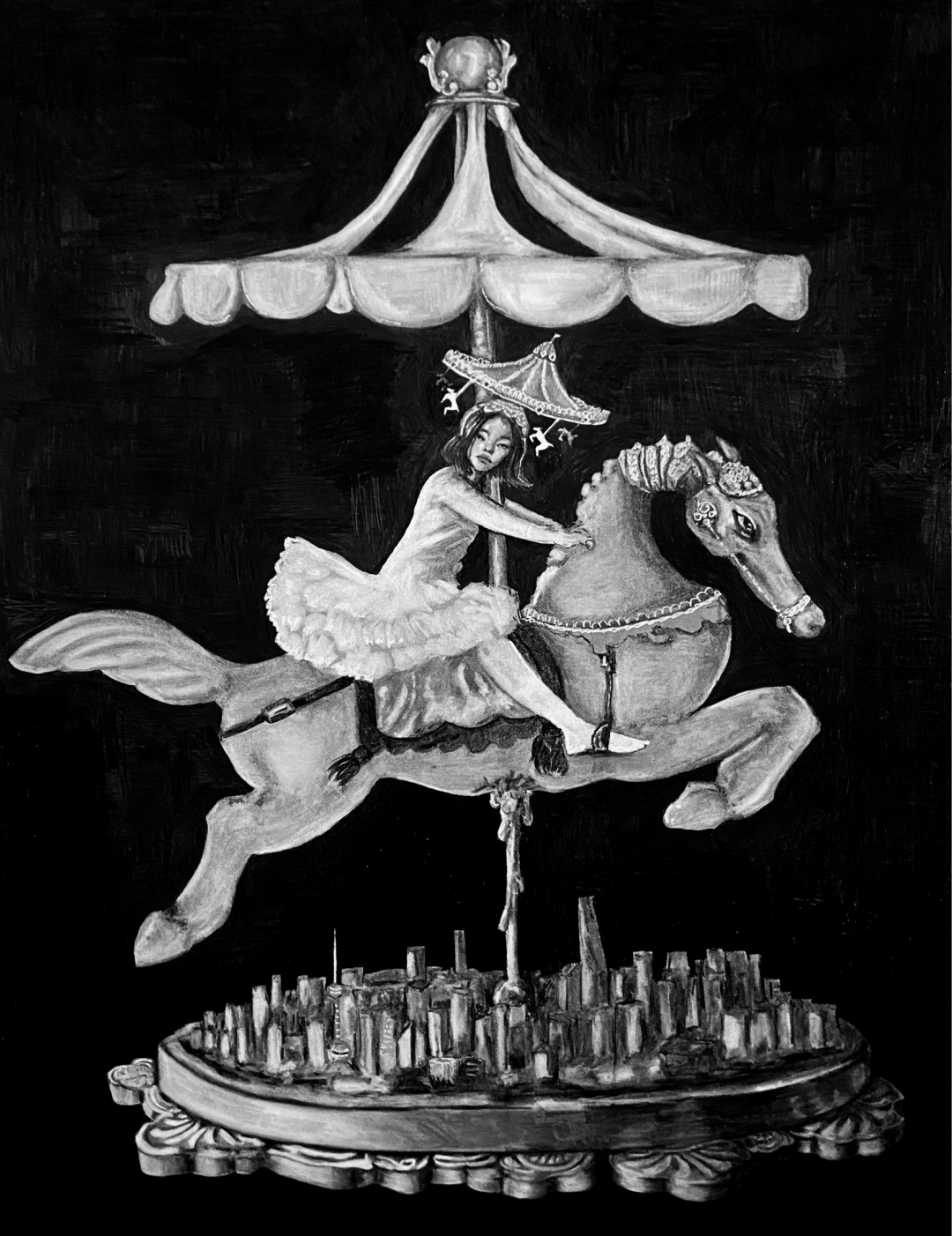
Andra Sarenius explores questions of accessibility, spatiality, and normativity through artistic research. The individual works within this collection may seem separate at first glance, however they are woven together by a continuous thread that examines disability as a social and physical phenomena. The collection of drawings aims to display a reflection of disability as an active part of the local community. While not trying to claim the experience, these works echo the cross-cultural realities and possibilities of crip-embodied urban life. Drawing inspiration from fleeting moments of observation of local social fabric and architecture, the project maps the city through alternative lenses.
How do people claim space in the city? How does efforts towards accessibility work in practice? Who is allowed to move freely? What remains invisible?
Wiring– Override
纸上炭笔 Charcoal on paper
110 x 82cm
2026
THE CAROUSEL; An Homage to the Girl who Walked with a Whimsy Skip
纸上炭笔 Charcoal on paper
110 x 82 cm
TACTILE MAPPING
纸上炭笔 Charcoal on paper
110 x 170 cm
2026
红酒赞助 Wine Sponsor
BLUESTONEBRIDGE石桥书屋旅居位于朱家角古镇的一处宁静的港湾,提供融合葡萄酒、美食与文学的沉浸式体验。环境优美,融合了水乡的静谧与西餐的精致,致力于为每一位客人打造一个好玩有趣,参与感强的体验空间。
BLUESTONE BRIDGE Retreat is an art-inspired experiential space nestled in Zhujiajiao Ancient Town, Shanghai. Blending the tranquility of a water town with the refinement of Western dining and wine, it offers a unique fusion of “boutique retreat + Western cuisine & wine + curated books.” Committed to creating engaging and interactive experiences, it provides every guest with a beautiful, enjoyable, and deeply participatory environment.
Address:上海市青浦区珠湖路99弄九间堂玲珑坊6-03
No.6-03. Jiujiantang. Lane 99,Zhuhu Road,Zhujiajiao, Qingpu District, Shanghai



![[超]灾变论 [Hyper-]Catastrophe Theory 舜 Shun](https://www.acentricspace.com/wp-content/uploads/2020/10/wxsync-2024-04-17e42ddfe2087d093ffcdad3f414da34-440x625.jpeg)