Taehyeong Kim
2026年七月驻地艺术家
金泰亨
No. 197 ACENTRICSPACE Resident Artist
2026 July Resident Artist
Taehyeong Kim
关于艺术家 About the Artist
(韩国 South Korea)
https://secra.kim/
在朱家角驻地期间,金泰亨以“水”的共同意象连接济州与朱家角。济州是一座四面环海的岛屿,朱家角则是一座由河道塑造的历史水乡。水在这里并非实际的地理水流,而是连接两地景观、历史与生活方式的象征性纽带。他将这一共同意象转化为一件交互媒体作品与一场现场演出。
他在朱家角的所见所感,以及对一股连接济州、上海与苏州三地的想象水流,将共同化为一场融合编舞、单簧管与电子声响的即兴演出。在整个项目中,他同时承担艺术策划、作曲、导演及技术制作,将不同的媒介与合作者整合为一个完整的舞台作品。
整个项目通过协作得以实现。以济州为创作基地的伙伴艺术家,ACENTRICSPACE的同期驻地艺术家以及本地中国艺术家,以“水”为共同语言展开合作,共同塑造展览与现场演出。
Taehyeong Kim is a composer and developer based in Jeju, South Korea. He treats composition and programming as a single creative language. Through numbers, algorithms, and physical computing, he gives sonic and sensory form to structures that would otherwise remain invisible. His work spans chamber music, electronic music, and interactive systems shaped by audience participation.
In collaboration with other artists, he translates their artistic visions into technological form. At the same time, he builds his own works from mathematical and logical structures. This balance between his roles as composer and developer defines his practice.
During his residency in Zhujiajiao, Taehyeong Kim connects Jeju and Zhujiajiao through the shared image of water. Jeju, an island surrounded by the sea, and Zhujiajiao, a historic water town shaped by its canals, are brought together through water as a symbolic link between their landscapes, histories, and ways of life. He transforms this shared imagery into an interactive media work and a live performance.
His impressions of Zhujiajiao, together with an imagined current of water connecting Jeju, Shanghai, and Suzhou, take shape in an improvised performance combining choreography, clarinet, and electronic sound. Throughout the project, he works across artistic planning, composition, direction, and technical production, bringing different media and collaborators together within a unified stage work.
The project is realized through collaboration. Fellow artists based in Jeju, co-resident artists at ACENTRICSPACE, and local Chinese artists come together around water as a shared language, collectively shaping the exhibition and performance.
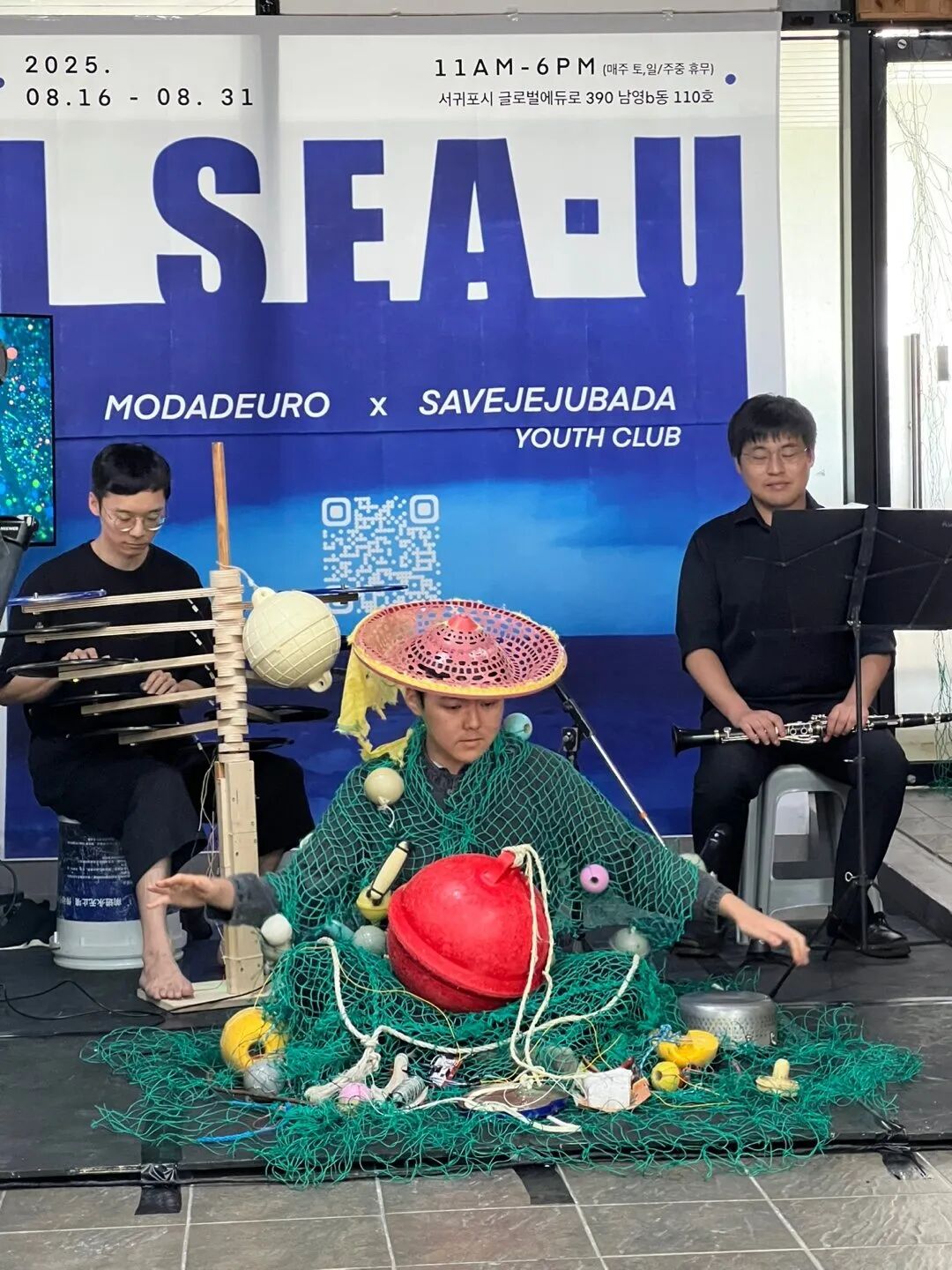
海洋垃圾电子乐器 Marine Debris Electronic Instruments
互动式现场电子音乐演出
Live electronic music performance with audience participation
Non-Smokers
2025年首演于济州西归浦 I·SEA·U,主办:MODADEURO × SAVEJEJUBADA
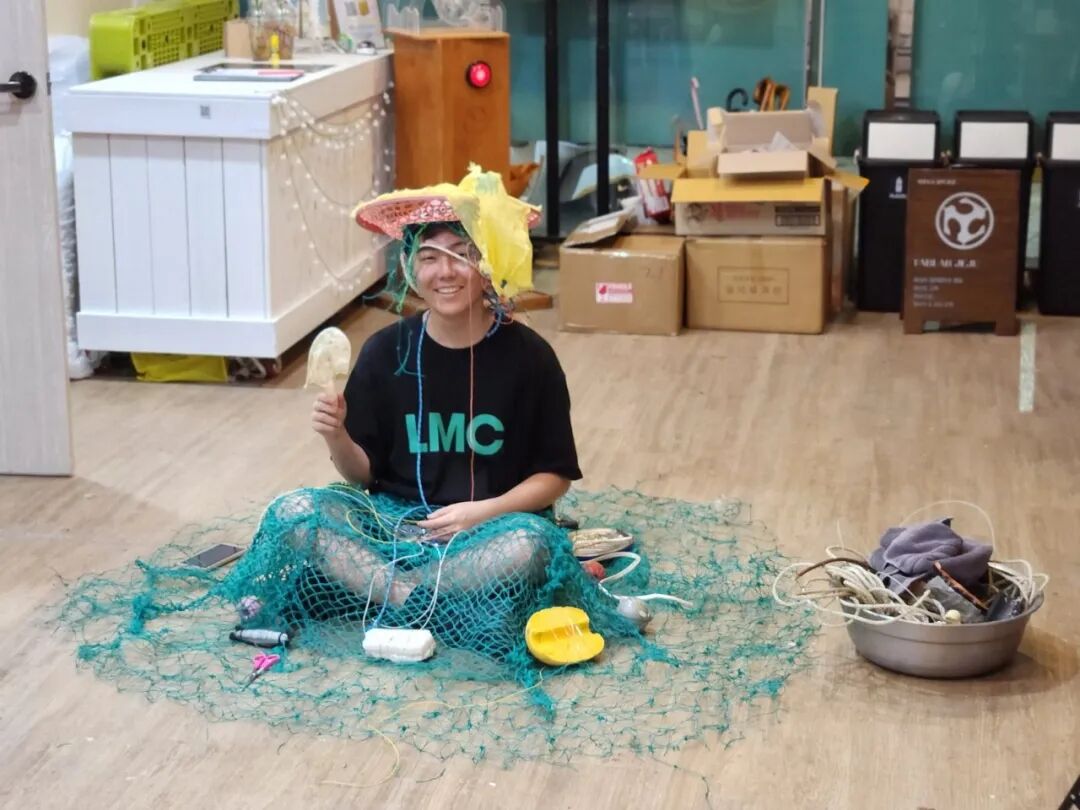
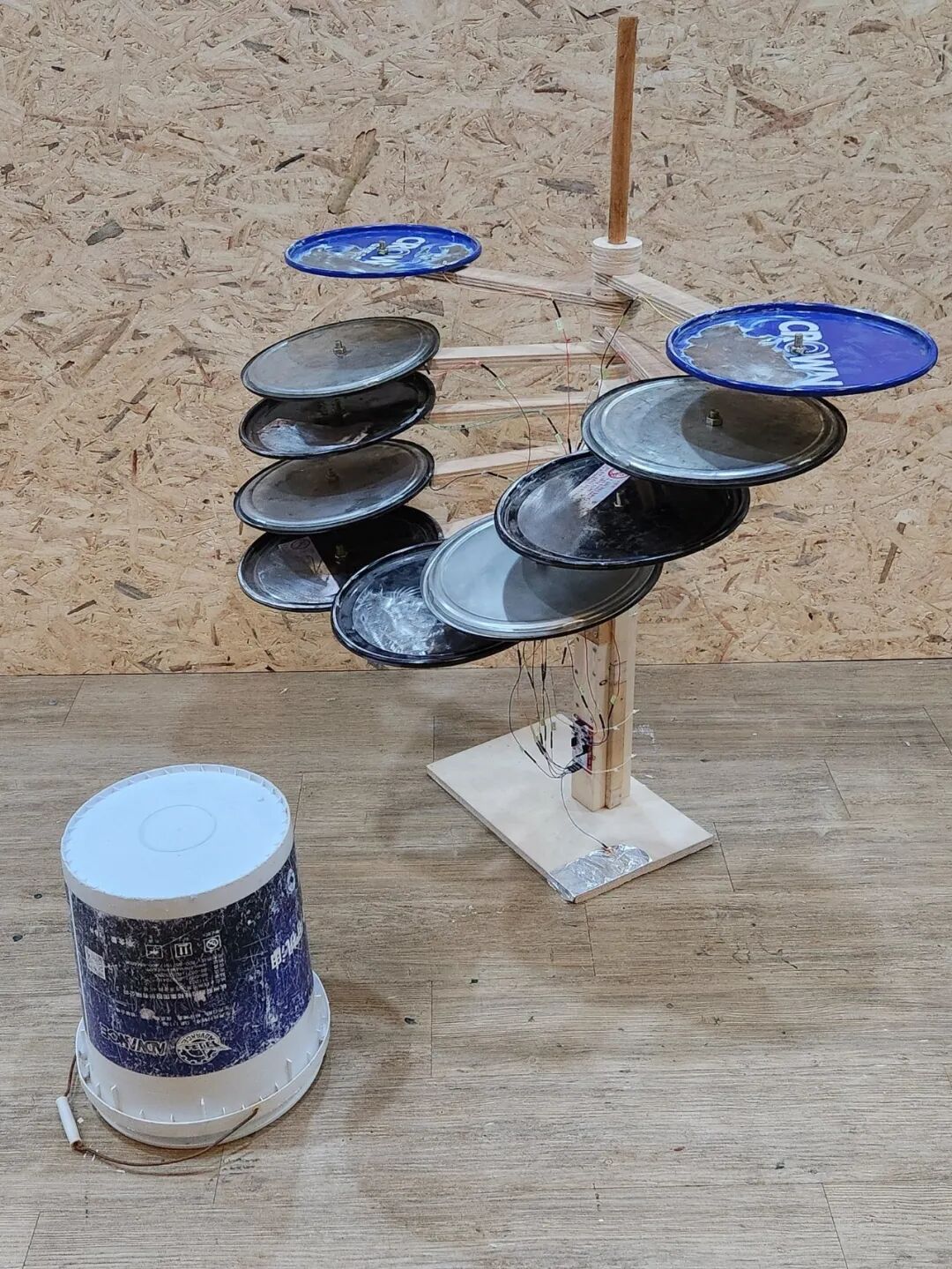
《海洋垃圾电子乐器》将采集自济州海岸的海洋垃圾——包括废弃浮标、渔网和钢制桶盖——重新构想为可演奏的电子乐器。金泰亨并未将这些材料作为传统打击乐器使用,而是把它们转化为导电触控界面。微控制器将触碰转换为电子输入信号,再通过定制的声音系统将这些信号映射为声音。
作品由两件乐器组成。第一件是一件以钢制桶盖作为导电触控面的落地式乐器。第二件则是一件由浮标、渔网和导电线制成的可穿戴乐器。演奏者通过穿戴这件乐器进行演奏,其身体动作与触碰会激活乐器的导电部件。
从海洋垃圾的采集与清洗,到乐器设计、音乐创作和现场演出,Non-Smokers 独立推进了项目的全部过程。该作品未接受任何外部资助。
Marine Debris Electronic Instruments reimagines marine debris collected along Jeju’s coast—including discarded buoys, fishing nets, and steel drum lids—as playable electronic instruments. Rather than using these materials as conventional percussion, Taehyeong Kim transforms them into conductive touch interfaces. A microcontroller reads physical contact as electronic input, which is then mapped to sound through a custom-built sound system.
The work consists of two instruments. The first is a freestanding instrument built from steel drum lids that function as conductive touch surfaces. The second is a wearable instrument made from buoys, fishing nets, and conductive thread. It is played through the act of wearing it, as the performer’s movements and touch activate its conductive elements.
Non-Smokers developed every stage of the project independently, from collecting and cleaning the marine debris to designing the instruments, composing the music, and presenting the performance. The work was produced without external funding.
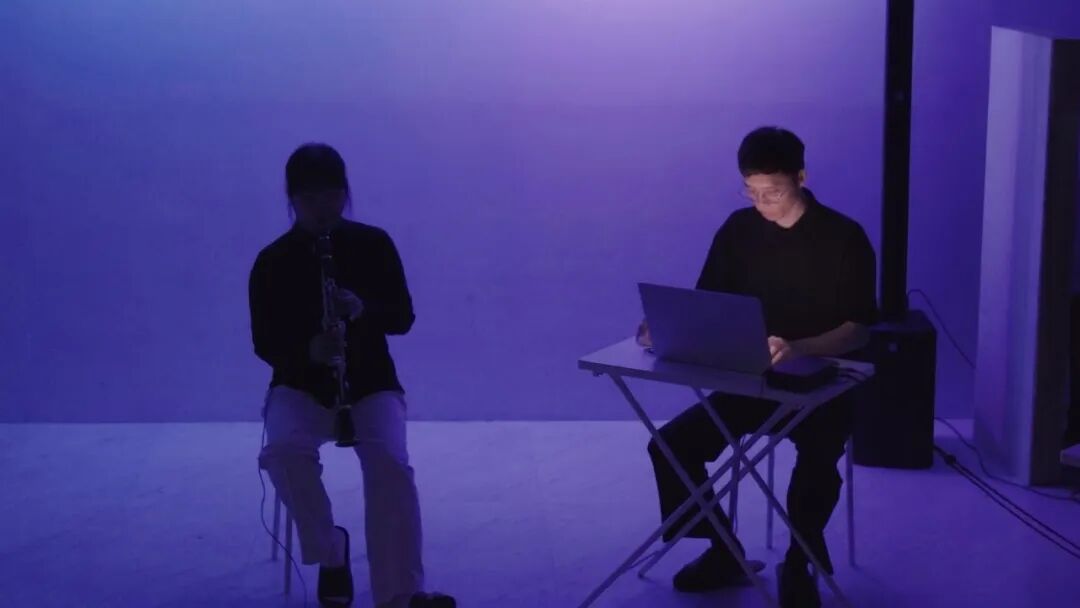
素数之海与湍流 The Sea of Primes and Turbulence
为单簧管与现场电子音响而作 For clarinet and live electronics
单簧管: MinYoung Lee Clarinet: MinYoung Lee
《素数之海与湍流》追问:仅凭声音,我们能否区分秩序与混沌?电子声部遵循一套源自素数计数函数 π(x) 的严格数学结构。无数个由系统决定的声音彼此聚集、漂移,如同一片流动的水体,构成“素数之海”。与之相对,单簧管只获得最低限度的演奏指示,并通过自由即兴展开,呈现出“湍流”不可预测的扩散与变化。
这两股流动并非彼此分离。正如海影响风、风又搅动波浪,确定性的秩序与自由即兴也不断相互作用。二者的相遇成为现实世界的一种映照——在那里,秩序与混沌始终共存。
The Sea of Primes and Turbulence asks whether order and chaos can be distinguished through sound alone. The electronics follow a strict mathematical structure derived from the prime-counting function π(x). Countless tones, each determined by the system, gather and drift like a body of water, forming the “sea of primes.” By contrast, the clarinet receives only minimal instructions and unfolds through free improvisation, embodying the unpredictable dispersion of “turbulence.”
The two currents are not meant to remain separate. Just as the sea influences the wind and the wind stirs the waves, deterministic order and free improvisation continually act upon one another. Their encounter becomes a reflection of the real world, where order and chaos coexist.
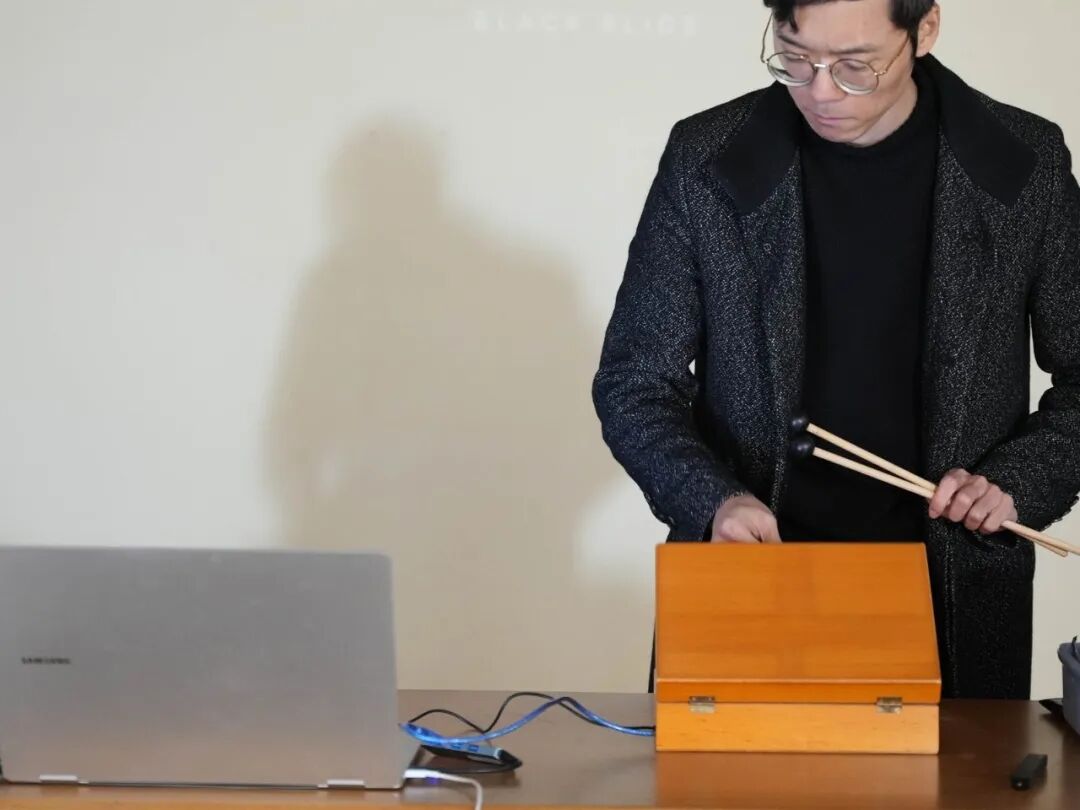
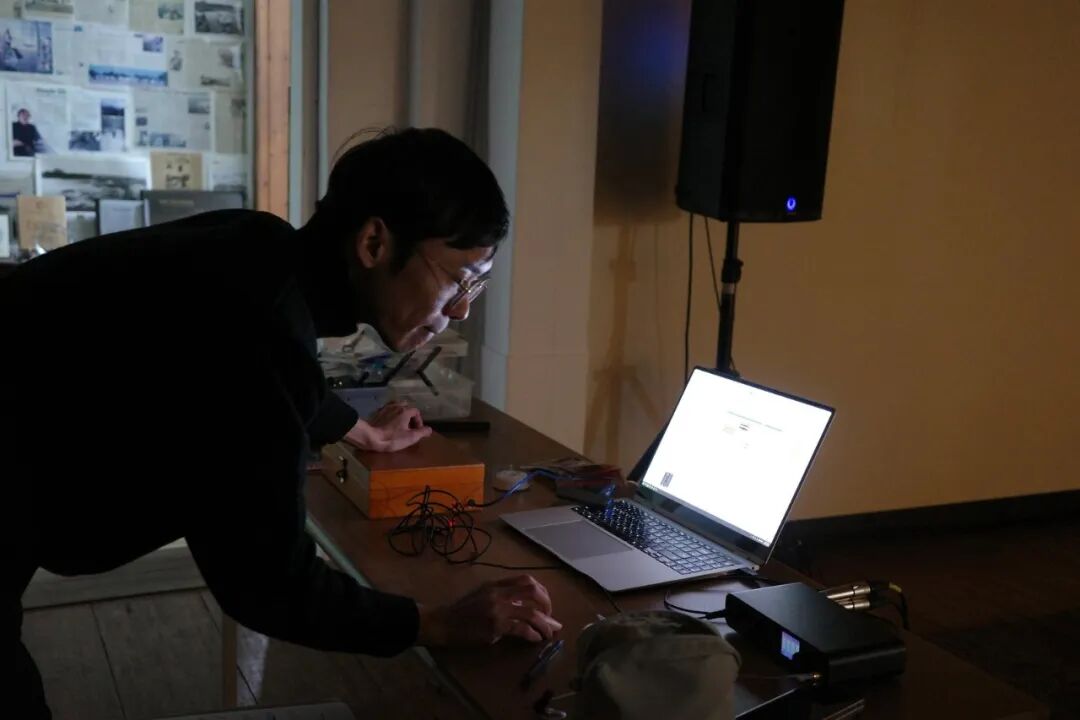
Pseudora’s Box
为增强木箱与现场电子而作 For augmented wooden box and live electronics
Premiere
木箱所引发的好奇,往往不在于箱体本身,而在于其中所藏之物。无论是“潘多拉的盒子”,还是“薛定谔的猫”这一思想实验,真正的焦点都指向盒中之物。作品标题 Pseudora’s Box 由“pseudo(伪)”与“Pandora(潘多拉)”组合而成,指向一种悖论:某种看似真实、实则并不存在的事物。
金泰亨在木箱中嵌入 Arduino、树莓派、传感器与电子模块,将其转化为一件乐器。演奏者通过用槌敲击、开合和摇动木箱,实时生成并处理声音。
对金泰亨而言,技术并非目的,而是一种赋予艺术家的抽象观念以具体形态的手段。无论装置本身多么复杂,真正重要的始终是它所承载的内容。那么,这只“伪多拉之匣”究竟装着什么?表演、实体计算与实时声音合成,最终又服务于什么?这一追问既指向木箱,也指向作曲家本人。
A box draws attention less to itself than to what it might contain. Both Pandora’s box and the thought experiment of Schrödinger’s cat use the box as a frame for imagining what lies inside. The title Pseudora’s Box combines “pseudo” and “Pandora,” pointing to a paradox: something that appears plausible yet does not actually exist.
Taehyeong Kim embeds an Arduino, a Raspberry Pi, sensors, and electronic modules inside a wooden box, transforming it into an instrument. The performer strikes it with mallets, opens it, and shakes it to generate and transform sound in real time.
For Kim, technology is a means rather than an end—a way to give concrete form to artistic abstraction. However elaborate the apparatus may be, what ultimately matters is what it contains. What, then, does this “Pseudora’s box” hold? What purposes are served by performance, physical computing, and live synthesis? The question is directed not only at the box, but also at the composer.
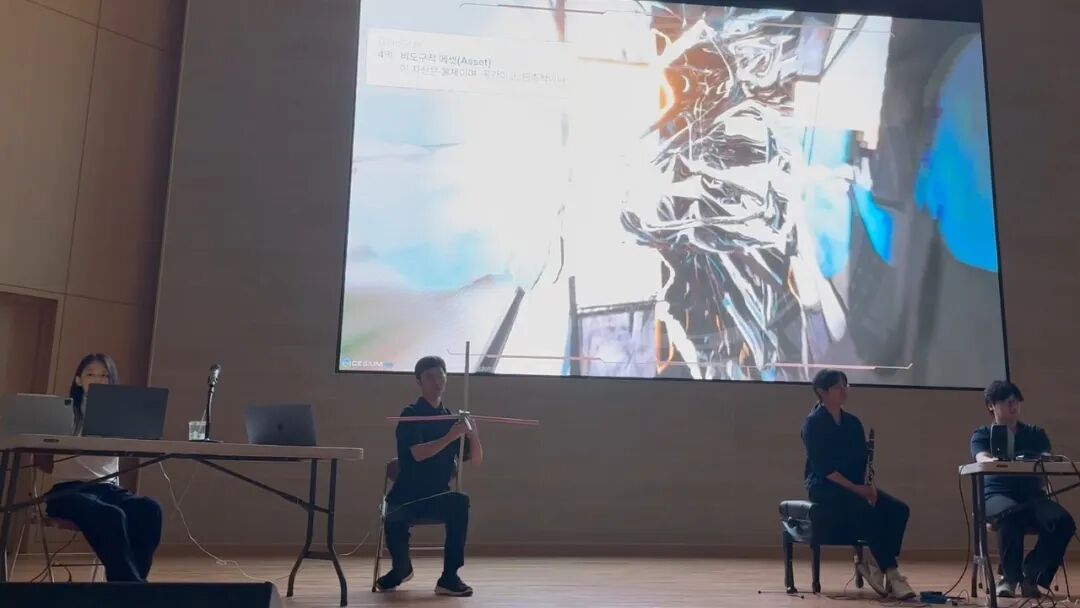
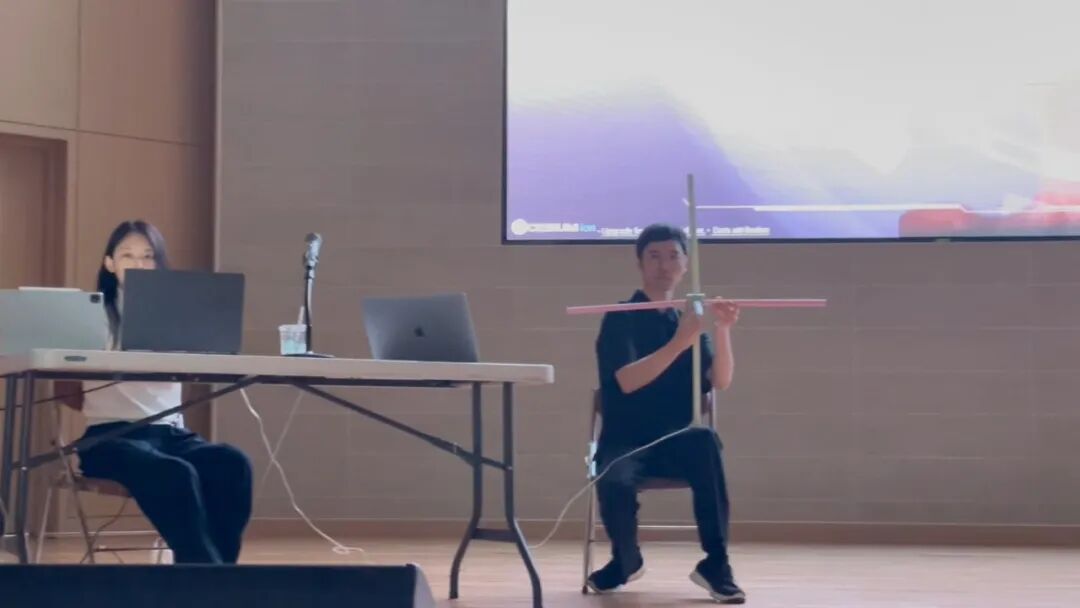
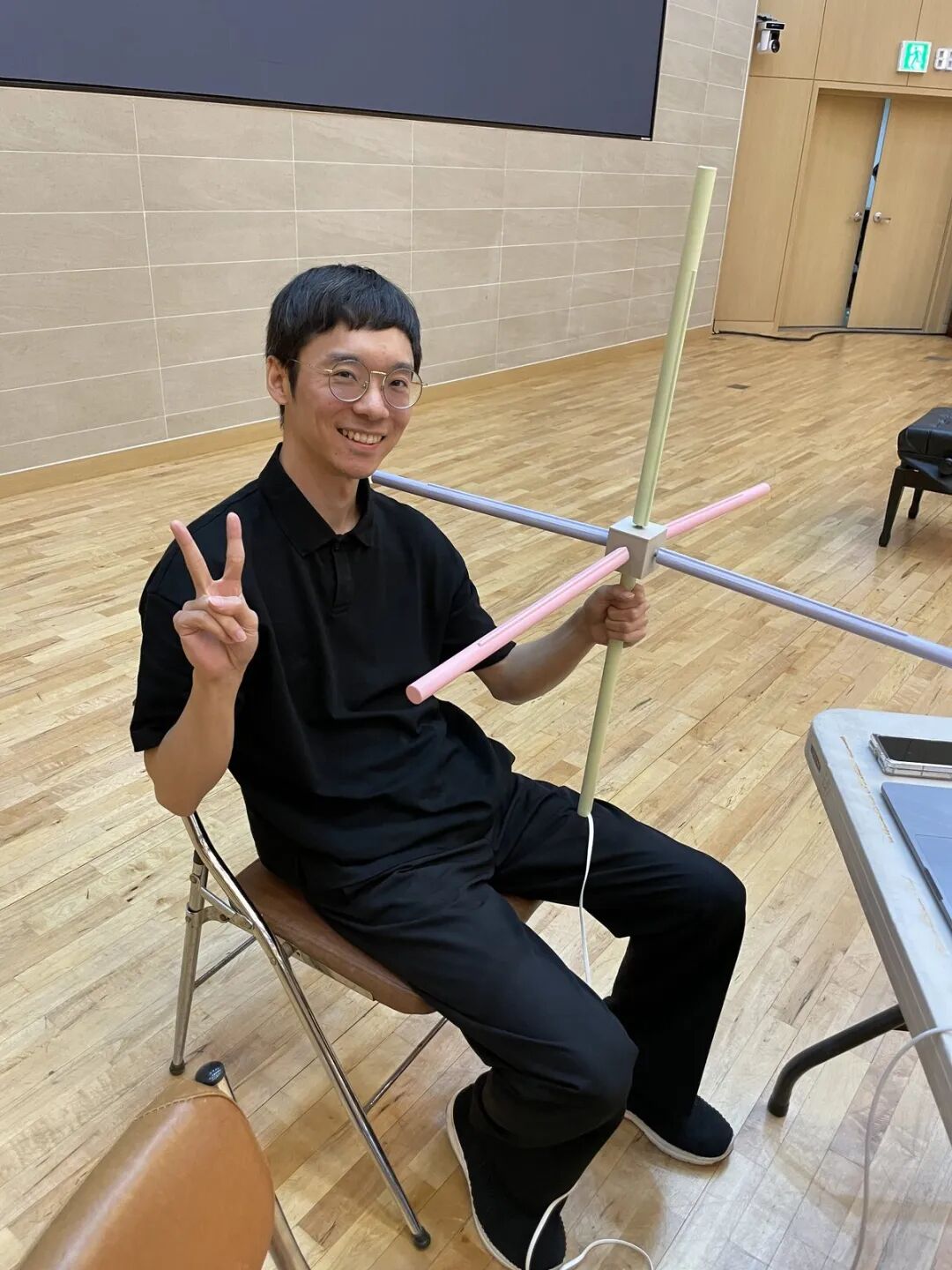
GranGran25 (Team Namsoyeonguso)
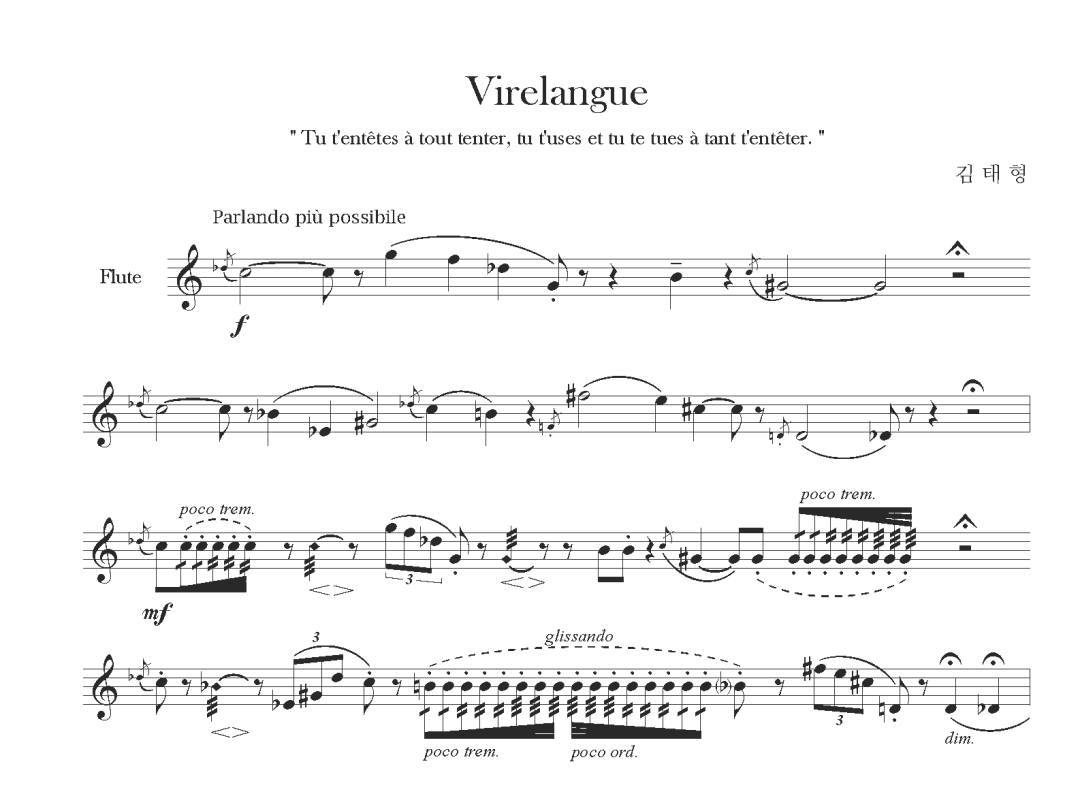
“Tu t’entêtes à tout tenter, tu t’uses et tu te tues à tant t’entêter.”
Virelangue
由济州文化艺术基金会支持